
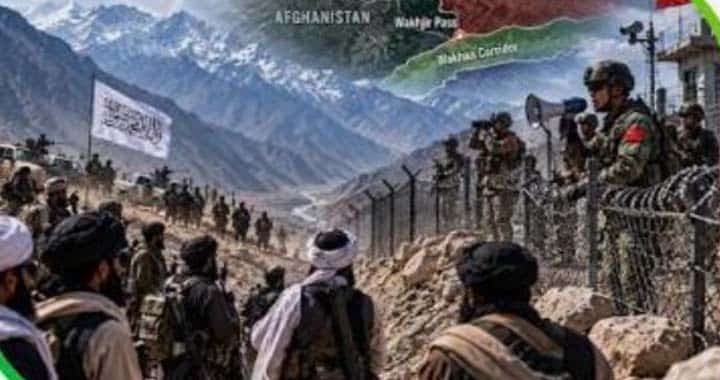
The construction of a road connecting Afghanistan’s remote Wakhan Corridor to the Chinese border has raised important geopolitical and regional trade questions. Despite the Taliban administration’s efforts to establish a direct land connection with China, Beijing has remained reluctant to open the border for regular commercial traffic, citing serious security concerns.
The road project, developed through the rugged and mountainous terrain of Badakhshan province, is intended to provide Afghanistan with an alternative land route to China, potentially reducing its dependence on existing trade corridors through Pakistan and other neighbouring countries. However, completing a road to the border does not automatically translate into an operational international trade route.
Beijing has longstanding concerns about instability in Afghanistan, cross-border militancy, and the potential movement of extremist groups into China’s Xinjiang region. In particular, China remains concerned about threats associated with militant networks that could exploit poorly secured border areas. For Beijing, protecting its western frontier and preventing security threats from spilling into Xinjiang remain critical priorities.
Consequently, China’s cautious approach reflects a broader strategic calculation: economic connectivity cannot be separated from border security, political stability, and confidence in the authorities responsible for controlling the territory.



