
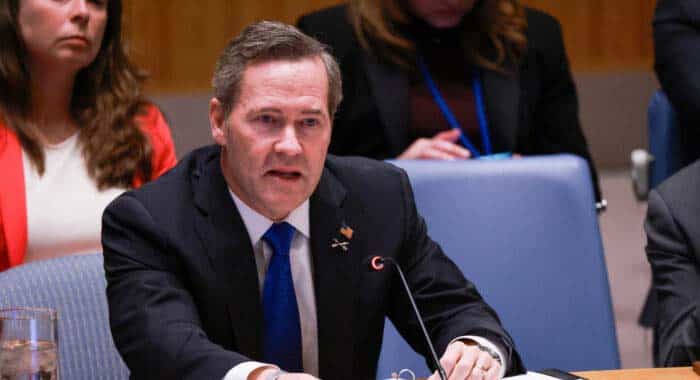
United States Representative to the United Nations Security Council Mike Waltz has accused the Taliban authorities in Afghanistan of providing shelter to terrorist groups, warning that developments inside the country could have consequences extending well beyond Afghanistan’s borders.
Addressing the United Nations Security Council, Waltz called for concrete measures rather than assurances from the Taliban, urging the Council to demand “action, not words” and stressing that statements and promises must be matched by verifiable actions.
According to Waltz, the Taliban’s conduct will ultimately determine Afghanistan’s trajectory, including whether the country can make progress toward peace and move closer to greater engagement and international legitimacy.
Waltz raised concerns over the continued presence and alleged activities of terrorist organizations operating from Afghan territory. He warned that instability and security threats originating in Afghanistan cannot be viewed solely as an internal matter, arguing that their potential repercussions could affect neighboring countries and the wider international community.
He called on the Taliban to demonstrate through tangible steps that Afghan territory will not be used as a safe haven for terrorist organizations or as a base from which threats can be directed beyond the country’s borders.
The U.S. representative emphasized that the international community is closely watching developments in Afghanistan and that the Taliban’s actions, rather than its public commitments, will be central to determining the future of its relationship with the international community.
Waltz also highlighted concerns reflected in United Nations reporting regarding the human rights situation in Afghanistan. He referred to reports documenting allegations of arbitrary detention, torture, ill-treatment, enforced disappearances and extrajudicial killings. He stressed the need for accountability and respect for fundamental human rights, particularly as the international community continues to assess the situation under Taliban rule.
The concerns come amid continuing international scrutiny of the treatment of Afghan civilians and the broader human rights environment in the country.
Waltz further criticized restrictions imposed by the Taliban on Afghan women working for the United Nations, describing the policy as inconsistent with international law and the principles of the UN Charter. He argued that preventing Afghan women from working with UN agencies has had consequences beyond employment rights, affecting the delivery of humanitarian assistance in a country where millions of people continue to depend on international aid.
According to Waltz, the restrictions have disrupted humanitarian operations and created an additional obstacle to Afghanistan’s efforts to rebuild its relationship with the international community. He urged the Taliban to reconsider policies that restrict the participation of Afghan women in humanitarian and international operations, emphasizing the importance of enabling aid organizations to operate effectively and reach vulnerable populations.
At the core of Waltz’s remarks was a call for the Taliban to demonstrate its commitments through measurable actions. He argued that declarations alone cannot satisfy the international community and that meaningful progress will depend on concrete steps addressing terrorism, human rights and restrictions on humanitarian organizations.
The U.S. representative’s remarks underscore the continuing challenges facing Afghanistan as the Taliban seeks greater international engagement while governments and international organizations maintain scrutiny of its policies and conduct.
The Security Council continues to face the broader challenge of balancing humanitarian engagement with concerns over security, human rights and the obligations expected of Afghanistan’s authorities under international norms.
Waltz’s warning places renewed emphasis on the consequences of Afghanistan’s internal developments for regional and international security, while underscoring Washington’s position that any future progress toward international legitimacy will depend significantly on actions taken by the Taliban rather than assurances alone.



