
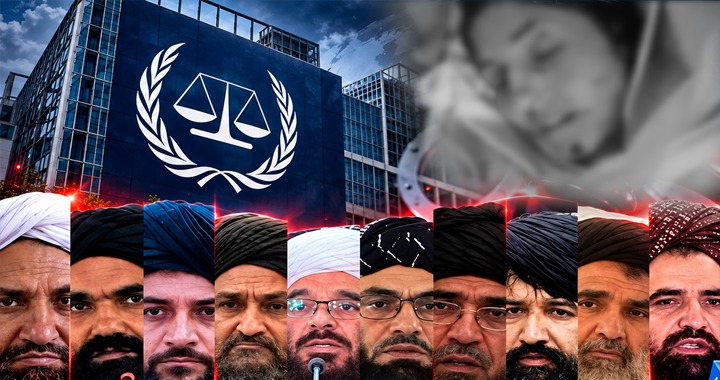
For years, the international community has pressed Afghanistan’s Taliban rulers to reverse restrictions imposed on women and girls. Those appeals have now been joined by a far more serious development: arrest warrants issued by the International Criminal Court (ICC) against senior Taliban leaders over the alleged persecution of women and girls. Yet neither diplomatic pressure nor the prospect of criminal accountability appears to have produced a fundamental change in the Taliban’s approach.
That disconnect is becoming increasingly difficult to ignore. International appeals have repeatedly called for Afghan women and girls to regain access to education, employment, public life and humanitarian work, while the Taliban have continued to defend their restrictions as matters of domestic policy and their interpretation of Islamic law.
The result is a widening gap between what the international community demands and what the Taliban are prepared to accept.
From Appeals to Accountability
The ICC warrants mark an important escalation because they move the issue beyond diplomatic criticism and humanitarian appeals. The court’s action places the conduct of senior Taliban leadership within the framework of potential individual criminal responsibility, specifically over alleged persecution on gender grounds.
That does not mean every act of violence against an Afghan woman can automatically be attributed to the Taliban leadership, nor does the death of a woman in Ghor by itself establish an ICC case. The distinction matters. The alleged torture and death of the 32-year-old woman in Ghor was attributed to her husband, who reportedly surrendered to Taliban authorities.
But the case illustrates the broader environment in which Afghan women continue to face questions about protection, access to justice and their ability to exercise basic rights.
For the Taliban, however, the ICC warrants appear unlikely to carry the same political weight that they would for a government seeking international legitimacy through engagement with Western institutions. The Taliban have already spent years governing in defiance of demands from much of the international community.
That helps explain why the latest judicial action may not immediately translate into a policy reversal.
A Pattern of Pressure and Resistance
The international response to Taliban restrictions has followed a familiar pattern. First came diplomatic appeals. Then increasingly strong condemnations, humanitarian warnings and demands for the reopening of schools and universities to girls and for women to be allowed to work.
The Taliban have generally responded by insisting that their policies are internal matters and by rejecting outside pressure to alter what they describe as religiously justified rules.
This creates a peculiar cycle. The international community increases pressure because the Taliban do not change course, while the Taliban’s refusal to change course becomes another reason for international pressure.
The latest ICC action raises the stakes considerably, but it also exposes the limits of pressure when the target is unwilling to treat international criticism as a reason to alter its domestic policies.
The central question is therefore no longer whether the Taliban are facing international condemnation. They clearly are. The more consequential question is whether that condemnation has any capacity to influence their behavior.
So far, the evidence offers little indication of a major retreat.
The Cost Falls on Afghan Women
While governments, international organizations and courts debate accountability, Afghan women continue to live with the consequences of Taliban restrictions.
The issue extends beyond access to classrooms or workplaces. Restrictions affect women’s economic independence, movement, participation in public life and ability to access services. Where women face violence inside their homes, the strength and transparency of the justice system becomes an additional concern.
The Ghor case is significant in this context not because it proves that the Taliban directly carried out the alleged torture, but because it raises the question of what protection and justice are available to Afghan women under the system the Taliban now control.
That question becomes particularly important when international institutions are simultaneously accusing senior Taliban leaders of pursuing policies that discriminate against women and girls.
Will the Pressure Change Taliban Policy?
The ICC warrants may have long-term consequences for Taliban leaders, particularly if they travel to countries willing to cooperate with the court. They also add a legal dimension to international efforts to hold Taliban officials accountable.
But legal consequences that may emerge in the future are different from immediate political leverage.
The Taliban have survived years of diplomatic isolation, international criticism and economic pressure while maintaining their core approach to women’s rights. They have also demonstrated that international recognition is not the only measure by which they judge the success of their rule.
That is why the significance of the ICC warrants should not be measured solely by whether they produce an immediate Taliban reversal. Their importance also lies in establishing a formal legal record and putting senior Taliban figures on notice that policies imposed under their rule can carry consequences beyond Afghanistan’s borders.
Yet for Afghan women, the immediate reality remains far less abstract.
The world has moved from appeals to warnings and now toward judicial accountability. The Taliban, meanwhile, have yet to show that this escalating pressure will persuade them to reconsider the restrictions that triggered it.
That is the stark contradiction at the heart of Afghanistan’s women crisis: the international pressure keeps rising, but the Taliban have shown no sign of backing down.



