
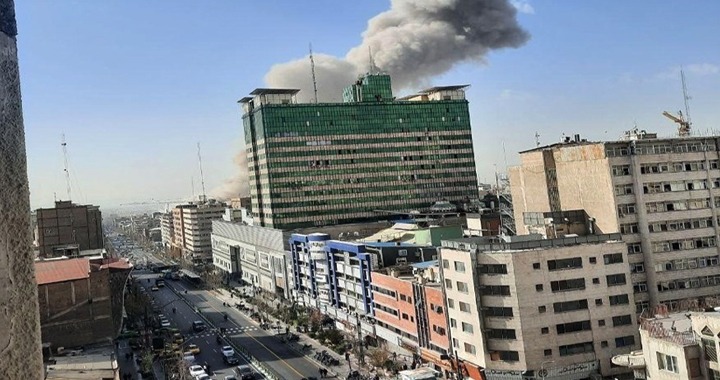
In an unprecedented escalation of tensions, the United States and Israel have jointly launched a series of missile strikes against Iran, targeting several key locations in the Iranian capital, Tehran, and four other major cities. The coordinated attack is part of a broader military operation aimed at neutralizing Iran’s leadership and military infrastructure in response to growing security threats in the region.
According to U.S. and Israeli officials, the operation, which had been months in the making, commenced with missile strikes on critical sites in Tehran, including the offices of Ayatollah Ali Khamenei, Iran’s Supreme Leader, as well as the Presidential Headquarters. The initial attack, confirmed by multiple sources, led to explosions in central Tehran and surrounding areas.
The Fars News Agency reported that at least three major explosions were heard in the heart of Tehran, with missiles targeting prominent locations such as University Road and the Democratic Area. Mehrabad International Airport, one of the busiest air hubs in Iran, was also struck in the early wave of the attacks.
The coordinated strikes also extended to four other cities, including Isfahan, Qom, Karaj, and Kermanshah, where loud explosions have been reported. The missile strikes in these cities have caused significant damage to military and government installations.
Following the missile strikes, Iran’s airspace was closed, with authorities shutting down all flights. In a further move to secure the region, Iraq also closed its airspace, anticipating the fallout from the escalating conflict.
U.S. military officials confirmed that the strikes were part of a broader military operation involving both U.S. and Israeli forces, marking a new chapter in the ongoing geopolitical tensions in the Middle East. This operation is a direct response to what the countries consider growing security risks posed by Iran’s military activities, especially its nuclear ambitions and regional involvement.
The attacks on Tehran were preceded by a coordinated effort to take out key military targets, including Iran’s leadership centers. According to Reuters, Iran’s Supreme Leader, Ayatollah Ali Khamenei, was not present at the targeted location during the attack and has since been relocated to a safe, undisclosed location. There are reports that the U.S. embassy in Doha, Qatar, has also moved its staff to shelters for their safety.
The Iranian government has responded by cutting off all phone and internet services in the affected areas to control the flow of information and prevent further destabilization. However, Iranian state media has confirmed that major infrastructural damage has been sustained in Tehran, especially in areas near the Presidential Headquarters and military facilities. The Mehrabad Airport strike has left several flights grounded, with the airport temporarily disabled.
The precision of the U.S.-Israeli strikes indicates that the attack was intended to inflict substantial damage to Iran’s military command structures and cripple its ability to wage further aggression. The missile strikes on key locations such as Ayatollah Khamenei’s offices signal a clear attempt to dismantle the leadership of the Iranian regime.
The Israeli Defense Ministry indicated that the strikes were part of a larger strategy aimed at deterring Iran from advancing its nuclear program and interfering in regional conflicts. “This action was taken to neutralize an immediate threat to regional security,” stated an Israeli official. “We will continue to act swiftly and decisively in defense of our national security.”
The international community has expressed deep concern about the escalation. The United Nations has called for an immediate ceasefire, urging all parties involved to return to diplomatic dialogue to avoid a wider regional conflict. The European Union has also appealed to both the United States and Israel to show restraint and prioritize diplomatic avenues to de-escalate tensions.
U.S. President, Donald Trump, in his response to the attacks, reaffirmed that the United States acted in response to Iran’s growing aggression in the region. “This military operation is a necessary measure to defend our interests and ensure that Iran no longer poses a threat to our allies or to global security,” President Trump stated. “However, we continue to support efforts for peace and stability in the Middle East and will seek to prevent further escalation.”
Inside Iran, the situation remains highly volatile. Reports of civilian casualties have not been confirmed yet, but the impact on infrastructure is severe. Iran’s government has vowed to retaliate, and Iranian-backed militias across the region are expected to mobilize in response to the U.S.-Israeli military actions.
Iranian military officials have condemned the attacks, labeling them an act of aggression and unprovoked war. However, the Iranian government has not yet publicly disclosed any specific countermeasures or retaliatory actions.



