
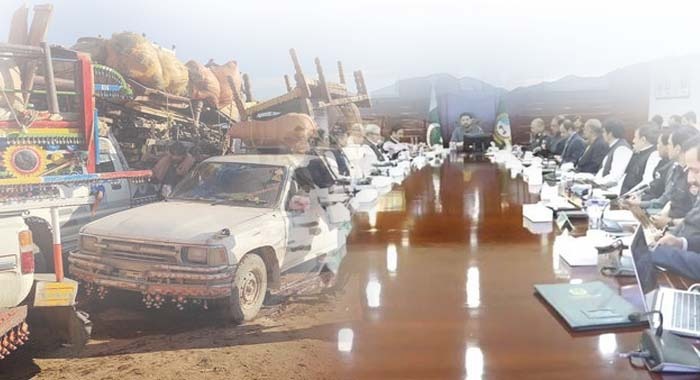
The ongoing displacement of residents from Tirah Valley has brought into focus both the entrenched threat of the banned Tehreek-e-Taliban Pakistan (TTP) and serious administrative and political questions surrounding the handling of Rs4 billion in resettlement funds, particularly involving Pakistan Tehreek-e-Insaf (PTI). Officials and local elders assert that the displacement is a security imperative, forced by terrorists hiding among civilians, rather than a sudden or politically motivated decision.
Security sources and tribal representatives confirm that intelligence-based operations (IBOs) were ongoing in Tirah against terrorists who were deliberately using civilian compounds and villages as cover. This tactic, deployed by Khwarij elements of the TTP, significantly increased the risk of collateral damage and threatened the safety of the local population.
Clear Options Presented to Local Communities
Following unrest among the population, elders approached security forces seeking guidance. Officials told them the situation required action to clear terrorists from civilian areas. The local population was presented with three options:
Voluntarily cleanse compounds and villages of terrorists taking shelter among residents.
If self-cleansing was not feasible, facilitate intelligence-based operations to eliminate terrorist elements safely.
If neither option was viable, temporarily vacate the area to allow security forces to conduct operations without risking civilian lives.
These options were communicated clearly to ensure that the displacement process was controlled, voluntary, and focused on minimizing harm.
High-Level Awareness and Cabinet Approval
The issue of displacement and terrorist removal was discussed at the highest political levels. In September 2025, local elders of Tirah met then Chief Minister KP Ali Amin Gandapur, in the presence of the current Chief Minister (then MPA), to discuss the need to evict terrorists and manage potential displacement.
On October 28, 2025, the Deputy Commissioner Khyber formally wrote to the Provincial Disaster Management Authority (PDMA), highlighting impending displacement and requesting preparation for the process, again in the presence of the current Chief Minister.
On November 14, 2025, the provincial cabinet principally approved Rs4 billion for the resettlement of displaced people from Tirah, months before any formal decision by the local population or notification of displacement. This disproves PTI claims that they were not “taken on board” regarding the resettlement plan.
Voluntary Displacement by Tribal Elders
After three months of attempting to persuade terrorists to vacate residential areas, Tirah elders informed the district administration on December 11, 2025, that negotiations had failed. They expressed readiness for voluntary, temporary displacement to enable security operations.
A 26-member jirga of local notables met the district administration on December 17, 2025, formally placing their demands and priorities regarding displacement. Follow-up jirga meetings continued on December 18 and 19 to finalize the modalities.
On December 26, 2025, the Chief Secretary sanctioned the Rs4 billion for resettlement. On December 31, the jirga met with the Chief Secretary to finalize registration procedures, allocation methods, and other logistical modalities. Displacement was initially scheduled for completion by January 14, 2026, later extended to January 26, 2026.
Scale of Displacement
A total of 19,000 families (approximately 90,000 individuals) were scheduled to be displaced from Bagh Maidan in Tirah. Reports indicate that only 60–65% of families have so far been shifted.
Local sources and security officials note that the displacement is strictly a counterterrorism measure forced by the TTP’s tactic of embedding within civilian populations.
Administrative and Political Concerns
While the displacement was approved and organized through provincial channels, several operational and political concerns have emerged:
Only two registration points, at Bagh and Dawatoi, were established for a population of 90,000, raising questions about intentional mismanagement and crowding.
Reports indicate that registration slips were issued to 14,000 families, of which approximately 6,000 were allegedly non-residents of Tirah—many suspected to be PTI party workers.
Disbursement mechanisms of the Rs4 billion package have been contested between the provincial government and the 24-member jirga, with allegations of non-transparency and political manipulation.
The resettlement process was delayed from mid-November approval to late January 2026, exacerbating hardship for displaced families.
These points have prompted local elders to directly challenge the PTI narrative, questioning the efficacy of registration, fairness in fund disbursement, and apparent exploitation of displacement for political mobilization ahead of February 8 protests.
Key Questions Raised by Elders and Security Observers
How can PTI claim they were not consulted when cabinet approval for the Rs4 billion package predated the jirga decision by months?
Why were only two registration centers provided for 90,000 people?
Will PTI respond to the jirga’s reservations regarding registration processes and fund disbursement?
Why were non-residents allegedly issued registration slips, potentially undermining fairness and transparency?
Does the delayed process and controversial allocation suggest PTI sought to exploit the displacement for political mobilization?
Security Perspective
Security officials emphasize that displacement is a counterterrorism imperative, not a political decision. The TTP’s deliberate embedding within civilian populations left no alternative but to conduct IBOs alongside voluntary displacement. Officials warn that political exploitation of such operations—particularly by PTI or other actors sympathetic to banned groups—directly undermines security efforts, endangers civilians, and strengthens terrorist narratives.
The situation in Tirah continues to be closely monitored, with operations ongoing against terrorist hideouts while authorities ensure civilian safety. Elders maintain that resolving the displacement efficiently and transparently is essential to both restoring public confidence and denying terrorists any civilian cover.



