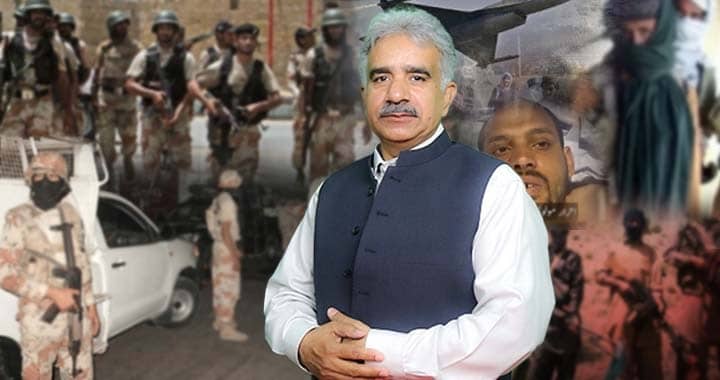
Pakistan’s recent response to cross-border terrorism in the wake of the Karachi Rangers camp attack reflects a shift that is no longer reactive in the narrow sense but structurally defensive, intelligence-driven, and strategically expansive. The sequence began with the capture of an injured attacker identified as Usman, who, according to his statement, detailed training routes, facilitation networks, and cross-border movement linked to Afghanistan. He reportedly described training arrangements, commanders involved, logistics of infiltration, the preparation of suicide jackets, and the facilitation chain inside Pakistan, including a local facilitator named Hadi. This single confession, in my view, becomes the pivot around which the entire recent escalation is being interpreted by security planners.
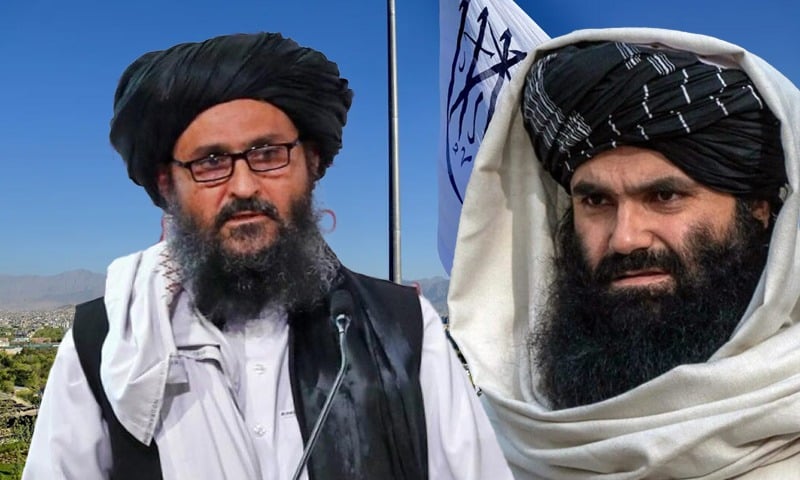
Following this development, statements emerged from Taliban spokesperson Zabihullah Mujahid and later from Hayatullah Muhajir Farahi, indicating that while they do not seek war, they would respond to Pakistani strikes. This contradiction itself is central to the current crisis narrative. On one hand, there is an assertion of restraint and avoidance of war, while on the other, there is an explicit claim of retaliation capacity. In practical terms, such rhetoric raises questions about whether the intent is deterrence or escalation management, especially when non-state actors continue to operate from within Afghan territory.
Pakistan’s air operations targeted areas in Paktika, Kunar, and Paktia following the Karachi attack. According to Pakistani official communication, these strikes were directed at terrorist infrastructure and resulted in the elimination of approximately 29 militants, including individuals linked to Jamaat-ul-Ahrar. There are also reports of a high-value commander being among those targeted. Afghan authorities, however, presented a contrasting account, claiming civilian casualties, including women and children. This divergence of casualty narratives is not new in the region, but it continues to shape diplomatic friction and international perception.
The Taliban response, particularly from Zabihullah Mujahid, framed Pakistan’s claims as illogical and accused Pakistani authorities of routinely blaming Afghanistan for internal incidents. He further argued that Pakistan should focus on internal security rather than external attribution. At the same time, however, he maintained that Afghanistan reserves the right to respond to Pakistani strikes, including statements suggesting alternative means of retaliation, including ground-based responses if aerial capability is limited. This dual messaging, restraint paired with retaliation, creates strategic ambiguity rather than clarity.
The second major dimension of the discussion revolves around Hayatullah Muhajir Farahi’s remarks, where he stated that the Taliban would respond at an appropriate time and described Pakistani strikes as an attempt to undermine their achievements. This again reinforces a pattern where narrative framing becomes as important as kinetic activity. The messaging suggests that Afghanistan views these strikes not merely as counterterrorism operations but as political signaling against its governance claims.
From Pakistan’s perspective, the core issue remains unchanged: terrorist groups including Jamaat-ul-Ahrar, Tehreek-e-Taliban Pakistan, and others continue to find operational space across the border. Pakistan has repeatedly raised concerns that Afghan territory is being used as a safe haven for planning, training, and logistical preparation. These concerns are not isolated statements but part of a sustained diplomatic and security record presented to Afghan authorities over time.
The broader context, however, is more complex. Multiple militant entities are operating across the region, including Daesh-Khorasan, various factions of TTP, and separatist groups active in Balochistan. Jamaat-ul-Ahrar itself, which emerged from earlier splinter dynamics within the militant ecosystem, has reappeared in operational relevance in recent incidents. The Karachi attack is being viewed as part of this wider networked militancy rather than an isolated event.
The guest analysis further situates Karachi as a symbolic and strategic target. Karachi is not just another urban center; it is an economic hub, an international gateway, and a critical node in Pakistan’s financial and maritime infrastructure. Historically, it has also been a focal point of layered violence, from ethno-political conflict to organized militancy. Any attack on Karachi, therefore, is interpreted not only as a security breach but as a message aimed at economic and psychological disruption.
Within this framing, the argument expands into historical continuity, referencing earlier phases of urban conflict in Karachi and suggesting that destabilization has often been systematic rather than incidental. The implication is that contemporary terrorism is part of a longer arc of strategic pressure applied through urban insecurity.
The discussion also extends beyond Afghanistan. It incorporates claims of regional and international dimensions, including references to external intelligence networks, geopolitical rivalries, and competing strategic interests in the region. These include allegations of involvement or influence by multiple actors and intelligence frameworks, which are interpreted as part of a broader hybrid warfare environment. Whether all such claims are verifiable or not, they reflect the speaker’s assessment of a multi-layered threat ecosystem rather than a single-state problem.
A significant portion of the analysis focuses on organizational complexity. The speaker highlights that there are numerous militant groups operating in the region, each with different objectives, structures, and ideological motivations. These include TTP factions, Jamaat-ul-Ahrar, Islamic State Khorasan Province, and various Baloch separatist groups. The argument presented is that these groups do not operate in isolation but often intersect in geography, logistics, and operational learning.
The Bajaur intelligence-based operation is cited as a parallel success, where key commanders linked to militant activity were neutralized. This is presented as evidence that counterterrorism operations inside Pakistan are ongoing and effective, even as cross-border threats continue.
The Afghan Taliban leadership’s statements about retaliation are repeatedly questioned in terms of capability and intent. The central argument is that if the Afghan authorities do not act decisively against terrorist sanctuaries, then cross-border kinetic responses will continue. At the same time, there is a warning embedded in the analysis: if retaliation against Pakistan escalates further, the consequences will move beyond controlled engagement, and external diplomatic restraint may become less effective.
The geopolitical layer of the discussion brings in broader international actors, including the United States, Russia, China, and regional states. The speaker argues that global counterterrorism consensus is inconsistent and often selective, particularly when it comes to enforcement of agreements and obligations related to non-state armed groups in Afghanistan. The Doha framework is referenced as an example of unimplemented or partially implemented commitments.
Another dimension is the allegation of proxy networks and hybrid warfare, including information warfare and propaganda ecosystems. The claim is that narratives around ethnicity, geography, and identity are being weaponized to destabilize Pakistan internally, particularly in sensitive regions such as Balochistan and Khyber Pakhtunkhwa.
Finally, the opinion turns inward toward policy recommendations. The core argument is that Pakistan must strengthen border management, intelligence integration, counterterrorism departments, and surveillance infrastructure. This includes buffer zones along the Afghan border, enhanced technological monitoring through drones and surveillance systems, and restructuring of local law enforcement capacity.
Equally important, according to the analysis, is governance reform. The speaker emphasizes that long-term stability cannot be achieved through kinetic operations alone. It requires addressing administrative gaps, local grievances, development disparities, and economic vulnerabilities that allow militant recruitment and mobility.
There is also a strong emphasis on countering terror financing networks, disrupting logistical supply chains, and regulating undocumented movement across borders. Alongside this, the narrative warfare dimension is highlighted as a critical battlefield, where perception management is seen as equally important as operational success.
The concluding argument is that Pakistan’s counterterrorism strategy must be comprehensive, combining intelligence operations, border security, internal reform, and diplomatic pressure. Without this multi-layered approach, the cycle of attacks, retaliations, and counter-retaliations will continue to define the regional security environment.