
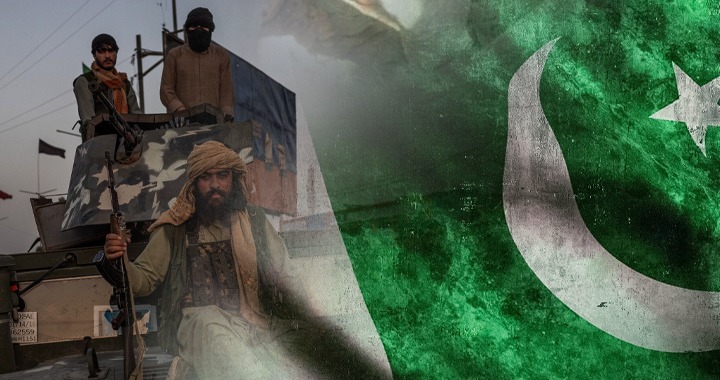
For years, the Taliban has repeated essentially the same promise: Afghan soil will not be allowed to be used against any neighbouring country, particularly Pakistan.
The promise has been heard so often that it has almost become a diplomatic cliché.
Yet there is one inconvenient problem with clichés: eventually, reality demands an answer.
And the reality confronting Pakistan is that attacks by the banned Tehreek-e-Taliban Pakistan (TTP) have continued, while Islamabad maintains that the group operates from sanctuaries and enjoys space and support inside Afghanistan. The United Nations also identifies the TTP as a major terrorist organization rooted along the Afghanistan-Pakistan border.
So perhaps the central question is no longer whether the Taliban says Afghan territory will not be used against Pakistan.
The question is much simpler:
What has the Taliban actually done to ensure that it is not?
From Denial to Inaction
This is where the dispute between Islamabad and Kabul has become fundamentally different from an ordinary diplomatic disagreement.
Pakistan’s concern is not simply that the Taliban disagrees with its assessment of the security situation. The deeper problem is what Islamabad sees as a repeated pattern: denial when evidence is presented, assurances when pressure increases, and insufficient action against the terrorists Pakistan identifies as responsible.
The Taliban’s ambassador in Islamabad has now said Kabul understands Pakistan’s concerns and does not want Afghanistan used against Pakistan. He has also argued that security allegations should be specific, based on identifiable individuals, networks and concrete cases.
But that raises another question:
How many specific cases, names, networks and incidents are required before a government stops asking for more evidence and starts acting on the evidence already provided?
Pakistan has repeatedly demanded action against TTP leadership and infrastructure operating from Afghanistan. The continued deterioration of bilateral relations has been closely linked to the group’s attacks from Afghan territory.
The issue, therefore, is no longer simply whether Kabul accepts Islamabad’s concerns.
It is whether Kabul is willing or able to do something about them.
Unable or Unwilling?
That leaves the Taliban facing an uncomfortable choice.
If it genuinely does not want Afghan territory used against Pakistan, why has it failed to eliminate the TTP’s ability to operate against its neighbor?
There are only a few possible explanations.
Perhaps the Taliban cannot control the areas where these terrorists operate.
Perhaps it does not possess sufficient intelligence or operational capacity.
Perhaps it does not consider the TTP a sufficiently serious threat to justify decisive action.
Or perhaps, despite its denials, it is unwilling to confront a group with which it shares ideological, historical and organizational affinities.
Whatever the explanation, the outcome for Pakistan remains the same.
Terrorists continue to operate. Pakistan continues to suffer attacks. And the Taliban continues to repeat its assurances.
That is precisely why the credibility of those assurances has eroded.
Pakistan Did Not Wake Up One Morning and Strike Afghanistan
There is another part of this argument that deserves far greater attention.
Whenever Pakistan conducts strikes inside Afghanistan, the Taliban immediately presents them as an assault on Afghan sovereignty.
The sovereignty argument cannot simply be dismissed. Military action across an international border is a serious matter.
But the question is: how did Pakistan reach the point where it considered such action necessary?
Islamabad did not suddenly discover Afghanistan on its map and decide to attack it.
Pakistan has spent years demanding that Kabul prevent terrorists from using Afghan territory to attack Pakistan. The country’s position has been that cross-border terrorism represents a direct security threat and that the Afghan Taliban must take effective action against TTP sanctuaries.
From Islamabad’s perspective, the sequence is therefore straightforward:
First came the attacks.
Then came the identification of their sources.
Then came diplomatic protests and demands for action.
Then came assurances.
Then came more attacks.
And eventually, Pakistan began taking matters into its own hands.
That does not make every military action automatically beyond scrutiny. Nor does it erase the risks to civilians or the dangers of escalation.
But it does make one question unavoidable:
If Kabul repeatedly refuses or fails to remove the threat, what does it expect Pakistan to do when its citizens continue to be killed?
Sovereignty Cannot Become a Shield for Terrorists
The Taliban ambassador has argued that military action should be replaced by diplomatic engagement.
That sounds reasonable in principle.
But diplomacy is useful only when it produces results.
A border cannot be secured through statements alone. A terrorist sanctuary does not disappear because diplomats exchange assurances. And a suicide bomber does not stop because two governments agree that they are neighbours.
If the Taliban genuinely believes that Afghan soil must never be used against Pakistan, then the most convincing response is not another statement.
It is action.
Disarm the TTP.
Arrest its leadership.
Dismantle its infrastructure.
Prevent recruitment and training.
Stop cross-border attacks.
And demonstrate, through verifiable measures, that Afghan territory is no longer available to terrorists targeting Pakistan.
Until then, Islamabad has little reason to treat another assurance as anything more than another assurance.
The Taliban’s Responsibility
There is also an irony in Kabul’s current argument.
The Taliban insists that Pakistan should respect Afghanistan’s sovereignty.
Pakistan can reasonably respond that Afghanistan’s sovereignty carries responsibilities as well as rights.
A state cannot demand that its neighbors respect its territorial sovereignty while allowing terrorists based within that territory to repeatedly attack those neighbors.
Nor can sovereignty become a shield behind which terrorist organizations operate with impunity.
This is ultimately the dilemma the Taliban has created for itself.
If it is genuinely unable to control terrorist groups operating from Afghan territory, then its claim to effective sovereign authority is weakened.
If it is able to control them but chooses not to, then its assurances become increasingly difficult to believe.
And if it is both able and willing to act, then there is only one obvious question:
Why hasn’t it done so decisively enough to end the problem?
Pakistan’s security concerns, therefore, are not merely a debate over whose intelligence assessment is correct.
The more fundamental issue is the Taliban’s record of denial followed by inaction.
The Taliban can continue saying Afghanistan will never be used against Pakistan.
But after years of promises, the burden is no longer on Pakistan to listen to another assurance.
The burden is on Kabul to prove it.
And until the TTP threat emanating from Afghan soil is genuinely dismantled, the Taliban’s repeated promise will remain what it has increasingly become: a sentence that sounds reassuring in diplomatic rooms while the ground tells a very different story.



