
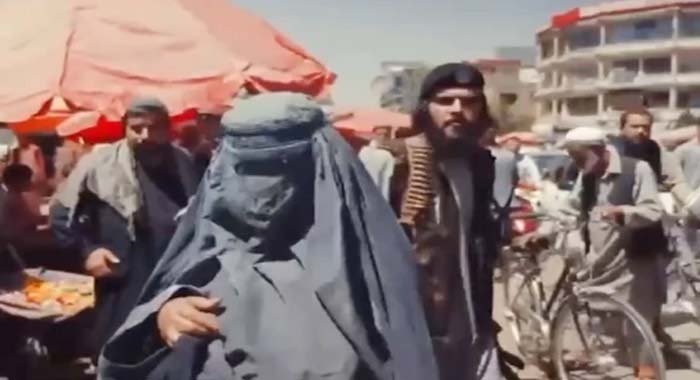
A new report has raised renewed concerns over the situation of women’s rights in Afghanistan, alleging that gender-based restrictions have become deeply embedded in the policies and governance practices of the Taliban administration since its return to power in 2021.
According to the report published by British magazine The New World, the Taliban authorities have pursued policies that significantly restrict women’s participation in education, employment, and public life. The report alleges that these measures have created an environment where Afghan women face severe limitations on their fundamental rights and opportunities for a dignified life.
The report states that since 2021, girls in Afghanistan have been prohibited from continuing education beyond the sixth grade, while women’s access to employment opportunities has also been increasingly restricted.
According to the publication, the exclusion of women from education and professional spaces has had broader consequences for Afghanistan’s social and economic development. The report highlights concerns that the decline in the number of educated and trained professional women could negatively affect essential sectors, including children’s education, healthcare services, and future opportunities for Afghan society.
The United Nations has also warned, according to the report, that the reduction of skilled professional women could create long-term challenges for Afghanistan’s development and the delivery of critical services. The report further states that women’s representation in government employment declined after 2023, decreasing from 21 percent to 17.7 percent.
The figures have been presented as an indication of the continued reduction of women’s participation in public institutions and decision-making spaces under the current system.
The report also highlights the economic consequences of limiting women’s participation in society, stating that Afghanistan is losing approximately $84 million annually due to women’s exclusion from economic activities. It warns that these losses could increase if restrictions continue.
Experts have emphasized that restricting women’s education and employment not only affects individual rights but also weakens economic growth, institutional capacity, and the overall development of the country.
Afghan taekwondo athlete and human rights advocate Marzieh Hamidi has criticized the Taliban’s policies toward women, stating that the authorities have removed women from public life, restricted access to education, and institutionalized discriminatory practices. She argued that these measures represent a broader effort to limit women’s presence in Afghan society and prevent their participation in public, professional, and educational spheres.
The report warns that continued restrictions could move Afghanistan closer to a system where women are entirely excluded from public life. Human rights organizations and international observers have repeatedly emphasized the importance of protecting women’s access to education, employment, healthcare, and participation in society as essential components of Afghanistan’s future stability and development.
The ongoing situation remains a major humanitarian and social concern, with calls for policies that ensure equal opportunities, preserve human dignity, and allow all Afghan citizens to contribute to the country’s future.



