
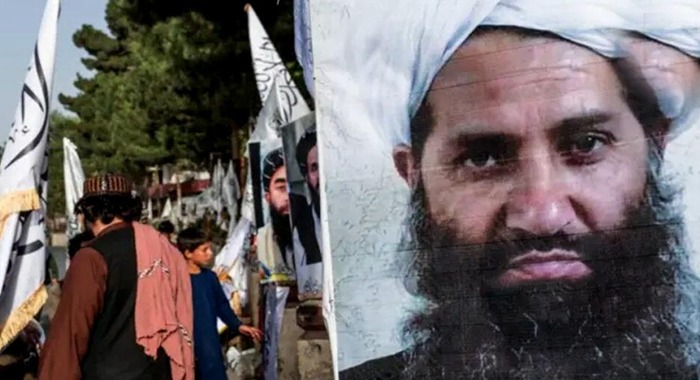
The recent wave of targeted attacks on Taliban leadership in Afghanistan has not only resulted in significant casualties but has also triggered an internal conflict between two major factions within the Taliban, deepening the ideological and power divide. The escalating tensions between the Kandahari and Kabul groups within the Taliban could have far-reaching implications for Afghanistan’s stability and its relations with neighboring Pakistan.
Afghan media reports indicate that Mullah Hibatullah Akhundzada, the Supreme Commander of the Taliban, was killed in a recent attack in Kandahar, one of the Taliban’s strongholds. However, the Pakistani government has refrained from confirming or commenting on these reports, maintaining its stance of neutrality in the ongoing conflict. A statement issued by Pakistan emphasized that the series of attacks have brought the two major factions within the Taliban—the Kandahari group and the Kabul group face to face, escalating tensions to dangerous levels.
The Kabul group, led by Sirajuddin Haqqani, has been highly active in various parts of the country and has played a pivotal role in commanding several of the Taliban’s most senior commanders. Meanwhile, recent airstrikes in the Spin Boldak area reportedly destroyed a vehicle carrying key Taliban commanders, including Nida Ahmad, the son-in-law of Mullah Hibatullah and a prominent figure in the Kandahari faction. These strikes have raised serious concerns over the potential for further factional violence within the Taliban, particularly given the personal and ideological connections between the victims.
Both Mullah Hibatullah and Nida Ahmad shared a common background, being from the same family, and were known for their hardline stance against the Kabul group. The fact that both were killed in the span of days in attacks linked to each other has led some analysts to suggest that these events could be more than mere coincidences. The similarity in their ideological positions and the fact that both figures were pivotal in the Kandahari faction’s leadership adds an intriguing layer of complexity to the situation.
These developments shine a spotlight on the ongoing internal divisions within the Taliban, revealing a growing rift between the Kandahari and Kabul groups, each with competing visions for the future of Afghanistan. The Kandahari faction, which has historically maintained control over key regions and is more traditionalist in its approach, is now facing challenges to its authority from the more urban-centric and militarily influential Kabul group.
Experts note that the growing divide could undermine the Taliban’s ability to function as a unified political and military force, potentially fracturing the group along ideological lines. These internal disputes could also further destabilize the already volatile region, with Pakistan’s role in the ongoing conflict remaining central. The increasing militarization of the Pakistan-Afghanistan border, exacerbated by airstrikes and cross-border tensions, has already strained relations between the two nations.
The escalation of internal strife within the Taliban carries significant regional and global consequences. The two major factions’ dispute could potentially affect not only Afghanistan’s political stability but also the security dynamics of its neighboring countries. Pakistan, in particular, is facing increased pressure as it grapples with security concerns related to Taliban infighting, cross-border militant activity, and the broader geopolitical ramifications of a fractured Taliban.
In addition to internal divisions, Afghanistan’s political landscape remains highly fragile. The possibility of a power vacuum or further instability could prompt increased international attention on Afghanistan, especially as nations closely monitor the Taliban’s ability to govern effectively. The airstrikes targeting Taliban leadership have already sparked questions about the role of external actors in the conflict, adding an additional layer of complexity to an already sensitive geopolitical environment.
As the Taliban leadership faces its most significant internal challenge since taking power, the future of Afghanistan remains uncertain. The impact of these killings could reverberate throughout the country, affecting not only Taliban command structures but also the broader political and social fabric of Afghanistan.
The Kabul group’s influence appears to be on the rise, but the Kandahari faction, with its deep-rooted ties to Afghanistan’s rural areas and its hardline ideology, may not easily concede power. The growing conflict between these factions, exacerbated by personal rivalries and ideological differences, could set the stage for prolonged instability.
Moreover, the internal tensions within the Taliban have the potential to influence Pakistan-Afghanistan relations in significant ways. Cross-border military operations, airstrikes, and the possibility of new conflicts along the porous border could escalate if these internal divisions worsen.
The international community is watching the situation closely, hoping that the current instability does not spiral into a full-blown civil conflict. Calls for dialogue, de-escalation, and a renewed commitment to peace have intensified, though the path forward remains fraught with challenges.



