
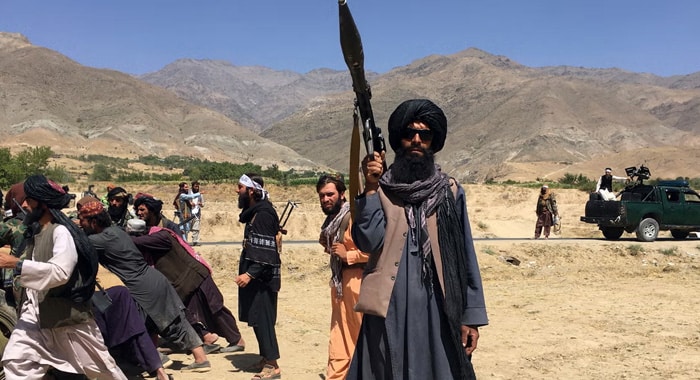
Five years after the political transition of 2021, Afghanistan continues to face compounded economic, humanitarian, and security challenges, with observers warning that state control has not translated into effective governance or long-term stability.
According to multiple recent assessments and monitoring reports, Afghanistan’s economic indicators have continued to deteriorate over the period. Gross Domestic Product (GDP) per capita is estimated to have declined by approximately 34%, while poverty levels have surged, with up to 85% of the population now requiring humanitarian assistance. The national economy remains stagnant, constrained by limited international engagement, restricted financial flows, and weak domestic production capacity.
Humanitarian agencies further report that nearly 30 million people require some form of assistance, reflecting persistent food insecurity, unemployment, and reduced access to essential services. The prolonged economic downturn continues to place significant pressure on international aid systems.
Alongside economic decline, security dynamics remain a key area of concern. Analysts point to a complex and evolving security environment marked by recurring cross-border tensions, allegations of militant movement across porous frontiers, and continued reports of safe havens being utilized by non-state armed actors. These conditions, according to regional security observers, have contributed to periodic instability along border regions and complicated broader counterterrorism coordination efforts.
Security experts further note that the alleged facilitation or tolerance of militant networks such as the Tehreek-e-Taliban Pakistan (TTP) has heightened regional security sensitivities. These developments are widely viewed as a contributing factor to strained relations with neighbouring states and intermittent disruptions in border trade and connectivity. While such claims remain subject to ongoing verification and geopolitical debate, they continue to influence regional security assessments.
Internally, Afghanistan’s security architecture is also described as centralized, with limited institutional checks and evolving command structures. Observers suggest that while internal security control has been largely consolidated, challenges persist in countering fragmentation risks, localized instability, and the potential for re-emergence of armed opposition elements in remote areas.
Human rights and governance monitors further highlight that restrictions on women’s participation in education, employment, and public life have reduced broader societal resilience, indirectly affecting long-term socio-economic stability and security sector sustainability.
Experts emphasize that the combination of economic contraction, governance limitations, and complex security pressures has created a fragile equilibrium. While territorial control remains largely intact, concerns persist regarding the durability of peace and the effectiveness of long-term stabilization mechanisms.
“Security control alone does not equate to sustainable stability,” analysts note, adding that enduring peace requires inclusive governance, functional institutions, and constructive regional engagement.
The report concludes that Afghanistan’s current trajectory reflects intertwined economic and security challenges. Without structural reforms, improved governance inclusion, and clearer security cooperation frameworks, the country risks continued instability and prolonged humanitarian dependence.
International stakeholders continue to stress that sustainable stability in Afghanistan will depend on inclusive political processes, strengthened institutions, and coordinated regional security approaches aimed at reducing cross-border tensions and preventing militant spillover.



