
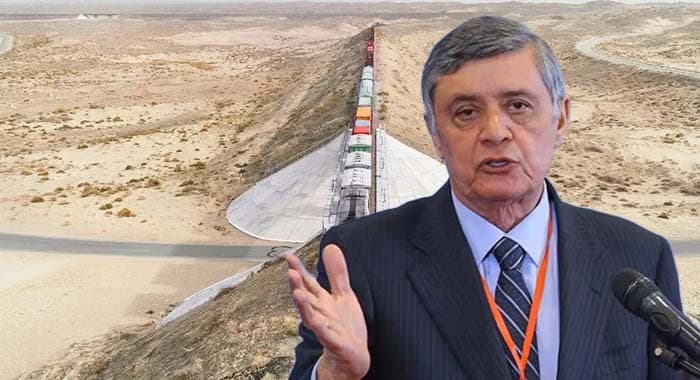
Tensions surrounding Afghanistan’s security landscape are once again casting a long shadow over regional connectivity projects, raising a fundamental question that stakeholders can no longer afford to ignore: who bears responsibility for the persistent instability?
Zamir Kabulov, Russia’s special envoy, has acknowledged that friction between Pakistan and the Afghan Taliban is delaying key regional initiatives, including a proposed railway and energy infrastructure projects involving Moscow, Tashkent, and Islamabad. However, beneath the diplomatic phrasing lies a deeper and more consequential reality.
The proposed Trans-Afghan railway, envisioned as a 573-kilometre link connecting Central Asia to South Asia via Afghanistan, remains stalled at the design stage. Despite agreements signed in 2021 and repeated assurances from multiple parties, tangible progress has yet to materialise. Russian and Uzbek officials have already indicated delays in feasibility studies, with timelines now stretching well beyond earlier projections.
While official narratives often point to “tensions” or “security concerns,” the core issue is far more direct. Afghanistan, under Taliban control, continues to be viewed as a permissive environment where multiple terrorist organisations operate with relative freedom. Pakistan has repeatedly presented evidence that the banned Tehreek-e-Taliban Pakistan (TTP), along with other groups such as the BLA and its Majid Brigade faction, maintain operational presence across Afghan territory.
Despite these claims being raised at bilateral, regional, and international forums, including the United Nations and European platforms, the Afghan Taliban have consistently rejected them. This denial stands in stark contrast to the pattern of cross-border infiltration attempts, attacks on Pakistani soil, and the identification of militants with links to Afghan sanctuaries.
Security experts note that large-scale infrastructure projects cannot advance in an environment where the host territory fails to guarantee basic security assurances. The absence of a joint security mechanism for the railway project further underscores the lack of trust among participating stakeholders. According to reports, proposals for a coordinated security framework were dismissed, leaving each country responsible for its own segment, a model widely seen as inadequate given the cross-border nature of the threat.
Regional leaders, including Shavkat Mirziyoyev, have repeatedly emphasised the importance of accelerating connectivity initiatives. Yet, without credible and verifiable action against militant networks, such ambitions remain constrained by ground realities.
At the heart of the issue lies a contradiction that continues to hinder progress. On one hand, the Afghan Taliban seek economic engagement, regional integration, and international legitimacy. On the other, persistent concerns about terrorist safe havens, cross-border militancy, and denial of responsibility continue to erode confidence.
For Pakistan and its regional partners, the question is no longer whether instability exists, but whether the assurances being offered are matched by action on the ground.
Until that gap is addressed, projects like the Trans-Afghan railway risk remaining not symbols of connectivity, but reminders of a region where security promises remain unfulfilled.



