
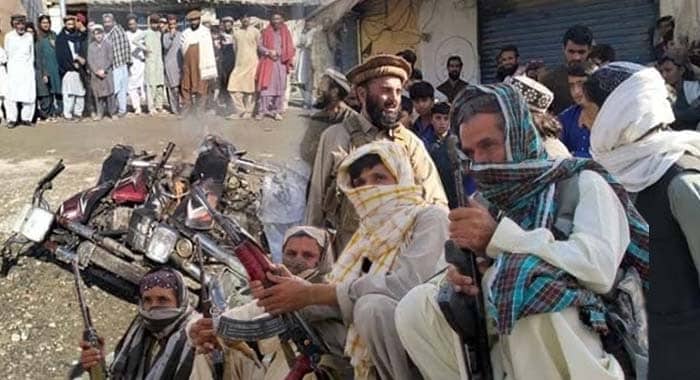
A growing wave of public resistance against terrorist groups in Khyber Pakhtunkhwa is underscoring the importance of popular support and community participation in Pakistan’s ongoing War on Terrorism, with residents increasingly refusing to allow armed groups to establish their presence or dictate life in their localities.
In a significant development, residents of Karikot in Lower South Waziristan have taken up arms against terrorists operating in the area, moving to resist their movement and activities. Local residents also took action against members of a banned organisation, setting their motorcycles on fire in a demonstration of their determination to prevent terrorists from regaining a foothold in the area.
The development comes a day after residents of Gomal in Tank district foiled an attempt by armed men to abduct a local shopkeeper. In the initial confrontation, local residents opened fire, killing two suspected kidnappers and rescuing the shopkeeper. When additional armed associates subsequently arrived to retrieve the bodies of the two men, residents again resisted, killing another suspected accomplice while a fourth person reportedly escaped.
The incident represents a particularly significant demonstration of community resistance, as residents not only prevented an abduction but also stood their ground against armed individuals attempting to recover their associates. Police investigations into the incident are continuing.
Similar expressions of local resistance have also emerged in Orakzai district, where tribal communities and members of local peace committees have confronted terrorist groups attempting to infiltrate residential areas.
In August, members of a local peace committee in the Sangharha area of Orakzai thwarted an infiltration attempt by Lashkar-e-Islam terrorists, killing at least two attackers and injuring several others. Earlier, residents of the Mullah Khel tribe had also mobilised to prevent terrorists from entering a village in the district.
These developments point towards an increasingly important dimension of Pakistan’s counterterrorism campaign: the rejection of terrorism by the very communities that extremist groups seek to intimidate, exploit and control.
Public support is not merely an additional advantage in the War on Terrorism; it is one of its fundamental pillars.
While security forces and law enforcement agencies undertake intelligence-based operations, dismantle terrorist networks and protect vulnerable communities, the willingness of local populations to deny terrorists shelter, freedom of movement, recruitment opportunities and social acceptance is equally consequential.
Terrorist organisations depend not only on weapons and manpower but also on the ability to intimidate communities into silence, exploit local grievances and establish parallel systems of coercion. When residents collectively resist these attempts, the groups lose an important part of the environment that enables them to operate.
The experiences of areas previously affected by militancy have repeatedly demonstrated that sustainable peace cannot be secured through security operations alone. It also requires public confidence, community cooperation, functioning local institutions and an unequivocal rejection of extremist violence.
The emerging response in Lower South Waziristan, Tank and Orakzai therefore carries significance beyond the individual incidents. It reflects a public determination to reclaim localities from terrorist intimidation and prevent the return of an environment in which armed groups could operate with impunity.
For Pakistan’s broader counterterrorism strategy, strengthening this public resolve, protecting communities willing to resist terrorism and ensuring their effective coordination with security institutions will remain essential to achieving lasting peace.



