
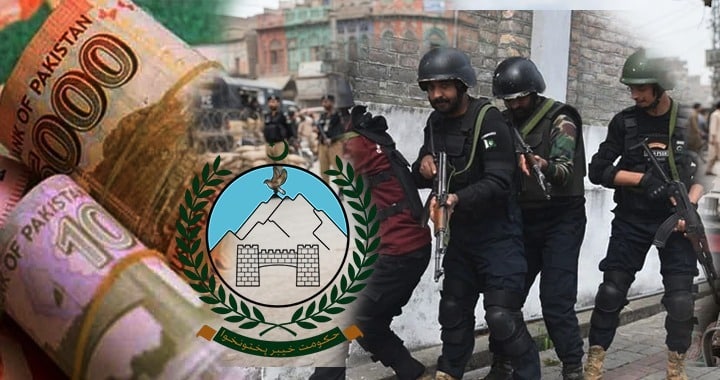
Khyber Pakhtunkhwa, or KP in short, has received Rs799.359 billion under the additional one percent share of the federal divisible pool allocated for the war on terror from 2010-11 through September 2026. The figure is staggering, particularly when viewed against the persistent terrorist violence that continues to haunt the province. The allocation recognizes the extraordinary burden imposed by terrorism on KP, but it also raises a question that successive provincial governments cannot indefinitely avoid: what has the province achieved with the resources made available to it?
The funding is not a personal grant to any political party. It is public money intended to help the province cope with the economic damage, infrastructure losses and security pressures associated with terrorism. Yet when a government repeatedly invokes the security crisis to demand more resources, it must also accept responsibility for explaining how those resources have been used and what measurable improvements they have produced.
PTI has governed Khyber Pakhtunkhwa since 2013, apart from the brief transition between its successive administrations. That prolonged tenure makes accountability particularly relevant. A party cannot claim the credit for its years in office while treating the province’s continuing security crisis as somebody else’s responsibility.
The December 2014 Army Public School attack remains one of the darkest chapters in Pakistan’s history. It took place during PTI’s first provincial government, led by Pervez Khattak. The fact that the attack occurred under that administration does not establish that the provincial government caused it, but it remains an unavoidable part of the security record against which the party’s years in power must be assessed.
The question is not whether PTI alone is responsible for terrorism. Terrorist networks, regional instability, developments in Afghanistan and failures across successive governments all form part of a much larger picture. The question is whether a party that has enjoyed more than a decade of provincial power can explain why ordinary citizens, police officers and security personnel continue to pay such a devastating price.
Recent allegations concerning former chief minister Ali Amin Gandapur and an alleged payment to a proscribed group during a visit to his home district of Dera Ismail Khan also demand clarity. Such claims must be examined on the basis of verifiable evidence, not treated as established facts merely because they are politically damaging. Gandapur and the relevant authorities should be judged against documented records and any formal findings.
The same standard applies to provincial expenditure. How much of the war-on-terror allocation went toward strengthening police capacity, improving intelligence coordination, protecting vulnerable communities and supporting the families of those who lost their lives? What independent audit can demonstrate that spending translated into better security?
The province’s allocation for 2026-27 has been estimated at Rs149.076 billion, according to figures reported in October 2026. That makes transparent expenditure and measurable performance even more important.
PTI cannot reasonably demand public confidence on the strength of political slogans alone. Nor can the federal government escape scrutiny over its own responsibilities. Every government that has handled these funds owes citizens an account of their use.
Nearly Rs800 billion is not a rhetorical talking point. It is a public obligation. The people of KP deserve to know what it bought, what it achieved and why the security crisis remains so severe.



