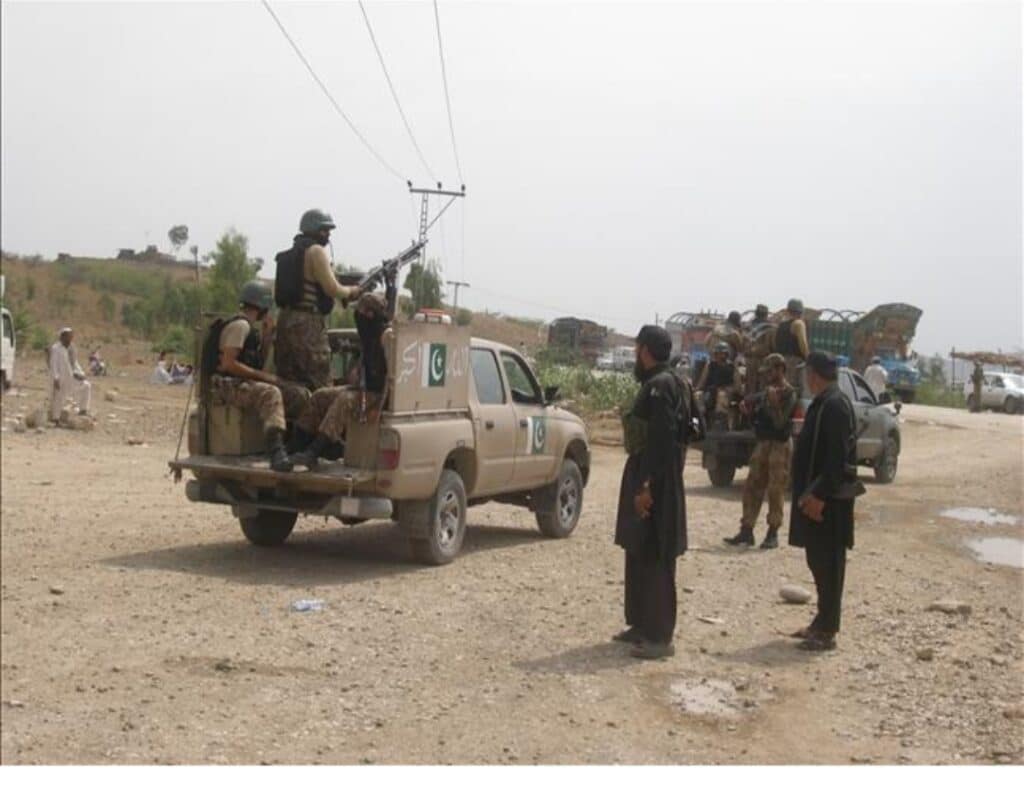
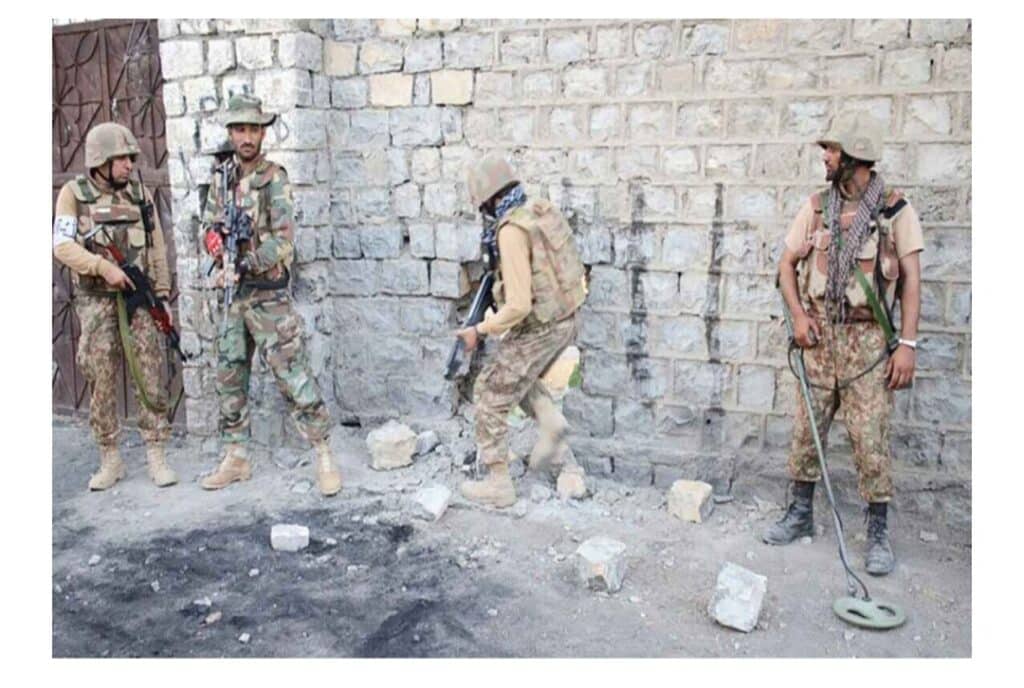
Police peace committees operating in southern Khyber Pakhtunkhwa, particularly in Bannu and Lakki Marwat, have increasingly become a source of institutional confrontation, raising serious questions about the writ of the state, police discipline and the exercise of authority outside the established legal framework. What was once presented as a local response to terrorism has developed into a contentious security arrangement, with the committees now facing scrutiny over their activities and their relationship with the provincial police.
The controversy has now extended to Kohat, where police personnel have announced the formation of a similar committee after protesting departmental action against colleagues. The development has intensified concerns that these groups are seeking to establish influence beyond the limits of the police command structure, creating the risk of a parallel authority in an already fragile security environment.
The issue is no longer simply about the security concerns of frontline personnel. It is about whether organized groups within the police can pressure the state, obstruct its administrative functions and demand a position of authority outside the established chain of command.
When a police committee begins challenging the police
The events in Bannu during August provided a clear indication of how far the dispute had escalated.
Police Peace Committee members objected to the transfer of seven personnel associated with the group. Its leadership called for a boycott of duties, resulting in disruptions to police services and the traffic system in several areas.
The dispute was eventually resolved through negotiations, with the committee submitting an 11-point written assurance to the regional police officer. Under the undertaking, members agreed not to participate in protests, strikes, sit-ins or political activities, and promised not to arrest anyone without legal authority.
The document also stipulated that action against suspects in terrorism and other serious cases would be taken through authorized law enforcement agencies, particularly the Counter-Terrorism Department. Committee members further agreed to cooperate with security institutions only on the directions of authorized officials.
The need for such an undertaking itself raises an important question: why had a group of police personnel reached a point where its activities required formal restrictions on protests, arrests and the exercise of authority?
The subsequent developments suggest that the written assurance has not ended the institutional confrontation.
A security burden shifted to other forces
The dispute in Bannu and Lakki Marwat has had consequences beyond transfers and departmental disagreements.
In August, the district police officer of Bannu warned the regional police officer that protests by the peace committee, road blockades, firing in the air and threats allegedly received by police officers had affected the movement of the district administration and judiciary.
The police official also expressed concern over the withdrawal of personnel from sensitive installations and the possibility of renewed protests. He requested the deployment of 450 Frontier Constabulary personnel in Bannu to secure government installations and maintain law and order.
In Lakki Marwat, additional Frontier Constabulary deployment was also sought for the district jail, judicial complex and district administration.
These developments expose a serious contradiction. At a time when southern KP requires a stronger and more disciplined police presence, the state has had to consider deploying additional forces to protect its own institutions amid a dispute involving police personnel associated with the committees.
The consequences extend to the administration of justice, the security of government buildings and the ability of public officials to perform their duties without disruption.
The same pattern reaches Kohat
The announcement of a peace committee in Kohat has brought the issue into sharper focus.
On November 23, police personnel staged a protest at Kacheri Chowk against the dismissal of two colleagues. The protesters reportedly objected to departmental action linked to the formation of a committee on the pattern of those operating in Bannu and Lakki Marwat.
The protest was called off after some demands were accepted. However, five police personnel were subsequently transferred to other districts, including Kohistan, and further demonstrations were announced.
The episode demonstrates how the committee model is spreading through organized pressure rather than through a clearly defined legal and administrative framework.
If such groups begin to establish themselves in additional districts, the provincial police could face a situation in which departmental decisions are increasingly contested through collective protests and demands for negotiated settlements.
That would weaken the principle that police personnel are accountable to their lawful command and that operational authority cannot be claimed independently by individual groups.
Courts are now being asked to examine the committee’s authority
The controversy has also reached the Peshawar High Court.
On November 20, the court sought a detailed report from the Bannu regional police officer regarding the alleged illegal detention of Shamal Khan by individuals identified in a petition as members of the peace committee. The petitioner said his two brothers had been detained, with one subsequently released while Shamal remained missing.
The court directed the regional police officer to continue efforts for Shamal’s recovery and conduct an inquiry into the allegations against two police officials named in the petition. The police officer informed the court that the officials and relevant personnel had been questioned, but denied that they had detained the man. The matter remains under judicial examination.
The case underscores a fundamental principle that cannot be compromised: no individual or group can exercise the power of arrest or detention outside the law.
The state cannot permit a security initiative to become an alternative authority over citizens, particularly when questions about detention and the exercise of coercive power are being brought before the courts.
The danger of a state within the state
The most serious concern surrounding these committees is not their name or their stated purpose, but the precedent their activities could establish.
When a group of police personnel can organize a protest against departmental orders, call for a boycott of duties, disrupt public movement and seek negotiated control over transfers and postings, it begins to challenge the institutional structure that is supposed to govern it.
The danger becomes greater when such a model is replicated across districts.
The police force cannot function through competing centers of authority. Nor can the state allow local pressure groups to determine who is transferred, which orders are implemented or how law enforcement personnel exercise their powers.
The security challenges of Bannu, Lakki Marwat and Kohat are real, but they cannot justify weakening the very institutions responsible for maintaining law and order.
A group formed to assist the state must remain subordinate to the state. It cannot claim independence from departmental command while continuing to operate under the identity and authority of the police.
The writ of the state must come first
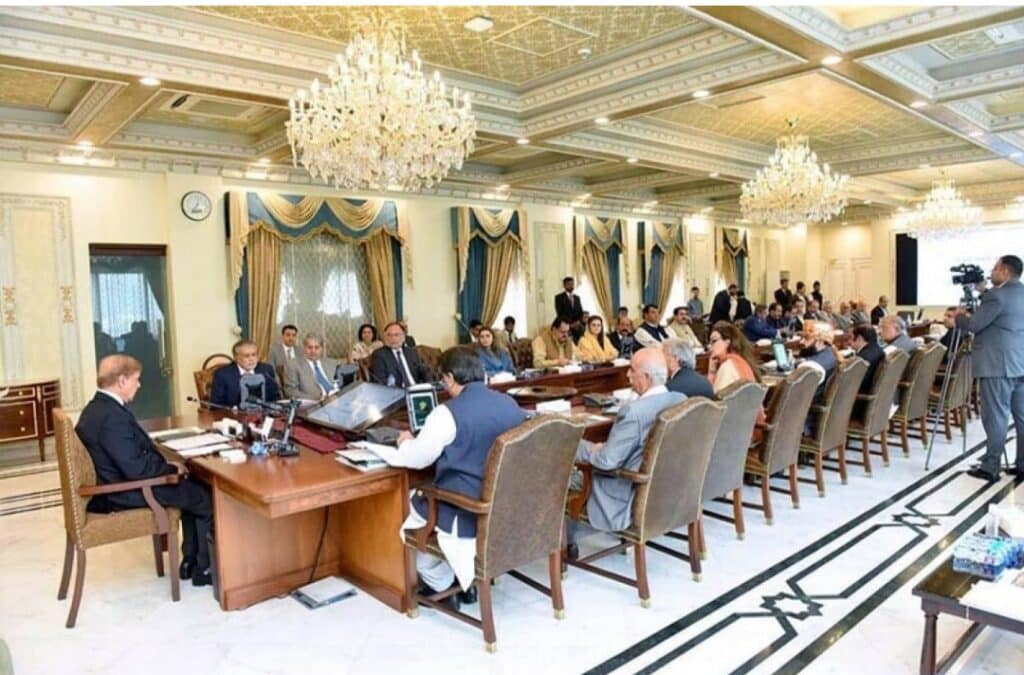
The provincial government and police leadership must now address the issue with clarity and resolve.
The first requirement is to enforce the existing legal and departmental framework. The written assurance submitted by the Bannu committee must not remain a document without consequences. Any violation of its terms should be investigated and dealt with through lawful disciplinary procedures.
The second is to ensure that all allegations of unlawful detention, abuse of authority or interference with public administration are investigated independently and transparently. Accountability must be based on evidence, not political influence or pressure from organized groups.
The third is to prevent the expansion of parallel authority into other districts. Police personnel must have a legitimate channel to raise concerns about security, welfare and working conditions, but that channel cannot be a structure capable of challenging the command of the provincial police.
Southern KP needs stronger policing, better counterterrorism coordination and greater public confidence in law enforcement. It does not need competing authorities operating under the banner of peace.
The state must make it clear that the fight against terrorism will be conducted through lawful institutions, not through groups that can place themselves above departmental discipline.
Peace cannot be established by weakening the authority of the state. And no committee, regardless of its name or stated purpose, can be allowed to become a state within the state.