
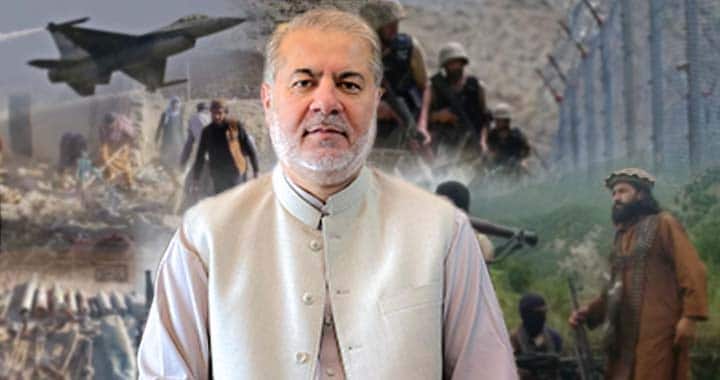
When I look at the failed attack on the Pakistan Rangers camp in Karachi, I do not see an isolated terrorist incident. I see a carefully planned operation that required months of preparation, extensive logistics, trained operatives and a network capable of moving terrorists across hundreds of kilometers without attracting attention.
According to the investigation so far, four suicide terrorists participated in the attack. This alone tells us that the operation was never spontaneous. Suicide missions are among the most complex terrorist operations to prepare. Every attacker undergoes months of ideological indoctrination and military training before being assigned a target. They are taught how to move, how to communicate, how to react under pressure, who leads the assault, who provides covering fire and, ultimately, who detonates the suicide vest if the mission fails.
Such operations cannot be organized overnight.
One of the most significant developments in this case is that one of the attackers survived. Identified as Usman Ali, the injured terrorist was captured alive. According to the information released by Pakistani authorities, he admitted that he is an Afghan national, that he received terrorist training in Afghanistan and that the group’s operational preparations were completed there before entering Pakistan.
If these findings continue to withstand scrutiny, they represent one of the clearest pieces of evidence linking a terrorist attack inside Pakistan to infrastructure operating from Afghan territory.
For years, Pakistan has maintained that terrorist organizations, particularly the banned Tehreek-e-Taliban Pakistan and Jamaat-ul-Ahrar, continue to enjoy operational space across the border. Those allegations have consistently been rejected by the Afghan Taliban administration. What makes this incident different is that the information is no longer based solely on intelligence assessments or diplomatic exchanges. It now includes the reported confession of a captured participant in the attack itself.
The logistics behind the Karachi operation also deserve attention.
Moving trained terrorists from Afghanistan to Karachi is not a simple task. They have to cross the border, pass through multiple cities, secure accommodation, receive weapons, establish communications and conduct reconnaissance before striking their target.
None of this happens without planning.
None of this happens without facilitators.
None of this happens without a support network extending well beyond the four terrorists who carried out the assault.
That is precisely why I believe this attack should be viewed as the work of an organized terrorist infrastructure rather than a handful of individuals.
Another noteworthy aspect is the claim of responsibility by Jamaat-ul-Ahrar.
For quite some time, the group had maintained a relatively low operational profile despite remaining part of the broader terrorist landscape. Seeing it publicly claim responsibility for such a high-profile operation suggests that it is attempting to project renewed capability and relevance.
Understanding this organization requires looking at its history.
Jamaat-ul-Ahrar emerged after differences within the TTP leadership and eventually established itself as one of the most violent terrorist factions operating against Pakistan. Its founder, Abdul Wali, better known as Omar Khalid Khurasani, became notorious for orchestrating some of the country’s deadliest terrorist attacks before being eliminated in Afghanistan in 2022.
Although the group’s organizational strength declined after his death, it never completely disappeared.
The Karachi attack demonstrates that even relatively small terrorist organizations can retain the ability to execute complex, high-impact attacks when provided with planning, sanctuary and logistical support.
Pakistan’s response therefore should not be viewed in isolation.
Following the Karachi attack and other recent terrorist incidents, Pakistan carried out retaliatory strikes under Operation Ghazb Lil Haq against what it described as terrorist infrastructure in Afghanistan’s Paktia, Paktika and Kunar provinces.
According to Pakistani authorities, the strikes targeted terrorist camps and resulted in the elimination of more than two dozen terrorists, including a senior Jamaat-ul-Ahrar commander.
The Afghan Taliban have disputed Pakistan’s account and alleged civilian casualties. Independent verification remains difficult because access to the affected areas is extremely limited, making it challenging for journalists to verify either side’s claims.
This uncertainty should not distract from one undeniable reality.
Terrorist organizations rarely operate in empty deserts or isolated mountains. They embed themselves among local populations, exploit civilian settlements and use those communities as cover for their activities. That unfortunate reality complicates every counterterrorism operation conducted anywhere in the world.
As analysts, we should therefore distinguish between competing claims while recognizing the broader challenge confronting states that are forced to respond to cross-border terrorism.
From my perspective, the Karachi attack has reinforced one conclusion.
Pakistan’s security challenge is no longer confined to individual terrorist attacks. It increasingly involves dismantling the networks that recruit, train, finance, equip and infiltrate terrorists into the country.
The elimination of senior terrorist commander Khan Farosh during a separate intelligence-based operation in Bajaur is equally significant. According to information available so far, he played an important operational role in coordinating terrorist activities, including extortion and planning attacks in the district.
Removing such figures weakens terrorist command structures and disrupts their operational continuity.
No counterterrorism campaign ends with a single operation.
It requires sustained intelligence, coordinated security measures, regional diplomacy and an unwavering commitment to denying terrorist organizations the space they need to survive.
The Karachi attack serves as a reminder that terrorism has evolved into a transnational challenge.
Pakistan’s response demonstrates that its counterterrorism strategy is evolving as well, combining intelligence-based ground operations with calibrated retaliatory action against terrorist infrastructure that it believes threatens its national security.
Ultimately, lasting stability will depend not only on Pakistan’s determination but also on whether every state in the region fulfils its responsibility to ensure that its territory is not used by terrorist organizations to plan, facilitate or launch attacks against its neighbors.



