
Pakistan has once again reaffirmed its unwavering and non-negotiable commitment to safeguarding the security, sovereignty and territorial integrity of the Kingdom of Saudi Arabia, declaring that the defence of the Kingdom and the protection of the Two Holy Mosques remain among its highest national and strategic priorities. The reaffirmation comes as the Makkah Joint Defence Alliance moves towards its practical implementation, marking a significant advancement in collective defence cooperation among Pakistan, Saudi Arabia and Türkiye.
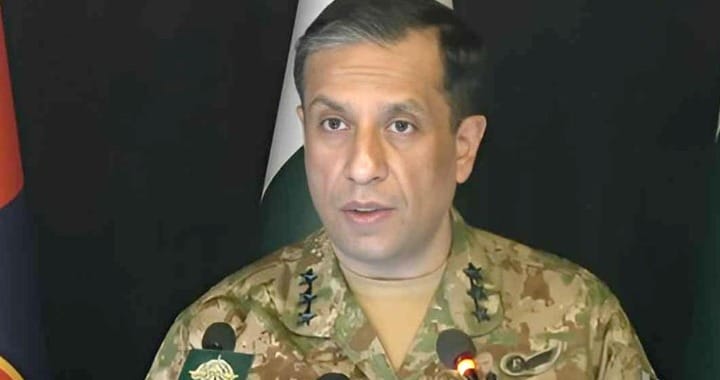
Director General of Inter-Services Public Relations (DG ISPR), Lieutenant General Ahmed Sharif Chaudhry, has categorically reiterated that Pakistan stands firmly committed to Saudi Arabia’s security and is prepared to undertake all necessary defensive measures to protect the Kingdom against any threat to its sovereignty, territorial integrity and national security.
In an interview with Saudi newspaper Asharq Al-Awsat, the military spokesperson disclosed that the Makkah Joint Defence Alliance was progressing towards its operational implementation phase, with arrangements being advanced for the rapid deployment of agreed military forces and capabilities within Saudi Arabia. These measures are aimed at strengthening collective defence preparedness, enhancing operational readiness, improving military integration and expanding intelligence-sharing and coordination mechanisms for defensive operations.
Lieutenant General Chaudhry confirmed that Pakistani military personnel were already deployed in Saudi Arabia, where they were contributing to defence support, joint military exercises, training programmes and coordinated military manoeuvres. He emphasised that Pakistan would continue extending all necessary defensive assistance to the Kingdom, encompassing military personnel, operational capabilities, professional training and logistical support.
Addressing the security situation in the region, the DG ISPR strongly condemned recent attacks targeting Saudi Arabia, including strikes against airports, urban centres and civilian and economic infrastructure. He underscored that attacks on the Kingdom’s territory and critical infrastructure constitute a direct challenge to its sovereignty, security and territorial integrity, reaffirming Pakistan’s unequivocal opposition to any threat against Saudi Arabia.
He stressed that Pakistan’s commitment to the Kingdom was not merely diplomatic or symbolic but reflected a longstanding strategic partnership, deep-rooted brotherly relations and a shared commitment to regional peace and security. He further emphasised that the protection of Saudi Arabia and the Two Holy Mosques would continue to occupy a central place in Pakistan’s strategic priorities.
On regional diplomacy, Lieutenant General Chaudhry explained that the October 26 meeting between representatives of the Makkah Joint Defence Alliance and Iran in Tehran was intended to establish a framework for de-escalation, dialogue and enhanced regional cooperation. He noted that the participation of Chief of Defence Forces Field Marshal Syed Asim Munir, alongside his earlier diplomatic engagement in Tehran, demonstrated Pakistan’s determination to prevent further escalation and pursue peaceful solutions to regional disputes.
He emphasised that Pakistan remained committed to constructive diplomacy, regional stability and the peaceful resolution of conflicts, while maintaining its readiness to fulfil its defence commitments and protect the security interests of its strategic partners.
Clarifying the institutional framework of the two defence arrangements, the DG ISPR distinguished between the Pakistan-Saudi Joint Strategic Defence Agreement, announced in September 2025, and the trilateral Makkah Joint Defence Alliance, announced in August 2026. He explained that the bilateral agreement establishes a framework for strategic defence cooperation and mutual support between Pakistan and Saudi Arabia, whereas the trilateral alliance involving Pakistan, Saudi Arabia and Türkiye provides broader mechanisms for collective defence, joint military preparedness, operational coordination and integrated security cooperation.
Lieutenant General Chaudhry categorically clarified that both arrangements were exclusively defensive in character, carried no offensive intentions against any country and were intended to strengthen deterrence, protect national sovereignty and contribute to regional stability.
Pakistan’s reaffirmation sends an unmistakable message of strategic solidarity with the Kingdom of Saudi Arabia. As the Makkah Joint Defence Alliance advances towards practical implementation, Islamabad has made clear that its commitment to Saudi Arabia’s security is firm, enduring and beyond compromise. The strengthening of collective defence capabilities reflects a shared determination to safeguard sovereignty, protect vital national interests and ensure that any threat to the security of the Kingdom is met with the necessary defensive preparedness.



