
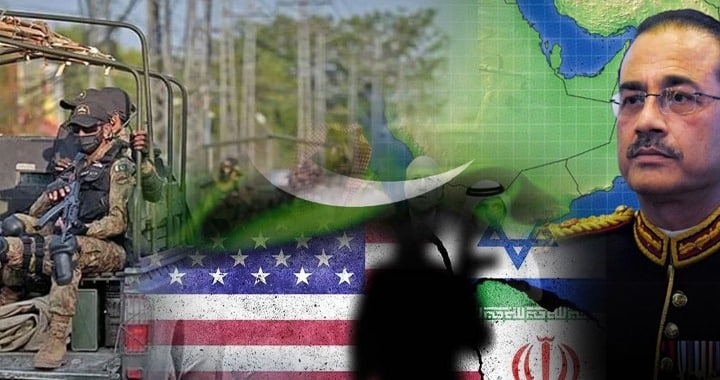
Pakistan today stands at a decisive crossroads, not as a state overwhelmed by challenges, but as one increasingly defining outcomes in a volatile region.
From the rugged mountains of Khyber Pakhtunkhwa to the restless terrain of Balochistan, Pakistan’s security forces continue to strike terrorist networks with growing precision, dismantling hideouts, foiling coordinated attacks, and denying space to enemies seeking to destabilize the country. What once appeared to be an escalating wave of terrorism is now increasingly being met with an organized, relentless, and intelligence-led state response.
The past week alone has offered multiple examples of this changing equation.
In Balochistan, security forces and law enforcement personnel thwarted repeated attacks by Fitna al Hindustan-backed terrorists, including the repelled assault on Dhadar Police Station in Kachhi, where several attackers were killed and others forced to flee. Similar operations across the province have demonstrated an important shift: terrorists are no longer operating with impunity, and their operational space is shrinking.
In Khyber Pakhtunkhwa, too, Pakistan’s security apparatus has intensified intelligence-based operations against Tehreek-e-Taliban Pakistan terrorists attempting to exploit cross-border sanctuaries and shifting regional dynamics. The state’s response is no longer reactive. It is increasingly pre-emptive.
This marks a critical transformation in Pakistan’s war against terrorism.
For years, the country fought largely to contain the threat. Today, it is moving to eliminate it.
And while Pakistan’s armed forces continue to deliver on the battlefield, the country’s diplomatic front is proving equally significant.
Islamabad has emerged as a key center of regional diplomacy.
Pakistan’s recent role, especially the one played by Field Marshal Asim Munir, in facilitating dialogue and de-escalation between major regional and international actors reflects growing international trust in its diplomatic credibility. Whether through efforts aimed at reducing tensions between Iran and Saudi Arabia, facilitating discussions involving Iran and the United States, or engaging with China and regional stakeholders on Afghanistan, Pakistan is increasingly being viewed not merely as a participant, but as a stabilizing force.
This renewed diplomatic relevance comes at a time when the Afghan Taliban appear increasingly cornered.
As negotiations and regional consultations over Afghanistan’s future continue, the Taliban’s revival of outdated rhetoric over the Durand Line appears less like policy and more like political deflection.
The timing is telling.
At a moment when reports suggest pressure is mounting on Kabul to act against terrorist groups operating from Afghan soil, including the TTP, reviving border disputes may serve as an attempt to distract domestic audiences and rally nationalist sentiment.
But the ground realities have changed.
Pakistan has reinforced its border management systems, enhanced surveillance, and expanded regional trade alternatives that reduce dependence on Afghan transit routes. New economic corridors and trade connectivity projects through China and Central Asia have already begun reshaping regional commerce.
In simple terms, Pakistan’s strategic options are widening.
Kabul’s leverage is shrinking.
Meanwhile, India’s ability to exploit regional instability has also faced setbacks.
Since Pakistan’s firm military and diplomatic responses in recent years, New Delhi appears increasingly cautious in pursuing overt aggression. India’s alleged support for destabilizing elements in Balochistan and elsewhere remains a serious concern for Islamabad, but Pakistan’s internal resilience and proactive counterterror strategy have complicated such designs.
At home, despite political turbulence and governance challenges in provinces such as Khyber Pakhtunkhwa, the broader state structure continues to hold and perform.
Security institutions remain active.
Diplomatic channels remain open.
Economic and strategic partnerships continue expanding.
This is not the image of a state in retreat.
It is the image of a state absorbing pressure while simultaneously expanding influence.
Pakistan’s story today is no longer solely about survival.
It is about resurgence.
A resurgence built on battlefield resilience, diplomatic agility, and strategic recalibration.
Terrorism remains a challenge.
Regional instability remains real.
Political divisions remain a concern.
But unlike in the past, Pakistan is not merely responding to events.
Increasingly, it is shaping them.
And in a region defined by uncertainty, that may be Pakistan’s most important victory yet.



