
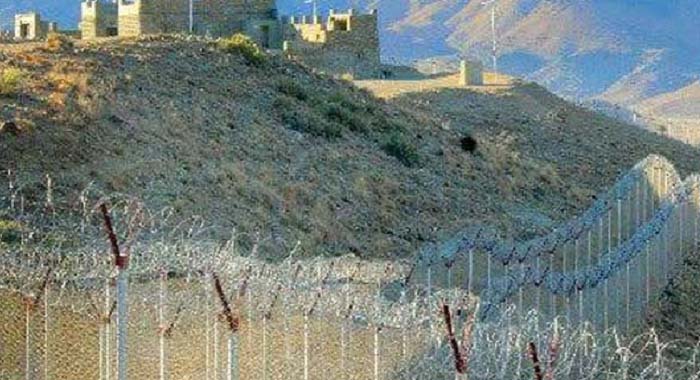
The Durand Line remains one of the most debated and politically exploited borders in South and Central Asia, yet it is also one of the most legally established international boundaries in the region. Stretching approximately 1,600 miles, or 2,600 kilometres, between Afghanistan and Pakistan, the Durand Line begins at the Iranian border in the west and terminates at the Chinese frontier in the east. Its geographical sweep is vast and complex, traversing the arid Registan Desert, cutting through rugged tribal regions, passing across the historic Khyber Pass in the Spīn Ghar or White Mountains, and rising into the high-altitude Karakoram Range. Along its length lie twelve Afghan provinces and three provinces of Pakistan, making it not merely a cartographic line but a border that has shaped political authority, ethnic identities, and regional security for more than a century.
Despite its enduring presence and repeated legal validation, the Durand Line continues to be portrayed by certain political elements in Afghanistan as an illegitimate colonial imposition. This portrayal, however, does not withstand serious historical or legal scrutiny. The persistence of the dispute is not rooted in ambiguity of law or geography but in political convenience, domestic narratives, and selective interpretations of international legal principles. When examined in totality through the lenses of history, treaty law, customary international law, and state practice the Durand Line emerges as a settled international boundary whose contestation serves political ends rather than legal justice.
The origins of the Durand Line are inseparable from the geopolitical rivalry of the nineteenth century known as the Great Game, a strategic struggle between the British Empire and Tsarist Russia for influence in Central Asia. Afghanistan, occupying a critical geographical position between the two expanding empires, became a buffer state whose territorial integrity was preserved but whose foreign relations were subject to external pressure. British concerns over Russian southward expansion led to repeated military interventions in Afghanistan, beginning with the First Anglo-Afghan War in 1839. That campaign ended disastrously for the British, who were defeated by Pashtun forces, leaving London cautious but not disengaged from Afghan affairs.
The British annexation of Punjab in 1849 brought them directly to the western frontier of the Indian subcontinent, where an ill-defined boundary separated British-controlled territories from Afghan influence. This frontier region, inhabited predominantly by Pashtun tribes with strong traditions of autonomy, presented significant administrative and security challenges. British policymakers were divided between those who advocated a defensive posture along the Indus River and those who argued for a forward policy that would push Britain’s strategic boundary deeper into Afghan territory to secure imperial interests. This debate shaped British frontier policy for decades.
The Second Anglo-Afghan War of 1878 resolved this strategic dilemma. Britain emerged victorious and installed Abdur Rahman Khan as the Emir of Afghanistan. Under the Treaty of Gandamak, Afghanistan ceded control over its foreign policy to the British in exchange for protection and a guarantee of non-interference in its internal affairs. This arrangement allowed Britain to secure its northwestern frontier while preserving Afghanistan’s internal sovereignty, setting the stage for the formal demarcation of a boundary.
In 1893, Sir Henry Mortimer Durand, the Foreign Secretary of the colonial government of India, negotiated directly with Emir Abdur Rahman Khan to delineate their respective spheres of influence. The resulting agreement, signed on November 12, 1893, defined what came to be known as the Durand Line. Though brief only a single page the agreement was explicit in its purpose: to establish a boundary between Afghanistan and British India. This was not a vague administrative arrangement nor a temporary expedient; it was a formal international agreement concluded between two recognized political authorities. Between 1894 and 1896, a joint Afghan-British survey physically demarcated the line on the ground, further reinforcing its status as a defined international frontier.
The demarcation divided Pashtun tribal areas between the two sides, a fact that would later be exploited politically but was fully understood by both parties at the time. It also brought Balochistan under British control and established the Wakhan Corridor as a buffer separating British India from Russian Central Asia. These decisions reflected imperial strategic logic, but they were implemented through mutual agreement, not unilateral imposition. Claims that the Durand Line was imposed under duress or intended to be temporary find no support in the text of the agreement or in subsequent state practice.
The validity of the Durand Line did not end with Abdur Rahman Khan. In 1905, following the Emir’s death, a fresh agreement was signed reaffirming all existing arrangements between Afghanistan and Britain. This continuity is significant, as it demonstrates that the boundary was not tied to a single ruler or moment but was accepted as a lasting legal reality. In 1919, after the Third Anglo-Afghan War, Afghanistan regained full control over its foreign policy through the Treaty of Rawalpindi. Crucially, this treaty once again reaffirmed the Durand Line as the official boundary between Afghanistan and British India. Thus, at every major political transition whether the death of an emir or the restoration of Afghan sovereignty the boundary was explicitly upheld.
The argument that the Durand Line was voided by the end of British rule collapses under legal examination. The agreements establishing and reaffirming the boundary were concluded not with the Government of India but with the British Crown. When British India was partitioned in 1947, Pakistan emerged as a successor state under international law. The principle of uti possidetis juris, a cornerstone of post-colonial state formation, dictates that newly independent states inherit the administrative boundaries of their predecessor entities. This principle exists to prevent precisely the kind of border disputes that could otherwise engulf post-colonial regions in perpetual conflict.
Customary international law, later codified in Article 11 of the Vienna Convention on the Succession of States in Respect of Treaties, explicitly states that state succession does not affect boundaries established by treaty. Under this framework, Pakistan automatically inherited the Durand Line as its international border with Afghanistan. No fresh agreement or ratification by Kabul was required. Unilateral declarations by one party have no legal effect on established boundaries, which can only be altered through mutual consent.
This legal position has been repeatedly endorsed by the international community. In 1950, Philip Noel-Baker, the British Secretary of State for Commonwealth Relations, stated unequivocally that Pakistan inherited the rights and duties of the former Government of India and that the Durand Line constituted the international frontier. In 1956, the members of the Southeast Asia Treaty Organization declared their recognition of Pakistan’s sovereignty up to the Durand Line. These endorsements underscore the international acceptance of the boundary.
Afghanistan’s rejection of the Durand Line emerged not in 1893, 1905, or 1919, but after Pakistan’s creation. In 1949, Kabul unilaterally declared the border an “imaginary line” and voided all related agreements. This declaration, however, had no standing in international law. More revealing than the rhetoric is Afghanistan’s conduct. Kabul has never formally raised the issue at any international forum, nor has it sought arbitration or adjudication through the International Court of Justice or the United Nations. Instead, it has continued to operate immigration, customs, and security checkpoints along the very border it claims does not exist, effectively acknowledging its validity through state practice.
The argument of force majeure, often invoked by Afghan political elements, is equally flawed. The end of colonial rule does not void boundary treaties, which are considered permanent unless altered by mutual agreement. If Afghanistan genuinely believed that colonial-era borders were invalid, it would have contested its northern boundaries following the dissolution of the Soviet Union. It did not. The selective application of this argument reveals its political, rather than legal, motivation.
The legitimacy of the Durand Line has also been reinforced in multilateral agreements and international resolutions. The Geneva Accords of 1988, which addressed the Soviet withdrawal from Afghanistan, implicitly recognized existing international borders. Various United Nations Security Council resolutions, including Resolution 1267, operate on the premise of the Durand Line as an international boundary and emphasize the principle of non-intervention.
Pakistan’s decision to fence its border with Afghanistan beginning in 2017 must be understood in this legal and security context. Under United Nations Security Council Resolution 1373, states are obligated to prevent their territories from being used as safe havens for terrorism. Border fencing is a legitimate exercise of sovereignty aimed at curbing cross-border militancy. Similar measures have been undertaken by other states, including the United States under the Secure Fence Act of 2006. Pakistan has the legal right to fence its side of the border without requiring Afghanistan’s consent.
The human dimension of the Durand Line, particularly its impact on the Pashtun population, is often invoked to challenge its legitimacy. Pashtuns, who live on both sides of the border, share a common ancestry, culture, and moral code known as Pashtunwali. This code emphasizes honour, hospitality, justice, bravery, forgiveness, protection of women, and defense of land. While the border undoubtedly disrupted tribal cohesion, cultural continuity does not necessitate political unity. Ethnic groups across the world span international borders without undermining state sovereignty.
The Pashtun dilemma has frequently been compared to the situation in Kashmir, yet the comparison reveals contradictions in Pakistan’s critics rather than in Pakistan’s legal position. Pakistan upholds international law with respect to the Durand Line because it is legally sound, just as it challenges the legality of the Line of Control in Kashmir because that dispute remains unresolved under international law. Acknowledging the right of self-determination for Pashtun tribes in this context would undermine the very legal principles that safeguard Pakistan’s territorial integrity elsewhere.
The porous nature of the Durand Line has undoubtedly facilitated militancy and organized crime, particularly in remote mountainous regions such as Waziristan. The Soviet invasion of Afghanistan in 1979 transformed the borderlands into a theatre of Cold War conflict. Mujahideen groups were recruited largely from Pashtun tribes on the Pakistani side, and the resulting insurgency produced localized armed groups that later contributed to the Afghan civil war and the rise of the Taliban.
Pakistan’s strategic calculations during this period, including its reliance on the Taliban as a means of securing influence in Afghanistan, produced unintended consequences. The Taliban refused to recognize the Durand Line and exacerbated Pashtun nationalism rather than containing it. Following the U.S. invasion of Afghanistan in 2001, Pakistan’s Afghan policy faced new challenges as militancy spilled back across the border. The Tehreek-e-Taliban Pakistan exploited weak border management to establish safe havens, expanding its presence in Khyber Pakhtunkhwa and beyond.
These security challenges underscore the necessity of effective border management rather than its illegitimacy. The lack of harmonized border patrols and intelligence-sharing has benefited militant networks operating on both sides. Pakistan’s fencing initiative is a response to this reality, aimed at restoring state control and protecting its citizens.
In Kabul, the Durand Line remains a politically sensitive issue. Many Afghan politicians believe that recognizing the border would provoke public backlash, as it is often portrayed domestically as a colonial injustice. This perception has transformed the Durand Line into a political taboo, overshadowing legal realities and practical necessities. It is raised selectively to divert attention from internal governance failures, economic hardship, and political instability.
Despite its rhetoric, Afghanistan has never pursued meaningful negotiations to alter the boundary. It has continued to abide by the clauses of the Durand Line Agreement in practice, cooperating with Pakistan on border management and trade. This contradiction between words and actions speaks volumes.
Ultimately, the Durand Line dispute is manufactured rather than organic. It persists not because of unresolved legal questions, but because of political incentives. Pakistan’s claim rests on a solid foundation of international law, historical treaties, and consistent state practice. There is no legal obligation for Islamabad to renegotiate a settled boundary, and any change would require bilateral consent that has never been sought in good faith.
For the sake of regional stability and improved bilateral relations, Pakistan may choose diplomatic restraint in its language, perhaps even avoiding emotive terminology in public discourse. Such restraint, however, does not weaken the legal reality. The Durand Line is not imaginary, not temporary, and not void. It is an international border established by treaty, reaffirmed by history, validated by international law, and recognized by the global community.
The continued contestation of the Durand Line serves as a reminder that borders are not merely lines on a map but political symbols. Yet symbols cannot override law. Until Afghanistan chooses to engage with the issue through legal and diplomatic channels rather than political rhetoric, the Durand Line will remain what it has always been: a settled boundary challenged only when it is politically convenient to do so.



