
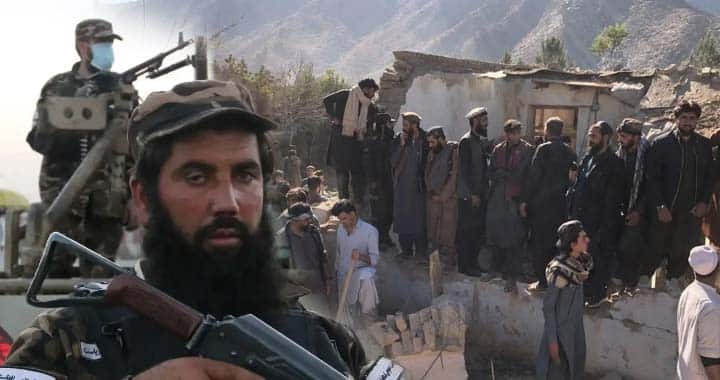
Disturbing details have emerged regarding the powerful explosion in Asadabad, the capital of Afghanistan’s Kunar province, exposing the alleged presence of an explosives manufacturing and militant training facility operated by Fitna al-Khawarij inside a residential neighbourhood.
According to sources, the explosion occurred at the residence of Samandar Ustad, a Fitna al-Khawarij operative associated with the Swat-based network, who was reportedly involved in explosives expertise, landmine manufacturing and training Khawarij fighters in the handling and use of explosive materials.
The revelations have raised serious concerns over the use of civilian residential properties for explosives production and militant training, placing innocent Afghan families, schoolchildren and other residents directly in the danger zone.
According to sources, the residence was being used as a facility for manufacturing improvised explosive devices and landmines, as well as providing specialised training to Fitna al-Khawarij operatives.
At the time of the explosion, between 20 and 25 Khawarij were reportedly receiving training in the handling and use of explosive materials. The blast triggered additional explosions involving explosives stored in adjoining rooms, dramatically increasing the scale of destruction.
Sources claim that approximately 30 Khawarij were killed and another 28 injured in the explosion.
The blast was so powerful that three to four interconnected houses associated with Fitna al-Khawarij were completely destroyed. Two classrooms of an adjoining government middle school were also reduced to rubble.
Among the most devastating consequences of the explosion was the loss of innocent civilian lives, particularly children attending the nearby government middle school.
According to sources, between 28 and 30 schoolchildren lost their lives, while approximately 120 to 130 people, including three teachers, sustained injuries.
The incident has exposed the catastrophic consequences of allowing explosives manufacturing facilities and militant training centres to operate within densely populated civilian neighbourhoods.
The presence of explosive materials in residential buildings and close to educational institutions placed the lives of innocent children and ordinary Afghan citizens at extreme risk.
Sources further claim that the Taliban regime immediately cordoned off the affected area and restricted the entry of ordinary residents following the explosion.
Instead of allowing transparent access and disclosure of the circumstances surrounding the incident, the Taliban authorities are reportedly portraying the explosion as an accident involving an explosives warehouse belonging to a mining contractor from Nuristan.
These claims have raised serious questions about transparency, accountability and the alleged concealment of the actual nature of the facility and its activities.
Experts argue that the use of residential properties for explosives manufacturing and militant training exposes the dangerous nexus between armed networks and civilian environments, while effectively turning ordinary Afghan families into involuntary human shields.
The most alarming aspect of the revelations is the reported connection between the explosives manufacturing facility and Fitna al-Khawarij’s operational activities targeting Pakistan.
According to sources, locally manufactured explosive devices were being prepared for use in terrorist attacks in Pakistan. The explosion, however, resulted in devastating casualties among Afghan civilians, including schoolchildren.
This development highlights the cross-border security implications of militant infrastructure allegedly operating from Afghan territory and the severe risks such facilities pose to the local population.
Experts have warned that the presence of explosives factories and training facilities in civilian neighbourhoods is not merely a security concern for neighbouring countries but an immediate and deadly threat to ordinary Afghan citizens.
Experts maintain that concealing the circumstances of the explosion, rather than ensuring transparent investigations and accountability, raises serious questions about the Taliban regime’s handling of militant infrastructure operating within civilian areas.
The incident has once again brought into focus the dangers posed by the presence of Fitna al-Khawarij networks, explosives manufacturing facilities and militant training centres in populated areas.
The devastating loss of innocent schoolchildren demonstrates that the consequences of such activities are borne not only by neighbouring countries but also by Afghanistan’s own civilian population.



