
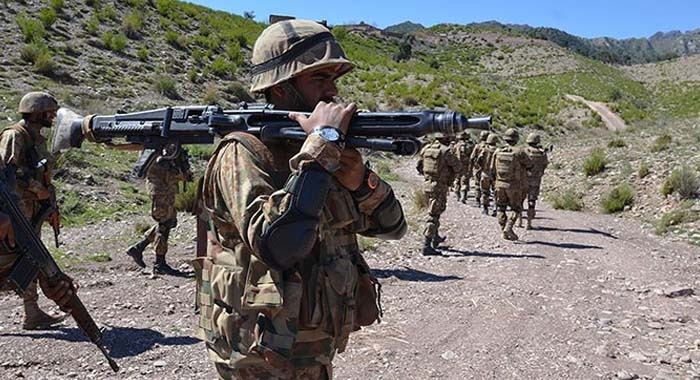
For many observers, the security situation in Khyber Pakhtunkhwa presents a seemingly contradictory picture. On one hand, security forces, intelligence agencies, police units, and counterterrorism departments regularly announce successful operations resulting in the elimination of terrorists, arrests of facilitators, and recovery of weapons and explosives. On the other hand, terrorist attacks continue to occur across several districts, particularly in southern and merged tribal areas.
The apparent contradiction has led some critics to question whether Pakistan’s counterterrorism strategy is working. Yet a closer examination of the conflict suggests a very different reality. The persistence of terrorist violence does not necessarily indicate failure. In many respects, it reflects the nature of a conflict that has evolved significantly since the large-scale military operations that dismantled organized terrorist strongholds nearly a decade ago.
Today’s battlefield is fundamentally different from the one Pakistan confronted during the height of terrorism in the 2000s and early 2010s. At that time, terrorist organizations controlled territory, operated training camps, collected taxes, established parallel administrative structures, and openly challenged the state’s authority. Entire regions became contested spaces where the writ of the government was severely weakened.
That reality no longer exists.
The terrorist threat confronting Pakistan today is dispersed, decentralized, and heavily dependent upon cross-border support, covert facilitation networks, and sporadic attacks designed to create psychological impact rather than strategic gains.
This distinction is crucial because success in counterterrorism is often measured incorrectly. The absence of complete peace does not automatically mean terrorists are winning. In fact, the available evidence increasingly suggests the opposite.
Every week, intelligence-based operations are conducted across Khyber Pakhtunkhwa. Security personnel continue to eliminate terrorists, disrupt hideouts, recover explosive materials, and dismantle support networks. Such operations would not be possible without significant intelligence penetration of terrorist structures.
The growing frequency of intelligence-led raids indicates that security agencies possess substantial information regarding terrorist movements and planning activities. This is not a sign of weakness. It is a sign that terrorist organizations are operating under constant pressure.
At the same time, police forces have become a frontline counterterrorism institution. District police personnel, once largely confined to conventional law enforcement duties, now regularly engage terrorists in some of the country’s most dangerous regions. The Counter Terrorism Department has likewise expanded its role, conducting sophisticated operations that increasingly rely on intelligence gathering, surveillance, and rapid response capabilities.
These developments rarely receive the attention they deserve because terrorist attacks generate headlines while disrupted plots often do not.
The Battlefield Has Moved Beyond Pakistan’s Borders
Understanding the current security situation in Khyber Pakhtunkhwa requires examining a factor that continues to shape the conflict more than any other: the security environment across the border in Afghanistan.
When the Afghan Taliban returned to power in August 2021, many analysts anticipated that Afghanistan’s territory would no longer be available to groups threatening neighboring countries. Pakistan, perhaps more than any other regional state, hoped the new reality would contribute to greater border security and reduced terrorist activity.
Those expectations have not been fully realized.
Over the past several years, Pakistan has repeatedly expressed concern regarding the presence of anti-Pakistan terrorist groups inside Afghanistan. Various international reports, regional assessments, and statements by security experts have similarly pointed to the continued presence of terrorist elements operating from Afghan territory.
The significance of this issue cannot be overstated.
A terrorist organization that enjoys sanctuary beyond Pakistan’s borders possesses advantages unavailable to groups operating entirely within the country. Leadership structures become more difficult to target. Recruitment networks gain greater freedom of movement. Planning activities can occur at safer distances from Pakistani security forces. Training, logistical support, and coordination become easier.
This does not mean terrorists enjoy unrestricted freedom across the border. It does mean they possess strategic depth that complicates Pakistan’s security calculations.
Consequently, many terrorist attacks witnessed in Khyber Pakhtunkhwa today are not necessarily indicators of expanding terrorist influence within Pakistan itself. Rather, they often reflect the ability of hostile actors to exploit cross-border dynamics while maintaining external support structures.
This reality helps explain why security operations continue to achieve tactical successes while the broader threat remains persistent.
Pakistan is not merely confronting terrorists inside its territory. It is simultaneously dealing with a regional security challenge that extends beyond its immediate control.
The distinction matters because no country can permanently eliminate terrorism if terrorist sanctuaries remain available elsewhere.
History offers numerous examples of this principle. Insurgent movements throughout the world have frequently relied upon cross-border sanctuaries to survive military pressure. Once deprived of those sanctuaries, many rapidly declined. When sanctuaries remained intact, conflicts often became prolonged despite significant battlefield losses.
Khyber Pakhtunkhwa increasingly reflects this dynamic.
This does not mean Pakistan lacks options. Border fencing, enhanced surveillance, intelligence cooperation, targeted operations, and diplomatic engagement all remain critical components of the state’s response. Yet lasting success ultimately requires broader regional cooperation against terrorist networks.
The challenge is therefore not simply military.
It is political, diplomatic, and regional.
Pakistan’s security forces can continue eliminating terrorists, and they undoubtedly will. But preventing new recruits, facilitators, and planners from emerging requires addressing the broader ecosystem that sustains terrorism.
This is where public understanding becomes particularly important.
Critics sometimes view every terrorist incident as evidence of state failure. Such assessments ignore the reality that terrorism is often measured not by the occurrence of attacks alone but by whether terrorists can achieve strategic objectives.
In Khyber Pakhtunkhwa, terrorists have repeatedly demonstrated the ability to conduct attacks. What they have not demonstrated is the ability to seize territory, establish governance structures, mobilize large populations, or fundamentally undermine the authority of the state.
That distinction is significant.
The Pakistan of 2026 is not the Pakistan of 2009.
The security apparatus is more experienced. Intelligence capabilities are stronger. Interagency coordination has improved substantially. Border management has expanded dramatically. Counterterrorism institutions are more mature and better equipped than they were during earlier phases of the conflict.
Perhaps most importantly, public attitudes toward terrorism have changed.
Communities that once found themselves trapped between terrorist intimidation and state authority increasingly recognize the devastating consequences of extremist violence. Local cooperation with law enforcement agencies has become a critical component of modern counterterrorism efforts.
The sacrifices of police personnel, intelligence officers, soldiers, and ordinary civilians continue to play a central role in preventing terrorists from regaining the momentum they once possessed.
This does not mean the threat has disappeared.
Far from it.
Terrorist organizations remain adaptive. They continue to exploit technological tools, social media platforms, and regional instability. They remain capable of inflicting casualties and generating fear.
Yet their continued reliance on sporadic attacks also reveals their limitations.
Organizations confident in their ability to achieve strategic objectives do not generally depend upon isolated incidents to maintain relevance. Such tactics are often characteristic of groups seeking visibility rather than victory.
That reality should shape how the security situation in Khyber Pakhtunkhwa is understood.
The province remains on the frontline of Pakistan’s fight against terrorism. The threat is real, persistent, and dangerous. However, the broader trajectory suggests that terrorists are operating under sustained pressure rather than expanding influence.
The central challenge facing Pakistan today is therefore not whether it can confront terrorism inside Khyber Pakhtunkhwa. Years of operations have already demonstrated that capability.
The larger question is whether the regional environment, particularly across the Afghan border, will evolve in a manner that denies terrorists the space, support, and sanctuary necessary for long-term survival.
Until that question is resolved, the conflict is likely to continue.
But if current trends persist, the struggle in Khyber Pakhtunkhwa may increasingly be defined not by terrorist strength, but by the gradual erosion of their ability to shape the future of the province.



