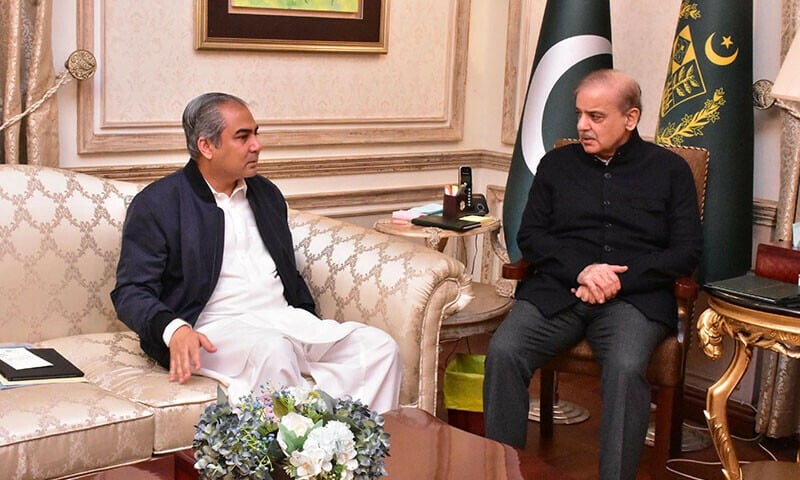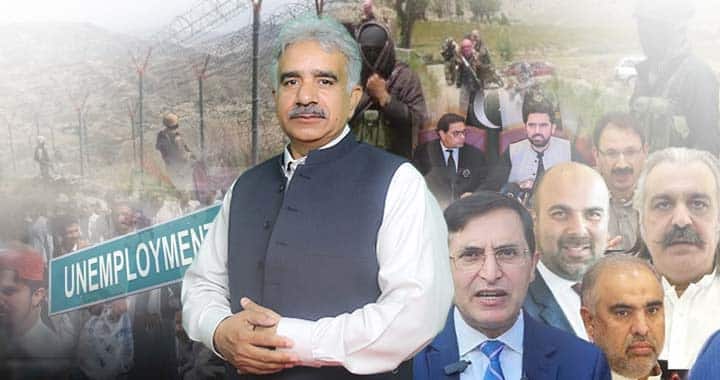
Khyber Pakhtunkhwa is facing a security crisis that demands political seriousness, administrative ownership and an unambiguous commitment to public safety. Yet the recent exchange at KP House Islamabad suggested that the province’s political leadership may still be struggling to place governance and counterterrorism where they belong, at the top of the agenda.
A journalist asked why, while terrorism continues to threaten KP, the provincial leadership was concentrating on the health and release of PTI founder Imran Khan. The response was essentially that the discussion was about Imran Khan’s health.
That answer was revealing, not because anyone’s health is unimportant, but because it exposed the difference between political priorities and governmental responsibilities.
A political party can make the release of its leader its central political objective. A provincial government cannot make that its substitute for governance.
The chief executive of KP carries responsibility for a province that has endured terrorism for decades. After the 18th Amendment, public order and policing are fundamentally provincial responsibilities. The federal government has a major role in national security and counterterrorism, but the provincial administration cannot outsource the everyday security of its citizens.
The people of KP did not vote merely for slogans. They voted for roads, schools, hospitals, jobs, functioning institutions and, above all, security.
The Accountability Question
What makes the current situation more troubling is that criticism of governance is no longer coming only from political opponents. Questions about performance, financial management and alleged irregularities have also emerged from within PTI’s own political circles.
Those allegations should not be treated as established facts without proper investigation. But neither should they be dismissed simply because they are politically inconvenient.
The correct response is accountability.
If there are allegations of corruption, investigate them. If there are claims of financial irregularities, audit the relevant departments. If there are governance failures, identify the responsible officials. If the province requires additional resources to fight terrorism, the provincial leadership should make that case forcefully before the relevant federal forums.
What cannot work is blaming everyone else while retaining responsibility for none of the outcomes.
The chief minister sits at the centre of the provincial administrative structure. He participates in national and provincial security forums. He has access to the institutions through which security concerns can be raised and addressed.
If there are obstacles, identify them.
If funds are insufficient, demand them.
If coordination is inadequate, fix it.
If terrorism is the problem, make defeating terrorism the political priority.
The people of KP should not have to guess who is responsible.
The Real Security Threat Is Evolving
There is another dimension to this crisis that Pakistan cannot afford to overlook.
The terrorist threat is changing.
Drones have transformed modern warfare because relatively inexpensive unmanned systems can provide surveillance, deliver explosives and create tactical pressure without exposing the operator directly. Pakistan therefore has to treat drone warfare as a strategic challenge rather than merely another tactical nuisance.
The recent discussion about drones allegedly entering KP and Balochistan from Afghanistan, and claims regarding their possible Indian origin, require serious investigation rather than speculation. If evidence establishes that terrorist networks are receiving externally sourced drone technology, Pakistan must identify the supply chain, the facilitators and the launch infrastructure.
The larger point, however, is already clear.
Pakistan needs to stay ahead of the technology curve.
The government has recognised this need. In May, the Ministry of Defence Production held a dedicated session with private-sector unmanned aerial systems developers, describing drone warfare and surveillance as an emerging national priority.
Pakistan is also expanding defence and aerospace cooperation with Türkiye, including discussions on unmanned aerial systems and emerging technologies. The Pakistan-Türkiye defence relationship has increasingly moved towards interoperability, aerospace cooperation, training and next-generation capabilities.
This is the right direction.
The answer to hostile drone technology cannot simply be to shoot down one drone after it appears. Pakistan needs an ecosystem covering detection, electronic warfare, counter-drone systems, intelligence, domestic production and rapid technological adaptation.
A modern terrorist network can exploit cheap technology. A modern state must therefore combine intelligence with technology, diplomacy with deterrence, and kinetic capability with prevention.
Afghanistan Cannot Be Separated From Pakistan’s Security
The Afghanistan question is equally important.
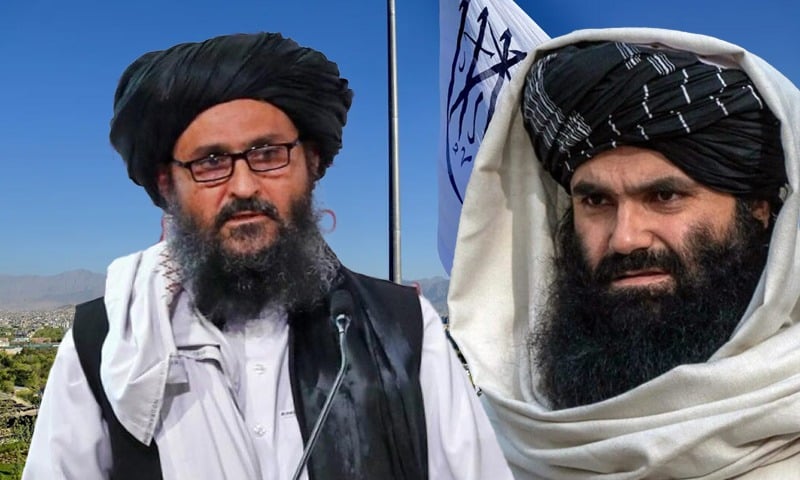
Reports emerging from Afghanistan suggest increasing activity by armed opposition groups against the Taliban regime. The Afghanistan Freedom Front, for example, has claimed attacks in Badakhshan and Baghlan, while other reports point to activity by several anti-Taliban formations.
A newly emerged group calling itself the People’s Democratic Front has also claimed a series of attacks across Afghanistan. Current claims circulating about the number and geographic spread of those attacks have not been independently verified, and Afghanistan’s highly restricted information environment makes verification particularly difficult.
But even unverified claims can point towards a developing strategic trend.
If Afghanistan becomes increasingly fragmented, Pakistan will feel the consequences.
A weakening of Taliban control in one region does not automatically mean greater security for Pakistan. It could instead produce competing armed groups, new sanctuaries, weapons proliferation, refugee pressure and greater opportunities for terrorist organisations such as the TTP and other transnational networks.
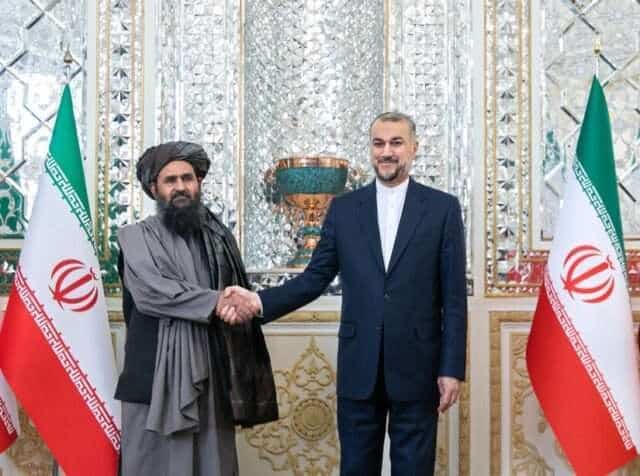
That is why Pakistan should pursue diplomatic engagement with Kabul while maintaining its security red lines.
Dialogue is not weakness.
Diplomacy is not surrender.
But diplomacy without consequences is unlikely to change the behaviour of a regime that permits its territory to be used against a neighbour.
Pakistan should continue engaging Afghanistan, while making one principle absolutely clear: Afghan territory must not be used for terrorism against Pakistan.
Pakistan Must Prepare for the War That Is Coming
The most dangerous mistake would be to think that tomorrow’s battlefield will resemble yesterday’s.
The era of conventional military power alone is disappearing. Cheap drones, artificial intelligence, electronic warfare, precision weapons, cyber capabilities and proxy networks are changing how states and non-state actors fight.
Pakistan has already demonstrated that it can adapt. Its security forces have repeatedly disrupted terrorist networks through intelligence-based operations, and the country’s counterterrorism campaign continues to impose serious pressure on foreign-sponsored proxies.
But military success must be matched by political and administrative seriousness.
KP needs governance that does not treat security as someone else’s responsibility.
Pakistan needs a national counter-drone strategy.
The border with Afghanistan needs stronger surveillance and intelligence coordination.
Diplomatic pressure on Kabul must continue.
International partners must be brought into the discussion about terrorist sanctuaries and external sponsorship.
And the political leadership must stop allowing partisan confrontation to consume the space that should belong to governance.
The question before Pakistan is no longer simply how to defeat the terrorist carrying a rifle.
It is how to defeat the network that gives him a sanctuary, money, technology, propaganda, explosives and political space.
That requires a state that thinks several moves ahead.
Pakistan has the institutions, the armed forces, the intelligence capability, the diplomatic relationships and the technological partners to meet this challenge.
What it needs now is consistency.
Because the battlefield has changed.
And Pakistan cannot afford to look away.