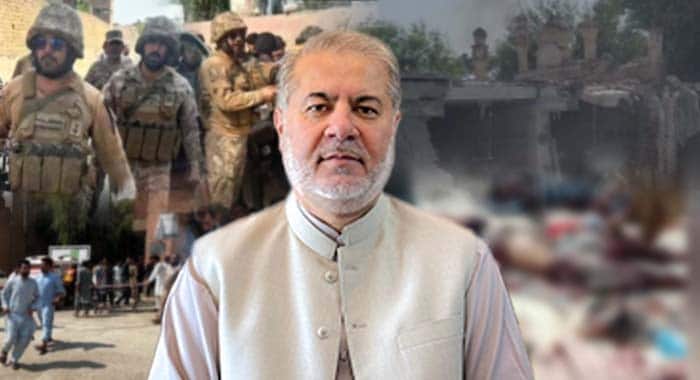
The deadly attack on a mosque inside Kohat Police Lines during Friday prayers is yet another grim reminder that terrorism remains one of Pakistan’s most serious national security challenges. The attack, which struck a place of worship while police personnel and other worshippers were gathered for prayers, was not merely an assault on individuals. It was an attack on the very idea of peace, public safety and religious sanctity.
As the rescue and clearance operations unfolded, the human cost of the tragedy continued to rise. According to reports available on Friday evening, at least 21 people, including 15 police officials, had been martyred, while more than 80 others were injured. Police said an explosives-laden vehicle was used in the initial attack, followed by an assault on police facilities.
The timing and location of the attack make its message particularly disturbing. A mosque during Friday prayers is among the places where ordinary citizens should feel safest. Targeting such a gathering demonstrates the willingness of terrorists to cross every moral and religious boundary in pursuit of violence.
The attack also exposes the dangerous environment in which Khyber Pakhtunkhwa’s law enforcement agencies continue to operate. Police installations were targeted, police personnel were among the victims, and armed attackers attempted to exploit the chaos created by the initial explosion. Yet the response of the police and other security personnel was immediate, with a clearance operation launched against the attackers.
There is another important aspect that should not be overlooked.
The Tehreek-e-Taliban Pakistan has denied responsibility for the Kohat attack. That denial is significant because it means responsibility should not be assigned merely on the basis of assumptions or past patterns. Investigators must establish who planned, financed, facilitated and carried out the attack, and those responsible must be brought before the law. Reuters also reported that the TTP publicly denied involvement, while Pakistani authorities have continued to raise concerns about militant sanctuaries across the Afghan border.
But the denial itself does not answer the larger question: who benefits when Pakistan and Afghanistan are struggling to repair their relationship?
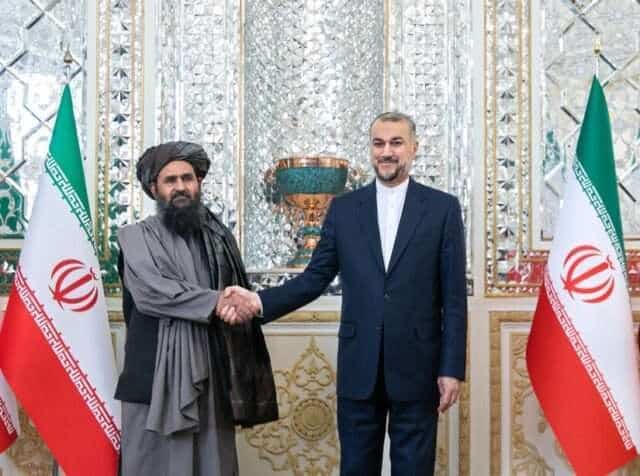
The timing deserves serious attention. Turkey’s intelligence chief, Ibrahim Kalin, recently visited Kabul and met senior Taliban officials, while a Qatari security delegation was also in the Afghan capital. Reports said the discussions focused on security, regional stability and bilateral relations. Kalin subsequently travelled to Pakistan, amid efforts involving regional countries to maintain dialogue between Islamabad and Kabul.
At precisely such a sensitive moment, another major terrorist attack has struck Khyber Pakhtunkhwa.
This does not, by itself, establish a connection between the diplomatic activity and the Kohat attack. Such a connection would require evidence. But it does demonstrate why the security dimension cannot be separated from the diplomatic one.
Pakistan’s relationship with Afghanistan is not simply a matter of border crossings and trade routes. It is also directly linked to the security of Pakistan’s western border and to the activities of armed groups operating in the region.
For Pakistan, therefore, engagement with Afghanistan cannot mean ignoring terrorism. Dialogue, trade and regional connectivity can only produce sustainable benefits when there is a credible security environment on both sides of the border.
At the same time, Pakistan must continue to make a distinction between the Afghan people and armed groups that threaten Pakistan. Millions of Afghans have longstanding social, cultural and economic links with Pakistan. The problem is terrorism, not an entire population.
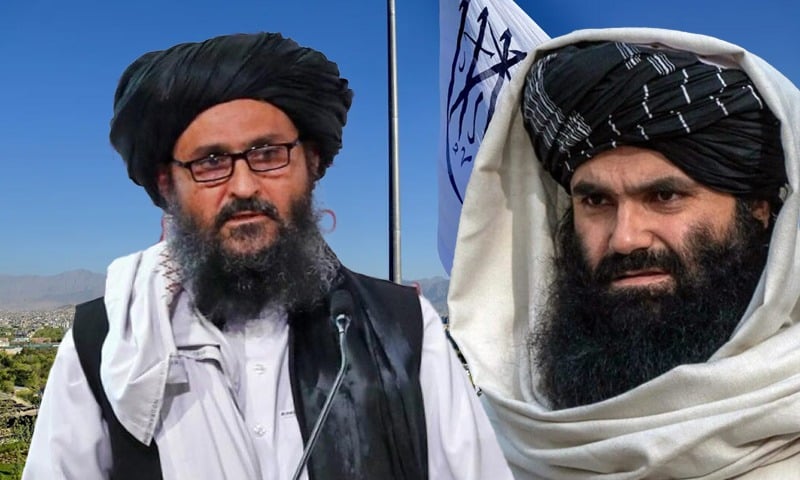
The same principle applies to Afghanistan’s internal power structure. There have been differences among Taliban factions and personalities, but these should not automatically be interpreted as evidence of an imminent collapse of the Afghan system. The Taliban leadership remains a complex structure involving political, military, religious and regional power centres. Reports of internal differences require careful verification before they are presented as decisive developments.
What is clear, however, is that instability in Afghanistan can have consequences far beyond its borders. Afghanistan has experienced decades of conflict, and the proliferation of weapons and armed networks has repeatedly created security challenges for neighbouring states.
That is why Pakistan has a direct interest in a stable Afghanistan, but stability cannot come at the cost of Pakistan’s security.
The international community and regional powers also have a responsibility. If diplomatic engagement with Kabul is intended to contribute to regional stability, counterterrorism must remain at the centre of that engagement. Commitments regarding the non-use of Afghan territory against other countries must be matched by practical steps on the ground.
Pakistan, for its part, must continue strengthening intelligence coordination, police capacity, border management and counterterrorism operations. The response cannot be limited to reacting after an attack. The objective must be to identify terrorist networks before they reach their targets.
The tragedy in Kohat also reminds us of another uncomfortable reality. Terrorists do not need to capture territory to damage a society. They can create fear by striking police stations, mosques, markets, roads and other public spaces. Their objective is to undermine confidence in the state and create the perception that ordinary life can be disrupted at any moment.
That is precisely why society must refuse to give terrorism the political or psychological space it seeks.
The people of Khyber Pakhtunkhwa have already paid an enormous price in the fight against terrorism. Police officers, soldiers, civilians, religious figures, tribal elders and families have all suffered. The loss of life in Kohat is therefore not an isolated tragedy. It is part of a wider security challenge that demands sustained national attention.
The immediate priority is to save lives, treat the wounded, complete the clearance operation and establish the facts behind the attack. The longer-term priority is even more important: dismantling the networks that plan and facilitate terrorism, wherever they operate.
Pakistan must continue pursuing diplomatic engagement with Afghanistan and other regional countries, but that engagement must be backed by clear security expectations. Regional connectivity and trade can become engines of prosperity only when terrorism is denied the ability to dictate relations between neighbouring states.
The people of Pakistan, particularly the people of Khyber Pakhtunkhwa, deserve nothing less than a sustained and comprehensive response.
Kohat should not become another tragedy remembered only through casualty figures. It should reinforce the national resolve to confront terrorism, strengthen the institutions fighting it and ensure that those responsible for attacking innocent worshippers and security personnel are held accountable.
The message from Pakistan should be clear: dialogue for peace will remain possible, regional cooperation will remain desirable, but terrorism cannot be allowed to become the price of either.