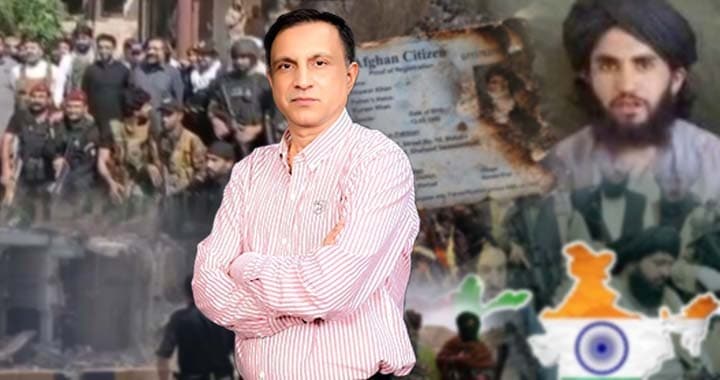
The attack on Kohat Police Lines is not simply another entry in Pakistan’s long list of terrorist incidents. It is a warning about the changing nature of the threat, the growing audacity of terrorist groups and, equally importantly, the priorities of those responsible for governing Khyber Pakhtunkhwa.
The attack began with a suicide vehicle laden with explosives striking the mosque inside the Police Lines during Friday prayers. Initial reports indicated that hundreds of people could have been present inside the mosque when the explosion occurred. The blast caused extensive damage, after which armed terrorists entered the Police Lines and engaged security personnel in a prolonged operation.
The fact that terrorists chose a mosque during Friday prayers makes the attack particularly disturbing. These were not people fighting for Islam or defending Muslims. They entered a place of worship and killed people while they were gathered for Friday prayers.
This raises a basic question: what kind of Islam is this, and what kind of humanity is this?
There is often outrage when Muslims are killed elsewhere in the world. That outrage is justified. But Muslims were killed inside a mosque in Kohat too. They were Pakistanis. They were police personnel and civilians. The terrorists came into a mosque during Friday prayers and accepted responsibility for the attack.
This is not an isolated phenomenon.
Police Lines and security installations have repeatedly been targeted. We have witnessed attacks in Peshawar, Bannu and other parts of the province. The Kohat attack demonstrates once again how terrorists exploit vulnerabilities around security installations.
The location of the mosque was particularly significant. It was close to the boundary wall of the Police Lines. Once the suicide vehicle created the initial breach and the attackers gained an entry point, armed terrorists were able to move into the compound. This suggests that the physical layout and security arrangements of sensitive installations require constant reassessment.
The operation that followed was prolonged and dangerous. Security forces ultimately cleared the Police Lines and eliminated all the attackers. Their response prevented the terrorists from achieving their wider objective after the initial devastation.
The attack in Kohat also came against the backdrop of another deadly incident in Kurram. A security forces vehicle was targeted there, resulting in the martyrdom of six soldiers, while eight terrorists were subsequently eliminated during the operation.
So we have Kohat on one side and Kurram on the other.
The entire province is facing a serious security challenge, and people are worried. Yet the question remains: where is the urgency from the provincial government?
A government confronted with this level of violence should be sitting continuously with its police, intelligence agencies and security institutions. It should be asking them what the emerging threats are, where those threats are coming from, what resources are required and what policy measures can reduce them.
Where are additional funds needed?
Where are weapons and equipment required?
What intelligence gaps exist?
What weaknesses have terrorists identified?
What support does the police require?
These are the questions that should be dominating the provincial government’s agenda.
But that does not appear to be happening with the seriousness that the situation demands. Cabinet meetings are held, but security does not appear to receive the attention it deserves. The relevant committees should be meeting security officials, intelligence representatives and police leadership and developing a coordinated response.
This is particularly troubling because the people being killed are not abstract statistics. They are Pakistanis. They are the people who live in these districts. They are voters of the same political parties that govern the province.
Two members of the provincial cabinet are themselves associated with Kohat. That should make the attack even more personal and politically urgent for the provincial government.
Yet instead of concentrating on the security crisis, political attention continues to be directed toward street politics and mobilization for protests.
If a government has time to organize political movements, travel for political activity and prepare for demonstrations, it should also have time to convene meetings on terrorism. The province cannot afford a situation in which political priorities overshadow the security of its own people.
The danger is not merely that terrorism will continue. The danger is that the nature of terrorism is changing.
Look at the wider regional picture.
There are growing concerns about terrorist organizations operating from Afghanistan. Turkey and Qatar have been engaging with the Afghan authorities, but the concerns extend beyond Pakistan. Al-Qaeda and Daesh are reportedly expanding their recruitment and organizational activity inside Afghanistan, including among Arabs and Central Asian nationals.
This should concern the entire international community.
If young people from different countries are being recruited into terrorist organizations operating from Afghanistan, the threat cannot be described as a Pakistan-only problem. Pakistan may be on the front line today, but the consequences can eventually reach other countries.
That is why the international community needs to pay attention to what is happening there.
The issue of Al-Qaeda is particularly important. Twenty-five years after the September 11 attacks, the world cannot afford to assume that the threat represented by Al-Qaeda has disappeared simply because its organizational structure has changed.
The killing of Osama bin Laden did not eliminate the ideology or the networks associated with Al-Qaeda. There have also been questions surrounding the deaths and whereabouts of senior Al-Qaeda figures over the years. What matters now is that terrorist organizations are again attempting to recruit, reorganize and establish themselves.
If these organizations are receiving financing, facilities and space to operate, the consequences will not remain confined to Afghanistan or Pakistan.
That is precisely why reports and international assessments concerning terrorist activity in Afghanistan should not be dismissed.
Pakistan’s security problem also cannot be separated from developments across the western border. The Afghan Taliban have repeatedly given assurances about preventing terrorism and have made commitments on various forums. Yet terrorist attacks continue, and groups hostile to Pakistan continue to operate.
The international community must therefore ask whether those commitments are being implemented in practice.
Pakistan’s problem is not simply whether it can reopen borders or expand trade. Pakistan wants stable relations and economic engagement, but security cannot be treated as a secondary issue. If attacks continue and terrorist networks remain active, simply talking about trade or normal relations will not solve the underlying problem.
This is also why recent international criticism of Afghanistan matters.
When international bodies raise concerns about terrorism originating from Afghan soil, it should not be viewed merely through the prism of Pakistan-Afghanistan relations. The threat posed by Al-Qaeda, Daesh and other terrorist organizations has the potential to become global.
There is another important dimension to this problem. Terrorist organizations do not normally operate without resources. Someone provides financing. Someone facilitates movement. Someone provides training, shelter or logistical support. Someone enables the infrastructure.
That does not mean every allegation about state sponsorship should automatically be accepted without evidence. But neither should credible intelligence and international assessments simply be ignored.
Pakistan has a direct security interest in determining where these networks are operating, how they are being financed and how they are moving personnel across borders.
The Kohat attack should therefore be treated as more than a single tragic incident. It should be a wake-up call for the provincial government, the federal government and the international community.
For Khyber Pakhtunkhwa, the first responsibility is straightforward: protect its people.
That requires sitting with the security forces, intelligence agencies and police, identifying the gaps and developing a policy based on the actual threat rather than political convenience.
The people of Kohat, Kurram, Bannu, Peshawar and the rest of the province do not need another political slogan. They need security.
And when terrorists can attack a mosque during Friday prayers, enter a police compound and force security personnel into a prolonged battle, there is no room for complacency.
The province needs its government focused on the threat in front of it.