
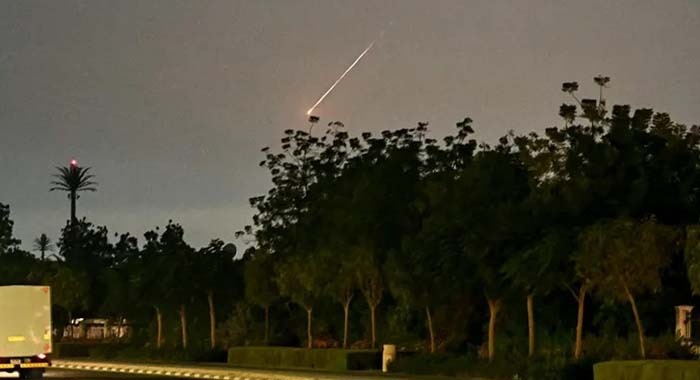
The Israeli Defense Forces (IDF) have officially confirmed the commencement of a new series of airstrikes on Iranian territory, with a focus on strategic missile launch sites and defense systems in central Iran. This marks a significant escalation in the ongoing conflict between the two nations and comes amidst rising tensions in the Middle East.
The Israeli military has stated that the airstrikes are aimed at crippling Iran’s missile infrastructure, specifically targeting facilities used for missile production and launch operations. These strikes are also intended to disable Iran’s defense systems, which have been a critical component of the country’s military capabilities. The IDF emphasized that these actions are part of Israel’s broader strategy to neutralize what it considers a growing security threat posed by Iran’s missile and defense programs.
According to Israeli officials, the operation was carried out with precision to minimize collateral damage and avoid civilian casualties. The airstrikes targeted key military installations in central Iran, including sites associated with the production, storage, and potential launch of ballistic missiles. The IDF has not disclosed the exact locations of the targets, citing operational security concerns.
The Israeli military’s official spokesperson confirmed that the strikes were a direct response to Iran’s increasing military activities, which Israel views as a threat to its national security. The spokesperson further stated that the airstrikes are part of an ongoing campaign aimed at degrading Iran’s ability to project military power across the region, particularly in the context of its involvement in proxy conflicts and its growing missile technology.
This new wave of Israeli airstrikes comes amid an already volatile geopolitical climate in the Middle East, where tensions between Israel and Iran have been intensifying in recent months. Iran’s involvement in various regional conflicts, including its support for militias in Syria, Lebanon, and Iraq, as well as its nuclear ambitions, has been a point of contention between the two nations.
The airstrikes have raised concerns among global powers, who have called for restraint and dialogue in order to prevent further escalation. The United Nations and several European governments have expressed concern over the potential for the situation to spiral into a broader regional conflict, urging both sides to pursue diplomatic solutions to reduce tensions.
Iran has yet to officially respond to the Israeli airstrikes, but reports indicate that Tehran’s military forces have begun preparing for retaliation. Iran has previously vowed to retaliate against any Israeli aggression, and it is widely anticipated that the escalation may provoke further military exchanges in the coming days.
Israel’s objectives with these latest strikes are multifaceted. In addition to disrupting Iran’s missile and defense systems, Israel aims to send a clear message about its commitment to countering Iran’s military influence in the region. Israeli officials have repeatedly expressed concerns about Iran’s missile development and its potential to target Israeli cities with advanced ballistic missiles.
In recent years, Israel has conducted similar operations against Iran’s nuclear and military facilities, although this is the first major airstrike campaign in 2026 targeting Iran’s missile infrastructure. Experts suggest that Israel is attempting to preemptively neutralize any potential threat before it can materialize, particularly in light of ongoing diplomatic challenges surrounding Iran’s nuclear program.
The international community has responded with mixed reactions. While some countries have expressed support for Israel’s right to defend itself against perceived threats, others have cautioned against further escalation. The European Union and Russia have called for urgent diplomatic efforts to prevent the situation from spiraling out of control.
The United States has issued a statement reaffirming its commitment to Israel’s security, while also urging both sides to avoid civilian casualties and to pursue diplomatic channels to address the broader security concerns. As the situation develops, the potential for further military exchanges remains high, with analysts predicting that Iran may retaliate in the coming days.



