
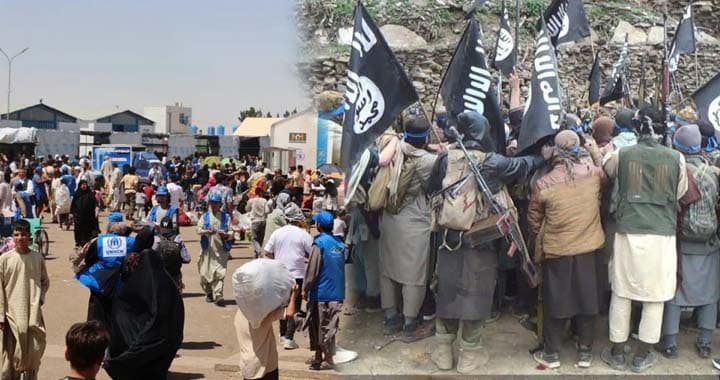
Diplomatic and security officials from the UN and Europe have raised the alarm over the growing risk that Islamic State Khorasan Province (IS-KP) could exploit the mass deportation of Afghan migrants from Pakistan and Iran, viewing the influx as a ripe opportunity for recruitment.
According to a report by Agence France-Presse (AFP), approximately 2.6 million Afghans have returned to Afghanistan since the beginning of 2024. Many have arrived after decades in exile, while others are stepping onto Afghan soil for the first time. This massive displacement, experts say, is unfolding into a security crisis.
“The risk that IS-KP sees these newly arrived Afghans as a potential recruitment pool is high,” said Hans-Jakob Schindler, former coordinator of the UN Security Council’s monitoring team on militant groups.
He noted that since the Taliban’s return to power in 2021, the IS-KP has tapped into disaffected Taliban fighters and alienated citizens, expanding its presence across Afghanistan, especially in the east.
A European diplomat echoed these concerns, telling AFP that economic desperation remains a major driver: “We already know that some Afghans join terrorist groups not out of ideology, but because they have no other option.”
Deportees Caught Between Poverty and Extremism
The UN High Commissioner for Refugees (UNHCR) estimates that up to 4 million Afghans could return to the country by the end of 2025, intensifying pressures on an already strained social and economic system.
“These returnees face enormous challenges; they have no jobs, no homes, no access to services,” said Indrika Ratwatte, the UN’s humanitarian coordinator in Afghanistan. He warned that this vacuum of opportunity makes them vulnerable to exploitation by armed groups.
According to World Bank data, nearly 50% of Afghanistan’s 48 million people live below the poverty line, while unemployment among young Afghans (aged 15–29) stands at around 25%.
Analysts say deportees are often treated as outsiders in their own country, especially those returning after decades abroad.
“Many have lost everything; homes, businesses, property, and become easy targets for transnational terror networks operating in the region,” said Amina Khan of the Institute of Strategic Studies in Islamabad.
IS-KP Remains the Most Lethal Threat
While the Taliban have largely ended their own insurgency since taking power, IS-KP continues to launch sporadic but deadly attacks, threatening both Taliban rule and wider regional stability. The UN has identified IS-KP as the most dangerous extremist group in Afghanistan, with an estimated 2,000 fighters.
The group has claimed or been linked to attacks in Pakistan, Iran, and Russia in recent years, and its ambitions appear to stretch across borders. In July, the UN warned that Afghanistan remains fertile ground for terrorist groups, posing a significant risk to Central Asia and beyond.
Russia has gone further, claiming that up to 23,000 fighters from 20 different terrorist groups are currently present in Afghanistan. Russian Security Council Secretary Sergei Shoigu recently warned that IS-KP maintains training camps in the east, north, and northeast of the country, calling the situation deeply concerning.
Europe on Alert
European diplomats have also expressed fears that IS-KP could export violence beyond the region. Hans-Jakob Schindler noted that several foiled terror plots in Europe between 2023 and 2025 were traced back to IS-KP operatives or influence.
One European official described the situation as a “ticking time bomb” for the continent, warning of a growing nexus between displacement, radicalisation, and transnational terror.
Aid Cuts Fuel the Fire
Despite the rising risks, humanitarian aid to Afghanistan has been sharply reduced, particularly by the United States, which aims to prevent funds from reaching the Taliban. However, experts warn that these cuts may further isolate vulnerable populations, pushing them closer to the very groups the international community seeks to defeat.
The UN has called for a long-term strategy focused on restoring dignity and opportunity for returnees, stressing that only inclusive development can disrupt extremist recruitment pipelines.



