
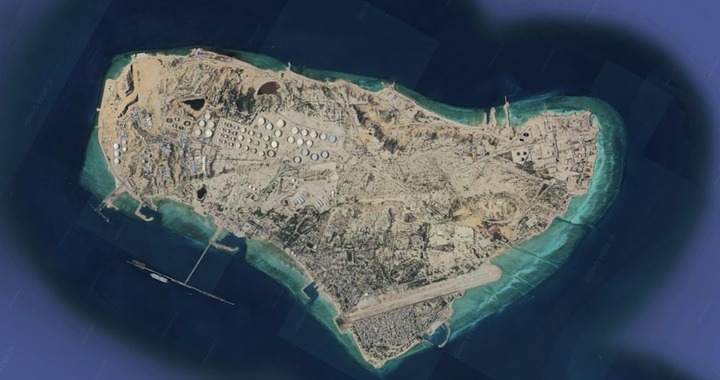
The ongoing United States-Israel military campaign against Iran has entered its third week, escalating tensions across the Middle East after US forces targeted military installations on Iran’s strategic Kharg Island, a critical hub through which nearly 90 percent of the country’s crude oil exports are routed.
According to official sources, the attacks specifically targeted Iranian military sites while deliberately sparing oil infrastructure. US President Donald Trump warned that Iran’s energy facilities could be struck if Tehran interferes with shipping through the Strait of Hormuz, underscoring the strategic leverage the US holds over global energy flows.
The Islamic Revolutionary Guard Corps (IRGC) reported coordinated missile and drone strikes on Israel with its Lebanese proxy, Hezbollah, citing annual al-Quds Day operations in support of the Palestinian cause. Meanwhile, US Secretary of Defense Pete Hegseth claimed that Iran’s new supreme leader, Mojtaba Khamenei, is reportedly wounded and possibly disfigured. The US Department of State has offered a $10 million reward for information on Khamenei and other senior Iranian officials.
Since 28 February, US-Israel attacks have killed at least 1,444 people and injured 18,551 in Iran. President Trump described the targeted military installations on Kharg Island as Iran’s “crown jewel,” emphasizing their strategic importance to Tehran’s military capabilities.
Iranian retaliation: Iran has launched drone and missile attacks on US military assets, commercial sites, and regional infrastructure across the Gulf.
Saudi Arabia: Intercepted six drones—five in the eastern region and one over the Empty Quarter desert.
Qatar: Successfully intercepted an incoming missile, issued heightened alerts to mobile phones, and temporarily evacuated parts of Education City.
Bahrain: Sirens sounded across the country, with the Ministry of Interior urging residents to seek safe locations.
Oman: Following recent drone incidents killing two civilians, Sultan Haitham bin Tariq and Qatar’s Emir Sheikh Tamim bin Hamad Al Thani held a call urging dialogue and regional de-escalation.
Formula One disruption: The Bahrain and Saudi Arabia F1 races have reportedly been cancelled or rescheduled due to escalating security risks.
The US is deploying 10,000 interceptor drones to the Middle East to counter Iranian attacks, while media reports indicate a potential deployment of the USS Tripoli with 2,500 marines. Hegseth stated that the US military would show “no quarter, no mercy” against Iranian targets, prompting concerns from lawmakers about possible escalation and legal implications.
While military sites were destroyed on Kharg Island, the oil infrastructure was deliberately spared, preserving Iran’s crude export channels for now. Analysts highlight that this restraint signals both strategic warning and leverage, as a strike on oil facilities could severely disrupt global crude exports and intensify energy shocks.
Israel: Reports indicate approximately 7,600 strikes in Iran and 1,100 in Lebanon since 28 February. Smoke was observed over Tel Aviv after Israeli warnings of Iranian missile fire.
Lebanon: Israeli attacks have killed at least 773 people since 2 March, targeting infrastructure, healthcare facilities, and a UNIFIL base housing Nepalese peacekeepers. Lebanon’s Health Ministry condemned the strikes on medical centers, which killed 12 healthcare personnel. Hezbollah’s leader Naim Qassem stated that the group is prepared for a “long confrontation” with Israel, framing its actions as legitimate defense.
US Embassy targeted: A missile strike hit the helipad and destroyed the air defense system at the US Embassy in Baghdad, located in the Green Zone. Iraqi authorities and the international community are monitoring the situation closely.
Diplomatic measures: Iraq’s Prime Minister Mohammed Shia al-Sudani pledged to prevent further attacks, especially after a French soldier was killed by a drone strike in the semi-autonomous Kurdish region.
Turkiye: Issued travel advisories, warning citizens to avoid non-essential trips to Iraq due to escalating instability.
The conflict has already triggered a global energy crisis:
-
Oil releases: Canada announced the release of 23.6 million barrels of oil through the International Energy Agency (IEA) as an emergency measure.
-
Aviation impact: Airlines in India, including Air India and IndiGo, increased ticket fares due to surging aviation turbine fuel costs.
-
Strategic shipping: Countries such as India, France, and Italy are negotiating directly with Iran for safe passage through the Strait of Hormuz, suggesting a shift in control over immediate crisis management from the US to regional diplomacy.
The US-Israel campaign demonstrates the ability to cripple Iran’s military infrastructure while maintaining restraint over energy assets, though Iranian retaliation and regional escalation remain high risks. Analysts warn that continued hostilities could further destabilize the Gulf, exacerbate the global energy crisis, and increase humanitarian costs in Iran, Lebanon, Iraq, and neighboring countries.
The situation remains fluid, with ongoing strikes, counterstrikes, and diplomatic efforts likely to shape both regional security and global energy markets in the coming weeks.



