
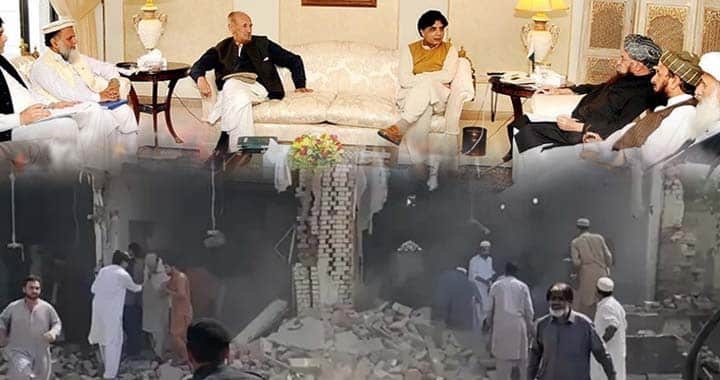
A new policy review has documented 16 instances between 2009 and 2023 in which former prime minister Imran Khan advocated, facilitated or defended negotiations, reconciliation or rehabilitation involving the banned Tehreek-e-Taliban Pakistan (TTP), placing the recent security crisis in Khyber Pakhtunkhwa against a much longer record of engagement with the group.
Titled The Khyber Pakhtunkhwa Terrorism Conundrum, the review traces Khan’s public position from calls for negotiations during the Swat conflict to the proposal for opening a TTP office, the 2021 talks with the group and subsequent arguments for rehabilitation and resettlement.
The review distinguishes between political advocacy, government action and documented concessions, while noting that the record does not establish that every subsequent terrorist attack was caused by any particular political party.
According to the report, Khan repeatedly promoted negotiations from 2009 onward, including a 2013 proposal to allow the TTP to establish an office in Pakistan to facilitate talks. PTI-led authorities in Khyber Pakhtunkhwa also offered facilities and security for negotiations in 2014.
The policy moved from advocacy to formal negotiations during Khan’s tenure as prime minister in 2021. The report says Khan publicly confirmed talks with sections of the TTP in October that year, while the Afghan Taliban facilitated the process.
A ceasefire was announced in November 2021, but the TTP ended it on December 9. AFP subsequently reported that up to 100 TTP prisoners had been released during the preceding days.
The review also records later calls for rehabilitation. In January and February 2023, Khan defended a proposal to bring TTP members and their families back to Pakistan, while arguing that relations with the Afghan Taliban should not be damaged. He later maintained that rehabilitation was the available option following the Taliban takeover of Afghanistan.
The report further notes that former KP government spokesman Barrister Muhammad Ali Saif continued to support negotiations in 2022, while a NACTA briefing reported by Geo stated that the talks period had allowed the TTP to expand its footprint and increase its strength.
The policy did not end with Khan’s federal government. The review records then-KP chief minister Ali Amin Gandapur advocating meaningful negotiations in 2024 and Khan subsequently backing direct provincial engagement with Kabul over insecurity.
It also records more recent calls by current KP Chief Minister Sohail Afridi for engagement with Kabul and reopening the border.
The review says the significance of the chronology lies not in treating negotiations themselves as proof of responsibility for later violence, but in examining whether concessions were accompanied by enforceable conditions, monitoring mechanisms and safeguards.
It argues that prisoner releases, rehabilitation proposals and political engagement warrant scrutiny against the eventual breakdown of the ceasefire and the subsequent resurgence of terrorism.



