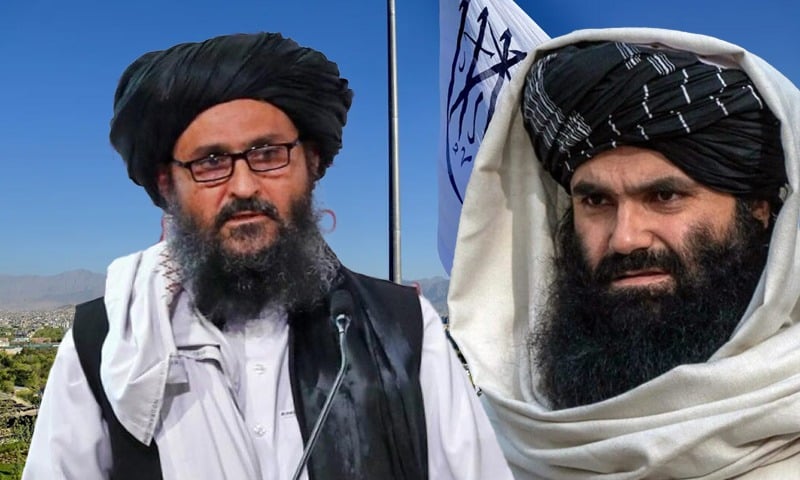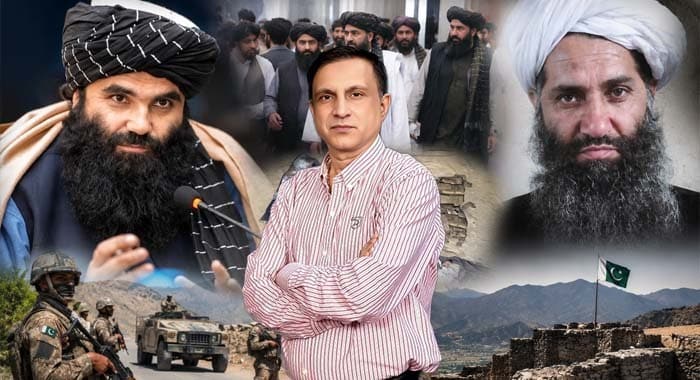
The differences within the Afghan Taliban leadership are not new, but they have become increasingly visible over the past few years. Sirajuddin Haqqani, the Taliban government’s interior minister, has long had disagreements with the movement’s supreme leader, Sheikh Hibatullah Akhundzada, over governance, decision-making, women’s role in society and relations with Pakistan and the international community.
Since the Taliban returned to power nearly five years ago, these differences have continued to surface over several important issues. One of the fundamental disagreements concerns the way Afghanistan is being governed. Sheikh Hibatullah operates from Kandahar and has not even visited Kabul, although the Taliban government and its administrative machinery are based in the capital.
He continues to run government affairs from Kandahar, and whenever the administration in Kabul makes a decision, the supreme leader can veto it. This has created difficulties for those responsible for running the government because decisions taken by ministers and other officials can be overturned at any time.
The internet shutdown issue was one example of these differences. Sheikh Hibatullah had ordered the internet to be shut down, which created serious problems for government departments and administrative affairs. In today’s world, almost everything depends on internet connectivity. Without it, people cannot communicate properly, complete documentation or carry out routine administrative work.
Sirajuddin Haqqani questioned how the government could function under such circumstances. He argued that shutting down the internet was not a workable approach in the present age. Following his objections, internet services were restored after three or four days. This was one of the early examples of disagreements emerging over governance and the practical running of the administration.
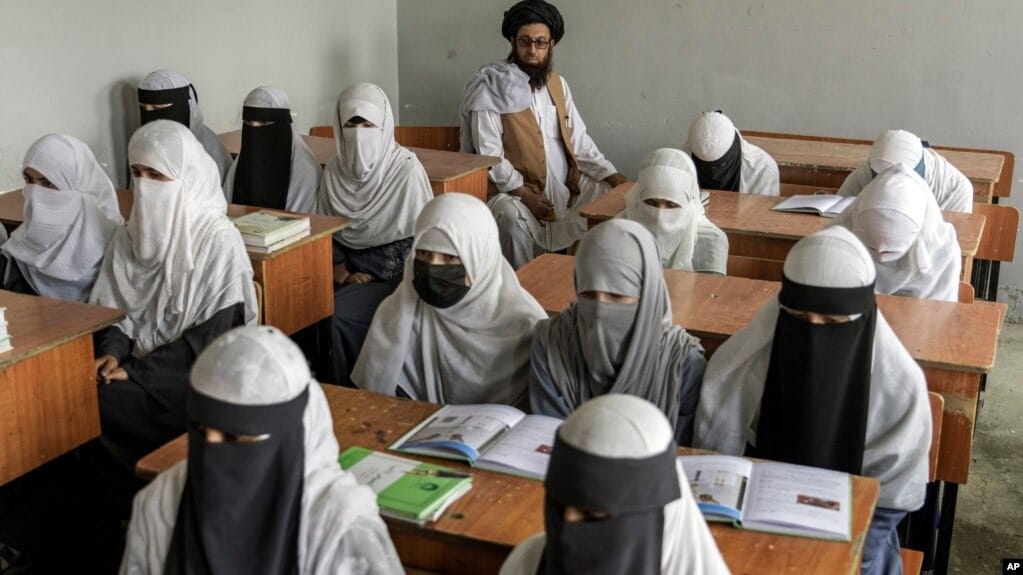
Women’s education and participation in society constitute another major area of disagreement. Sheikh Hibatullah maintains a particularly strict position, opposing women’s education and insisting that they should remain at home rather than attend schools, colleges or workplaces. He also believes that women should not leave their homes for education, employment or business activities.
Sirajuddin Haqqani, by contrast, has a relatively more open approach. He believes women should be able to work in different departments and run their own businesses. He has also made efforts to bring women forward and give them opportunities to participate in different fields. These differences have remained an important source of disagreement between the two leaders.
Another significant issue is the concentration of authority in the hands of the supreme leader. Sirajuddin Haqqani has repeatedly expressed reservations in different meetings, arguing that important decision-makers are not consulted and that Sheikh Hibatullah handles matters independently before issuing orders for the government to implement.
Haqqani has indicated on several occasions that the government cannot function effectively if those responsible for running its affairs are excluded from decision-making. There have also been reports of dissatisfaction among several ministers over this arrangement.
Relations with Pakistan and the international community are another area where the two sides have differing approaches. Sirajuddin Haqqani believes that Afghanistan should maintain better relations with Pakistan. This, too, has contributed to disagreements within the Taliban leadership.
However, Sheikh Hibatullah remains the supreme leader and exercises greater authority over government policies. Consequently, Haqqani has so far avoided taking his disagreements to a point where he would be forced to resign and leave the government. He appears to prefer finding a middle ground rather than creating a confrontation that could lead to a government split.
Nevertheless, there is a limit to how long such differences can be contained. Sirajuddin Haqqani heads a powerful group within the Taliban movement. If he eventually feels that his influence and authority are being sidelined and that his position in the government has become ineffective, the possibility of a deeper split cannot be ruled out.
There are already several groups operating against the Taliban government, including the United Front and Afghan Front, among others. Some of these groups are headed by former Afghan army personnel. Haqqani believes that the Taliban should engage with them through dialogue. His position suggests that he favors communication and political engagement rather than treating every opposing group solely through confrontation.
He has considerable experience and understands the importance of leadership, but challenging Sheikh Hibatullah remains difficult because of the latter’s position as the movement’s supreme authority.
Counterterrorism Operations Gain Momentum Across KP
Turning to the security situation in Khyber Pakhtunkhwa, there has been a noticeable acceleration in counterterrorism operations compared with the previous provincial government’s tenure. Operations are now being conducted across different parts of the province, and there are positive developments in terms of terrorists being eliminated and their networks being targeted.
Khyber Pakhtunkhwa has eight merged districts and four other sub-districts, and operations are underway in most of these areas. On the 17th, an operation in South Waziristan resulted in the elimination of around 10 terrorists. In North Waziristan, security forces have also conducted operations in different areas, eliminating terrorists.
These operations are not confined to the merged districts. Security forces have also carried out action in areas such as Bakakhel, where a substantial quantity of weapons was recovered. Terrorists conceal weapons and explosives in different locations, including forests, mountainous terrain and other remote areas. Security forces have now started locating and recovering these hidden weapons and explosives as well.
Operations have also been conducted in Lakki Marwat, while security action continues in different parts of Bannu. In Kurram, an operation was also carried out in which terrorists were eliminated. The overall effort is aimed at targeting terrorist networks wherever intelligence identifies their presence.
One important development is the cooperation of the provincial government. Unlike the situation previously, the provincial government is now fully on board and providing support for counterterrorism efforts. Intelligence gathering has also improved, while coordination between different institutions has become more effective.
The public is extending support as well. The police, Counter Terrorism Department (CTD) and Special Branch are all playing important roles in these operations. This coordination is helping security institutions act on intelligence and target terrorist elements in different districts.
However, these operations also involve sacrifices. Just two days ago, an Army major and a soldier embraced martyrdom. Police personnel are also being targeted by terrorists. It would therefore be wrong to assume that the improved operational tempo has come without a cost. Whenever security forces move against terrorist hideouts, they face resistance and attacks from those being targeted.
Nevertheless, the overall security situation in the province has shown improvement. Previously, major incidents were occurring almost every week. Now, there have been stretches of several days without major terrorist incidents. There are still attacks, and the martyrdom of security personnel remains a serious concern, but the frequency and scale of major incidents have changed.
The Kohat incident, in which 10 people were martyred, needs to be viewed in the context of a wider terror-crime nexus. Terrorism is not operating in isolation. Smugglers, criminals and those involved in illegal mining are also part of this wider network. These interconnected interests create an environment in which criminal and terrorist activities can support and reinforce one another.
If the Kohat incident involving the martyrdom of 10 people is considered separately, there have not been many major incidents or large-scale attacks across the province during the rest of the month. There have been smaller incidents, and security personnel have embraced martyrdom during targeted operations, but the overall pattern is different from what was being witnessed previously.
Another encouraging development is that terrorists planning attacks are increasingly being intercepted and arrested before they can carry out their intended operations. This indicates that intelligence gathering, police work and coordination among security institutions are contributing to a more effective security response.
If we compare the current situation with the period of the previous PTI provincial government, there has been a considerable change. Security forces have strengthened their operational capabilities, intelligence-based operations are being conducted more rapidly, and different institutions are working together more closely.
The challenge now is to sustain this momentum. Counterterrorism operations must continue wherever terrorist networks are identified, while intelligence, public cooperation and coordination between the provincial government, police and security forces remain essential. The progress achieved so far needs to be consolidated to prevent terrorists from exploiting any gaps in the security system.