
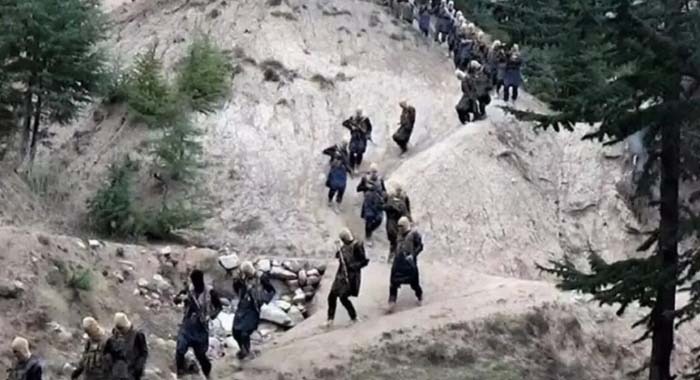
Militant violence rarely survives on weapons alone. It requires narrative oxygen, ideological validation, and operational space. In Afghanistan’s evolving security environment, anti-Pakistan militancy is increasingly normalized through rhetoric, symbolism, and facilitation structures.
Ideological Legitimization
Public praise for TTP leadership figures has surfaced repeatedly, blurring lines between militant actors and political authority. Such signaling:
Boosts militant morale
Reframes attacks as religiously or politically justified struggle
Media framing amplifies this effect. Attacks targeting Pakistan are often couched in jihadist terminology, reinforcing recruitment pipelines and ideological buy-in.
Propaganda as Force Multiplier
Militant groups contest perception spaces as aggressively as battlefields. Digital propaganda units produce:
Battlefield footage
Martyrdom narratives
Training visuals
Cross-border attack claims
The Previous Read: Sanctuaries Persist Despite Edict: Afghanistan’s Militant Network Remains Operational
These materials circulate via encrypted platforms and sympathetic media, extending militant reach far beyond physical territory.
Safe Havens and Logistic Depth
On the ground, facilitation extends beyond rhetoric. Intelligence assessments indicate:
Safe houses
Madrassa-linked shelters
Weapons storage sites
Transit staging points
These infrastructures allow militants to plan, recuperate, and redeploy with minimal disruption.
Collaboration Across Groups
Tactical coordination between groups traditionally viewed as separate, including BLA elements and TTP-linked facilitators, has increased. Such linkages enable:
Resource pooling
Attack synchronization
Intelligence exchange
The shift from parallel to collaborative militancy significantly heightens the threat spectrum.
Enforcement vs Reality
Taliban decrees aimed at restricting militant activity face credibility tests in this environment. When ideological endorsement coexists with operational tolerance, enforcement is inconsistent at best, symbolic at worst.
Normalization operates on three reinforcing layers:
Narrative validation
Logistic facilitation
Operational collaboration
Together, they sustain a threat architecture that is ideological as much as military.



