
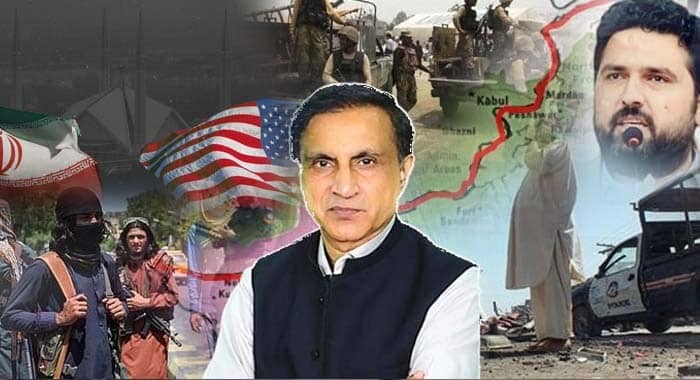
The relations between Pakistan and Afghanistan are once again entering a phase of tension, uncertainty, and strategic mistrust, despite multiple rounds of dialogue and diplomatic engagement in recent months. What initially appeared to be a pathway toward stabilization has instead revealed deeper structural issues that continue to drive instability along the border.
The situation at the border has worsened in a way that cannot be explained by isolated incidents alone. Pakistan has repeatedly pointed out that attacks are being launched from across the border, even after assurances were given during earlier negotiations that Afghan soil would not be used for such purposes. This contradiction between commitment and action lies at the core of the present crisis.
It is important to recall that significant diplomatic efforts were made to resolve these tensions. China, in particular, played a central role in facilitating dialogue between the two sides. The talks, which continued for several days, created an expectation that both countries would move toward a more stable and cooperative framework. During that period, there were visible signs of progress. Afghan authorities reportedly detained individuals linked to cross-border violence, and official statements suggested a willingness to address Pakistan’s concerns.
However, these measures proved to be inconsistent. Detentions were short-lived, enforcement appeared selective, and the overall approach lacked continuity. As a result, what initially seemed like a shift in policy began to look more like a temporary adjustment rather than a sustained commitment. This inconsistency reinforced the long-standing trust deficit between the two sides.
The key question, then, is why the situation has deteriorated again despite these efforts.
A major factor is the evolving nature of militant networks operating in the region. The threat is no longer limited to a single group. While the banned TTP remains central, there is increasing evidence that other organizations, including Al-Qaeda, have become more active. Previously, such groups were believed to play a supporting or facilitative role. Now, their involvement appears more direct, both in terms of messaging and operational coordination.
Recent statements attributed to these groups indicate an attempt to frame the conflict in ideological terms, portraying violence as part of a broader struggle. This shift is significant because it expands the scope of the conflict beyond immediate tactical objectives. It transforms localized violence into part of a larger narrative, one that is harder to contain and more difficult to counter.
This development also explains the increasing intensity and frequency of attacks. The conflict is no longer driven solely by operational considerations but is being amplified by ideological motivations that encourage escalation rather than restraint.
Another critical dimension is the changing pattern of attacks. In the past, most operations were directed at security forces, including the army and police. While such attacks continue, there has been a noticeable shift toward targeting civilians. This change is reflected in recent incidents where non-combatants, including children, have been deliberately targeted.
The use of drones and quadcopters represents a key element of this shift. These technologies allow attackers to strike from a distance, reducing their own risk while increasing the psychological impact on the population. Such tactics are not only designed to cause casualties but also to create fear and uncertainty, extending the impact of each attack far beyond its immediate physical consequences.
There are also claims that these technologies are being sourced and supported externally, adding another layer of complexity to the conflict. Whether through direct provision or indirect facilitation, the presence of advanced capabilities suggests that the threat environment is evolving in ways that require a more sophisticated response.
At the same time, the internal dynamics within Afghanistan present their own challenges. The Afghan Taliban leadership does not appear to be fully unified in its approach. Different figures and factions issue statements that are often contradictory. Some emphasize restraint and engagement, while others adopt a more aggressive stance.
This lack of coherence creates uncertainty for Pakistan. It becomes difficult to determine which statements reflect actual policy and which are merely rhetorical. Without a clear and consistent position from the Afghan side, even well-intentioned diplomatic efforts struggle to produce lasting results.
There is also the issue of capacity and willingness. The Afghan authorities may face constraints in taking action against certain groups, particularly if those groups have established networks or alliances within the broader terrorist landscape. There are indications that concerns about internal stability may limit their willingness to confront these elements directly.
Beyond the immediate security concerns, the broader regional context also plays a role. The situation is influenced by a range of external factors, including geopolitical competition and proxy dynamics. Various actors may have an interest in sustaining a level of instability, either to exert pressure or to advance their own strategic objectives.
At the same time, Afghanistan itself is facing a severe economic and humanitarian crisis. A significant portion of the population is dealing with poverty, unemployment, and lack of basic resources. International reports have highlighted both the presence of multiple militant organizations and the scale of economic hardship.
This creates a complex dilemma for the international community. On one hand, there is a need to prevent Afghanistan from becoming further isolated, as isolation can exacerbate instability. On the other hand, ongoing security concerns make engagement difficult and politically sensitive.
Pakistan’s position reflects this complexity. It has expressed a willingness to engage economically and support regional connectivity, including trade and transit arrangements. However, this willingness is conditional. The primary requirement remains that Afghan territory must not be used for attacks against Pakistan.
Repeated violations of this condition undermine the basis for cooperation. Each incident reinforces skepticism about the effectiveness of diplomatic commitments and raises questions about enforcement on the ground.
Looking ahead, there are indications that Pakistan may adopt a more assertive approach if the current trend continues. This could involve targeted actions against identified threats, particularly if cross-border attacks persist.
Such a response would be consistent with the principle of self-defense, but it also carries the risk of further escalation.
At the same time, there is a growing argument for the establishment of a monitoring mechanism that could provide independent verification of incidents. A neutral third-party system could help reduce ambiguity, ensuring that claims and counterclaims are assessed on the basis of evidence rather than perception. This, in turn, could help rebuild a degree of trust.
Ultimately, the situation reflects a convergence of multiple challenges: security threats, diplomatic limitations, internal divisions, and external pressures. Addressing any one of these in isolation is unlikely to produce lasting stability.
What is required is a comprehensive approach that combines credible enforcement with consistent communication and sustained engagement. Without such an approach, the cycle of dialogue and disruption is likely to continue.
Because at its core, the issue is not only about border incidents or isolated attacks. It is about whether a framework can be built in which commitments are honored, responsibilities are clearly defined, and actions on the ground align with assurances given across the table.
And until that alignment is achieved, tensions will persist, uncertainty will grow, and the prospects for lasting stability will remain fragile.



