
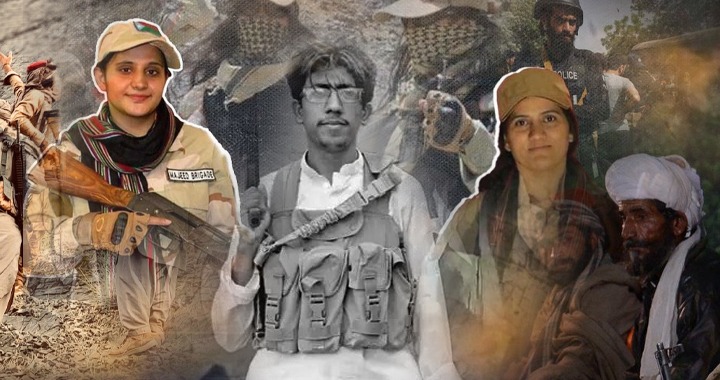
The killing of banned BLA commander Javed Phaliya is not an isolated security incident. It reflects a deeper, structural pattern in how militant organizations operating in Balochistan recruit, radicalize, and weaponize individuals with criminal backgrounds, particularly those already alienated from society.
Crime as a Gateway to Militancy
Militant organizations in Balochistan have long relied on criminal ecosystems to replenish their ranks. Individuals involved in robbery, extortion, murder, or moral crimes often find themselves cornered by law enforcement. At this point, militant groups offer an escape route, shelter, protection, and a false sense of purpose.
Javed Phaliya’s trajectory fits this pattern precisely. His transition from repeat offender to militant commander occurred only after a serious crime left him with no viable legal exit. Militancy, in such cases, becomes less an ideological choice and more a survival strategy rooted in fear and impunity.
Psychological Exploitation and Coercive Recruitment
Security assessments indicate that banned groups such as the BLA and BLF operate structured recruitment cells designed to identify psychologically vulnerable individuals. These networks use a combination of emotional manipulation, threats, blackmail, and social pressure to break resistance.
Young men, teenage boys, and increasingly women are targeted due to limited life experience, economic distress, and social isolation. Once recruited, individuals are subjected to ideological conditioning that reframes personal failure and criminal guilt as political struggle.
This explains why many suicide attackers in recent years fall within a narrow age bracket or include women, groups that are more susceptible to coercion and emotional exploitation.
The Role of External Sponsorship
The designation of the BLA as Fitna al-Hindustan underscores the broader geopolitical dimension of militancy in Balochistan. External sponsorship allows these groups to sustain recruitment pipelines, provide logistical support, and compensate families of militants, further incentivizing participation among economically distressed communities.
Criminal recruits serve a dual purpose. They bring operational experience with violence and are easier to control due to their compromised legal status.
The Cost of Narrative Distortion
A critical and often overlooked factor is the role of certain political and social actors who, deliberately or otherwise, amplify militant narratives. By downplaying recruitment methods, ignoring coercion, or portraying militants as political actors rather than criminal-terrorist hybrids, these voices indirectly strengthen extremist networks.
The greatest cost of this distortion is borne by Baloch youth, who become both victims and instruments of violence.
Security Operations and Strategic Messaging
The elimination of figures like Javed Phaliya carries significance beyond tactical success. It reinforces a strategic message that criminality and militancy are interconnected paths leading to the same outcome: failure and death.
Security forces increasingly focus on dismantling recruitment infrastructure rather than merely neutralizing attackers. This includes intelligence-led operations, financial disruption, and counter-radicalization efforts aimed at breaking the cycle that converts criminals into militants.
Balochistan’s Real Future
The broader lesson from this case is clear. Balochistan’s stability does not lie in armed movements or criminal networks, but in governance, development, and the rule of law. Every individual drawn into militancy represents a failure of social protection and a success for violent networks.
The end of Javed Phaliya reinforces a reality that militant propaganda cannot erase: the road of violence offers no redemption, no justice, and no future. Only peace, lawful governance, and opportunity can prevent the next generation from walking the same destructive path.



