
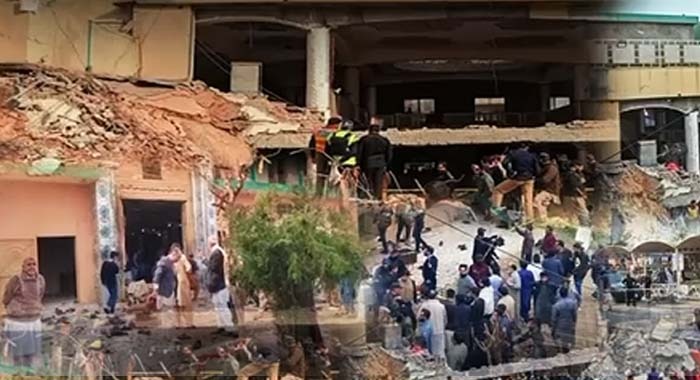
Over the past two decades, Pakistan has faced a brutal campaign of terror carried out by the militant group Fitna-al-Khawarij, which has systematically targeted mosques, imambargahs, and other places of worship. Hundreds of innocent worshippers have been killed or injured in these attacks, leaving communities across the country traumatized and on high alert.
Fitna-al-Khawarij militants, under the guise of religious ideology, have repeatedly attempted to destabilize society and spread fear among civilians. The province of Khyber Pakhtunkhwa has been the most affected, where mosques and innocent worshippers have borne the brunt of the group’s violence. Entire congregations have been struck in horrific attacks, while in some cases, the sanctity of mosques has been desecrated, adding to the trauma experienced by worshippers.
Significant incidents over the years demonstrate the group’s long-standing campaign. In February 2026, a suicide attack in a mosque in Islamabad claimed numerous lives and left many more injured. In previous years, attacks in Peshawar, Hangu, Parachinar, Mohmand Agency, Shikarpur, Dera Adam Khel, and Kohat similarly resulted in high casualties among innocent civilians attending prayers. These attacks have not only caused loss of life but have shaken the sense of security in places that should serve as safe havens for worship.
Religious scholars have repeatedly condemned these acts, emphasizing that the perpetrators are not representative of Islam. Classical Islamic texts describe the Khawarij as misguided individuals who kill fellow Muslims and commit acts of senseless violence. Scholars stress that targeting innocent worshippers is antithetical to Islamic teachings, which advocate for peace and the protection of human life, noting that the murder of a single innocent person is equivalent to the killing of all humanity. Experts have also criticized the failure of certain regional actors to denounce these attacks, underscoring the need for collective responsibility in combating extremism.
Authorities continue to intensify security measures and counterterrorism operations to prevent further attacks and protect innocent civilians, particularly worshippers in vulnerable communities. Protecting places of worship and ensuring the safety of congregations remain top priorities for law enforcement and government agencies.
These decades of terror serve as a stark reminder of the persistent threat posed by Fitna-al-Khawarij and the importance of unwavering vigilance, community resilience, and decisive action against extremist networks seeking to exploit religion for violent ends.



