
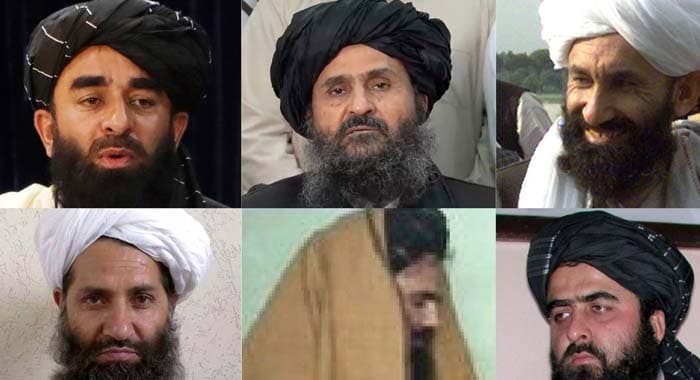
Five years after returning to power in Afghanistan, the Taliban regime continues to face a fundamental contradiction: it has established control over the country’s institutions but has struggled to transform that control into political legitimacy, international acceptance and regional confidence. Its policies toward women, its treatment of political opponents and its relationship with foreign terrorist organizations have created problems that extend well beyond Afghanistan’s borders.
The regime’s greatest strength remains its ability to maintain centralized authority through the leadership structure established by Supreme Leader Sheikh Hibatullah Akhundzada. However, centralization has also produced tensions within the movement. Important political and administrative decisions remain concentrated around the Kandahar leadership, while other influential Taliban factions have sought greater representation and authority.
The reported differences between the Kandahar leadership and the Haqqani network illustrate this problem. Disagreements over government appointments, administrative powers, financial resources and political direction have raised questions about the cohesion of the Taliban administration. These differences do not necessarily mean that the regime is close to fragmentation, but they demonstrate that the movement’s internal unity cannot simply be assumed.
The question of women and girls provides another example of the contradictions within Taliban rule. Restrictions on education, employment and participation in public life have become defining features of the administration. Despite criticism from international organizations and some voices within the movement, the leadership has shown little willingness to reconsider its fundamental approach.
The consequences are far-reaching. Preventing women from working in international organizations and humanitarian institutions affects not only their individual livelihoods but also the delivery of services to vulnerable communities. In a society where women may have limited access to male healthcare professionals, restricting female medical workers can create additional barriers to healthcare.
The economic implications are equally serious. Afghanistan needs skilled professionals, teachers, healthcare workers and administrators to rebuild its institutions. Excluding a substantial part of the population from education and employment weakens the country’s human-resource capacity and restricts its economic potential.
The regime’s relationship with armed organizations presents an even more consequential challenge for regional security. The presence and activities of Islamic State Khorasan Province (ISKP) remain a serious concern. Russia has repeatedly warned about the threat posed by the organization and called for coordinated international action.
The Taliban administration faces a difficult security calculation. It considers ISKP an enemy and has conducted operations against its networks. However, the wider presence of armed organizations, including the TTP and other foreign groups, continues to generate concerns among neighboring countries.
Pakistan’s complaints about the TTP are particularly significant. Islamabad maintains that the organization uses Afghan territory to organize and conduct attacks inside Pakistan. The Afghan Taliban reject allegations that they facilitate such activities. Nevertheless, the dispute has become a major obstacle to bilateral relations.
The Taliban’s historical and ideological connections with some of these organizations complicate the issue. The administration must decide whether maintaining relationships with former allies is more important than establishing predictable relations with neighboring countries. Its inability or unwillingness to address these concerns will continue to undermine regional confidence.
Another problem is the regime’s international position. Several countries maintain diplomatic and commercial contacts with Kabul, but engagement has not translated into broad international acceptance. Different governments approach Afghanistan according to their strategic interests. Russia, China, Iran, Turkey and Western countries all have different priorities, making a unified international policy difficult.
This fragmented approach gives the Taliban room to maneuver. The regime can maintain relations with different countries while avoiding major concessions on issues where international pressure is divided. It can engage economically with one partner, pursue security cooperation with another and reject criticism from a third.
However, this strategy has limitations. Afghanistan’s economy remains vulnerable, humanitarian assistance is declining, and international financial engagement remains constrained. The World Bank’s November 2026 assessment projects economic growth of approximately 3 percent, but population growth exceeding 6 percent means that output per person is expected to decline for a third consecutive year.
The regime must also confront growing public dissatisfaction. Restrictions on women, limited political participation, economic hardship and the absence of inclusive governance have created deep divisions between the administration and significant sections of Afghan society.
Armed opposition groups have not yet demonstrated the ability to seriously challenge Taliban control nationwide. Nevertheless, the absence of a powerful armed challenge does not necessarily indicate political acceptance. Discontent can remain present even when it does not translate into organized resistance.
The Taliban leadership therefore faces a choice. It can continue prioritizing ideological conformity and centralized authority, or it can gradually adopt a more inclusive political and administrative approach that recognizes the country’s social and economic requirements.
The international community also needs a consistent policy. Engagement should not mean overlooking human rights violations or security threats, while isolation alone cannot resolve Afghanistan’s problems. A coordinated approach should connect diplomatic and economic engagement with verifiable improvements in governance, women’s rights and counterterrorism.
The Taliban have secured control over Afghanistan, but governing a country requires more than controlling its institutions. It requires public confidence, economic capacity, functional administration and responsible relations with neighboring states.
Until the regime addresses these contradictions, its hold on power may remain stronger than its ability to establish a stable and internationally accepted Afghanistan.



