
Pakistan is confronting, in Balochistan and in KP, two distinct patterns of terrorist violence that require clear identification and an equally clear understanding of their objectives. In Khyber Pakhtunkhwa, Fitna al-Khwarij (FAK) has increasingly widened its target list beyond security forces and installations to include mosques, educational institutions, sports activities, civilian homes, peace committees and commercial premises. In Balochistan, Fitna al-Hindustan (FAH) terrorists are also targeting the infrastructure that keeps communities connected and economic activity moving. The destruction of a bridge on the Quetta-Karachi National Highway in Mastung is the latest reminder of this threat.
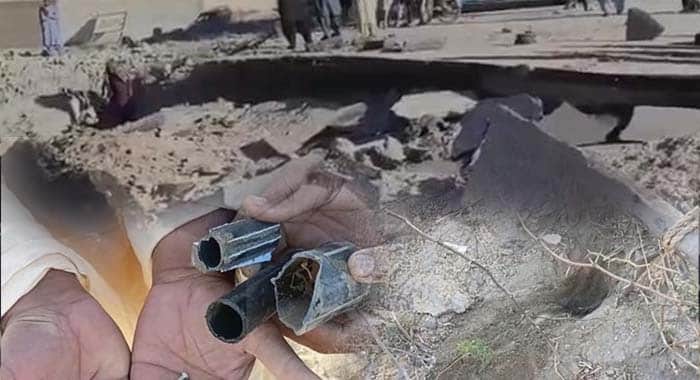
The Mastung attack was not simply an explosion that damaged a structure. By destroying the bridge near Injiri Cross in the Khadkocha area, FAH terrorists disrupted traffic on a major national highway, stranded hundreds of vehicles and passengers, and interrupted an important connection between Quetta and Karachi. The immediate consequences were visible in the long queues on both sides of the damaged crossing. The wider implications, however, extend to trade, transport, supply chains and the movement of people.
This is precisely why attacks on infrastructure must be examined beyond the physical damage they cause. A bridge is not merely concrete and steel. It is a link between markets, businesses, communities and essential services. When terrorists destroy such a link, the disruption spreads far beyond the blast site. Goods are delayed, transport operators face additional costs, passengers lose valuable time and businesses are left dealing with uncertainty. Repeated attacks can also undermine confidence in the reliability of commercial routes.
The targeting of bridges and transport infrastructure in Balochistan is not an isolated concern. The province has experienced attacks on railway infrastructure, roads, pipelines, commercial vehicles and projects linked to economic activity. A recent analysis by the Royal United Services Institute highlighted how attacks on cargo transport can make the movement of goods increasingly expensive, even without causing mass casualties. Its central observation was that an attack can achieve an economic effect simply by making transporters reluctant to operate.
The consequences are particularly significant for a province whose economic potential is closely tied to mineral resources, transport corridors, energy infrastructure and Gwadar. Projects such as Reko Diq and Saindak require reliable roads, secure logistics and long-term investor confidence. The same applies to the commercial development of Gwadar and the broader connectivity envisioned under the China-Pakistan Economic Corridor. When roads and bridges become vulnerable, the costs of protecting projects and moving materials increase, while the prospect of uninterrupted commercial activity becomes less certain.
The pattern in KP is different in its immediate targets, but equally disturbing in its impact on everyday life. FAK terrorists have repeatedly used weaponized quadcopters against security personnel and installations, but their attacks have also reached civilian homes, places of worship, educational institutions and sporting activities. The recent attack on a shop in Lakki Marwat, where a mortar round fired from a quadcopter landed outside the premises, added commercial spaces to the growing list of locations exposed to this threat.
The attacks in Bannu have demonstrated another dimension of this campaign. After targeting the residence of a peace committee chairman, Khwarij carried out two successive quadcopter attacks on a peace jirga attended by tribal elders and local residents. At least 10 people were injured. Such attacks are not only intended to cause casualties. They also seek to frighten communities, discourage collective resistance and undermine local efforts to restore peace.
The targeting of a mosque in South Waziristan, civilians in their homes in Upper Orakzai, children playing cricket in Mohmand and police personnel at an IDP camp in Bannu further illustrates the range of targets. Security forces, civilian communities, religious gatherings, education, sports and local peace initiatives are all being exposed to violence. This is not a campaign confined to the battlefield. Its effects are being carried into the places where ordinary people live, learn, worship, work and gather.
There is an important distinction between the two theaters. FAK’s expanding use of quadcopters in KP has brought the threat closer to homes, markets and community gatherings, while FAH’s attacks on bridges and transport links in Balochistan demonstrate how infrastructure can be used as a pressure point against the wider economy. The groups, their operational methods and the contexts in which they operate should not be conflated. Yet the consequences of both patterns extend beyond individual incidents: insecurity, disruption of normal life and pressure on the state’s ability to provide protection and maintain essential services.
The response, therefore, must be tailored to the nature of each threat. In KP, protecting vulnerable civilian locations requires better detection of weaponized drones, improved local intelligence, stronger security around public gatherings and closer coordination with communities. Peace committee members and tribal elders need protection because their participation is important to local resistance against terrorism. Markets, schools, mosques and residential areas also require security arrangements suited to the risks they face.
In Balochistan, protecting national highways, bridges, railway lines, pipelines and commercial transport must be treated as an integral part of counterterrorism. Rapid damage assessment, effective surveillance, coordinated security along vulnerable routes and timely restoration of damaged infrastructure are essential. The state must also ensure that development projects continue to generate meaningful opportunities for local communities rather than allowing insecurity to deepen economic isolation.
The larger lesson is that terrorism cannot be measured only through casualties or the number of attacks. A bridge destroyed, a market frightened into closing, a school disrupted, a peace jirga attacked or a family forced to remain indoors represents a wider cost to society. The ability of terrorists to interrupt ordinary life is itself a measure of the threat.
Pakistan’s counterterrorism response must therefore protect both people and the systems on which their lives depend. In KP, that means denying FAK the ability to intimidate communities and turn everyday locations into targets. In Balochistan, it means preventing FAH terrorists from severing transport links and disrupting economic activity. The distinction between the two threats is essential, but the national priority is shared: ensure that terrorism cannot dictate where people travel, where children learn, where communities gather or whether the country’s economic lifelines remain open.



