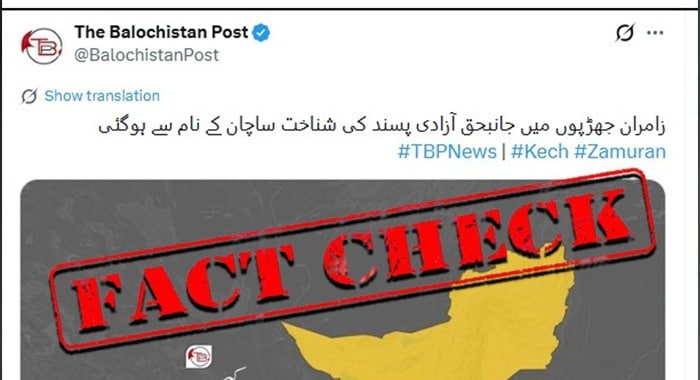
The identification of a terrorist neutralized during a recent clash in the Zamran area has raised fresh questions over narratives built around so-called “missing persons,” after individuals linked to anti-state propaganda reportedly acknowledged the deceased as a man previously portrayed as forcibly disappeared.
According to security and local intelligence-linked sources, the deceased militant has been identified by the alias “Sachan,” and is believed to have been actively involved in armed activity in the mountainous region.
The development has drawn attention because the same individual had allegedly been cited in campaigns accusing state institutions and security forces of enforced disappearance.
Observers say the emergence of such cases raises serious concerns regarding the misuse of “missing persons” narratives in information campaigns aimed at discrediting state institutions.
According to available information, accounts associated with anti-state networks and sympathizers of banned groups indirectly acknowledged the identity of the deceased following the clash, prompting renewed scrutiny over earlier claims regarding his disappearance.
Security analysts note that armed groups and their facilitators have increasingly relied on narrative warfare to influence public perception, often portraying active militants as victims of enforced disappearance while concealing their operational involvement.
The latest case is being viewed by some observers as part of a broader pattern in which propaganda campaigns attempt to build pressure against security institutions while masking the militant affiliations of certain individuals.
Officials have not yet released a formal statement on the identification; however, the case has already sparked debate on social media regarding the verification of claims circulated under the banner of “missing persons.”
Analysts argue that each such case underscores the importance of independent verification and responsible reporting, particularly in conflict-related narratives where misinformation can influence public opinion and undermine trust in institutions.
This incident may further strengthen concerns that some narratives are being strategically amplified by facilitators and sympathizers of what officials describe as Fitna-al-Hindustan to create confusion and advance anti-state messaging.