
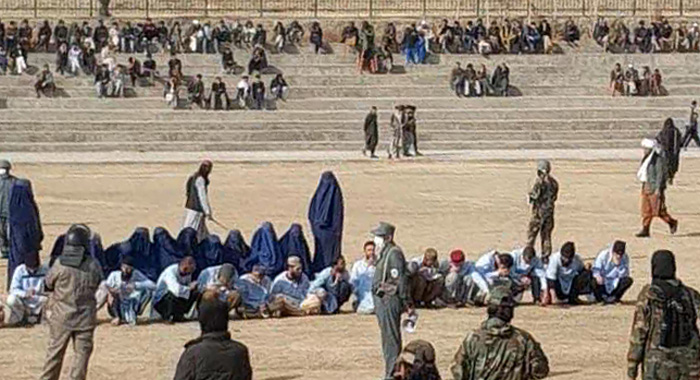
The Taliban’s enforcement of its recently enacted penal code has drawn renewed international concern following reports that six individuals, including two women, were subjected to public flogging in Qosh Tepa district of Jawzjan province. According to statements from the Taliban’s Supreme Court, the punishments were issued under rulings from a primary court and targeted individuals accused of “insulting” officials, violating fasting rules during Ramadan, and engaging in alleged illicit relations.
This latest case marks at least the second instance of corporal punishment specifically linked to alleged insults against Taliban authorities since the penal code was introduced approximately two months ago. A similar incident earlier this year in Badghis province involved a man sentenced to 39 lashes and one year in prison for allegedly insulting the Taliban leader.
Human rights experts and advocacy groups have sharply criticized the Taliban’s penal code, which contains more than 100 articles and prescribes a broad range of offenses and severe penalties. Critics warn that provisions relating to “insult” are vaguely defined and open to arbitrary interpretation, allowing the Taliban to suppress dissent and silence critics.
“The Taliban’s legal framework systematically curtails civil liberties and imposes severe corporal punishments,” said a spokesperson for an international human rights organization. “Its implementation disproportionately affects women and targets personal behavior and religious observance, threatening fundamental freedoms.”
Analysts note that the punishments imposed appear harsher than those outlined in the code itself. While earlier reviews indicated that offenses such as insulting officials could result in up to 20 lashes and six months in prison, recent cases suggest significantly stricter penalties are being enforced.
Since returning to power in 2021, the Taliban have repeatedly carried out public floggings and other corporal punishments. These actions have drawn consistent condemnation from the United Nations, international rights organizations, and observers concerned with human rights, gender equality, and freedom of expression.
The enforcement of the penal code in northern provinces, including Jawzjan, underscores a pattern of intimidation and control by Taliban authorities, raising concerns about the consistency, transparency, and fairness of the judicial system. The move also highlights the broader challenge of protecting civil liberties and human rights under Taliban rule.
Taliban officials have defended their legal framework as consistent with their interpretation of Islamic law but have not publicly responded to international criticism regarding the latest punishments.
The recent flogging incidents serve as a stark reminder of the ongoing human rights crisis in Afghanistan and the urgent need for international attention and monitoring to safeguard the rights of vulnerable populations, particularly women and those accused of dissent.



