
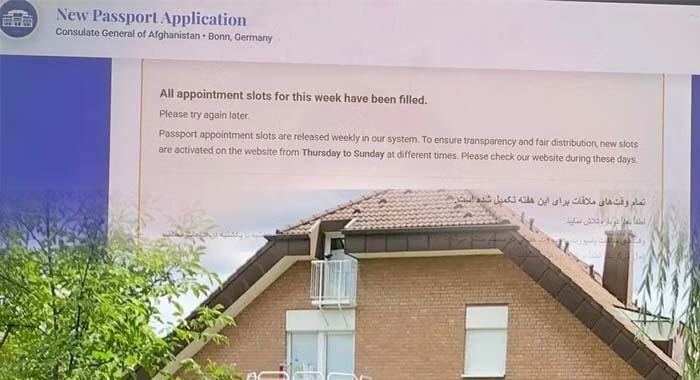
According to Afghanistan International, Afghan citizens in Bonn have reported widespread corruption and bribery at the Taliban-controlled Afghan Consulate in Germany. Sources claim that appointments for passports and other consular services are being sold on the black market for as much as €400, creating significant barriers for ordinary citizens.
Afghans told Afghanistan International that the consulate’s online appointment system opens at specific times known only to certain intermediaries, commonly called “commissioners.” These intermediaries allegedly secure appointments on behalf of clients for a fee, while ordinary citizens are repeatedly blocked by automated notifications stating that all slots for the week are full.
Afghanistan International sources report that the payment process is split: €200 is paid before securing the appointment, and the remaining €200 is transferred via bank before receiving the documents. Audio recordings obtained by Afghanistan International reportedly show intermediaries arranging appointments in exchange for money. Bank transaction records also reportedly confirm payments to these individuals.Several Afghan residents told Afghanistan International that they are effectively forced to pay bribes to access passports and other essential documentation, which are required under host-country regulations.
According to Afghanistan International, inside sources at the Bonn consulate claim the process was implemented under the guidance of Taliban-appointed acting head of the consulate, Sayed Mustafa Hashimi, and overseen by a Pakistani IT officer, Safiullah, formally appointed by the Taliban Ministry of Foreign Affairs. Taliban internal documents reportedly show Safiullah receives a monthly salary of €2,500.
Afghanistan International also reports that social media complaints from Afghan citizens have increased, with calls for the Taliban Ministry of Foreign Affairs to investigate and prevent the alleged corrupt practices at the Bonn consulate.
Attempts by Afghanistan International journalists to obtain comments from consulate officials were reportedly unsuccessful. Neither the consulate nor Taliban authorities have publicly responded to the allegations or the appointment of the Pakistani IT officer.
According to Afghanistan International, these allegations highlight growing challenges for the Afghan diaspora in Germany, where bureaucratic corruption and lack of transparency are reportedly obstructing citizens seeking vital documentation. Observers warn that if left unaddressed, these practices could undermine the credibility of Taliban diplomatic missions abroad and the trust of Afghan citizens.



