
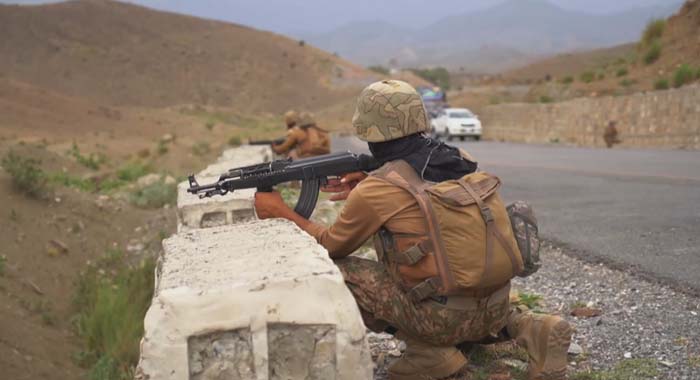
Pakistan’s security forces have implemented a critical recalibration of their counterterrorism strategy in the tribal areas, reflecting evolving threats and national security imperatives. The adjustment is not a sign of weakness or any hidden agenda; rather, it is a measured, facts-based response aimed at protecting civilians, consolidating forces, and prioritizing intelligence-led operations against Tehreek-e-Taliban Pakistan (TTP), Afghan Khawarij, and their facilitators.
Since Operation Zarb-e-Azb in 2014, Pakistan’s primary objective has been the dismantling of organized terrorist networks. The operation successfully neutralized TTP infrastructure in major urban centers, weakened their presence in smaller towns, and diminished their overt support base in the tribal belt, all while minimizing harm to civilians a core principle of Pakistan’s internal security operations.
Contrary to widespread misinterpretations, Pakistan has never supported any armed group. The concept of “good Taliban” arose from temporary tribal arrangements and narratives shaped by the Afghan conflict, not any permanent state policy. Today, it is clear that any group challenging Pakistan’s writ, irrespective of name or guise, is considered an enemy.
The security landscape worsened following the U.S. withdrawal from Afghanistan, when the Afghan Taliban assumed power and facilitated the TTP and allied Khawarij by providing safe havens, freedom of movement, and access to advanced weaponry abandoned by U.S. forces. This reorganization and rearmament of Pakistani Taliban factions was driven by cross-border sanctuaries and ideological alignment with Kabul, not by Pakistani policy.
The Afghan Taliban’s unwillingness or inability to act against TTP has created a persistent threat. Pakistan, avoiding direct confrontation with Afghanistan which adversarial actors would exploit to open another front—has adopted a measured strategy: containment, monitoring, and precision targeting of TTP and Afghan Khawarij within Pakistan.
Under this approach, smaller, redundant check posts in tribal regions are being phased out, forces consolidated in fortified positions, and intelligence-led operations, including drone-enabled precision strikes, are being prioritized. Ensuring the security of major cities, cantonments, and sensitive installations remains paramount. Recent operations in Tirah, Bara, Bannu, and surrounding areas are designed to protect Peshawar, Kohat, Bannu, and Mardan while actively targeting cross-border infiltrators and Afghan Khawarij.
Significantly, tribal communities now recognize the real threat: Afghan Taliban, TTP, and local facilitators exploiting the population. These Khawarij groups manipulate religion to justify violence, destabilize Khyber Pakhtunkhwa, prolong conflict in the tribal belt, and indirectly advance the agendas of external actors. The state, in coordination with tribal communities and security forces, is committed to eliminating this menace.
This strategic recalibration underscores Pakistan’s resolve to protect its citizens, maintain territorial integrity, and pursue intelligent, effective counterterrorism operations. By focusing on containment, precision targeting, and consolidating security infrastructure, the state demonstrates that what may appear as tactical adjustment is in fact smart warfare designed to decisively defeat the forces threatening peace in the tribal areas.



