(Shamim Shahid)
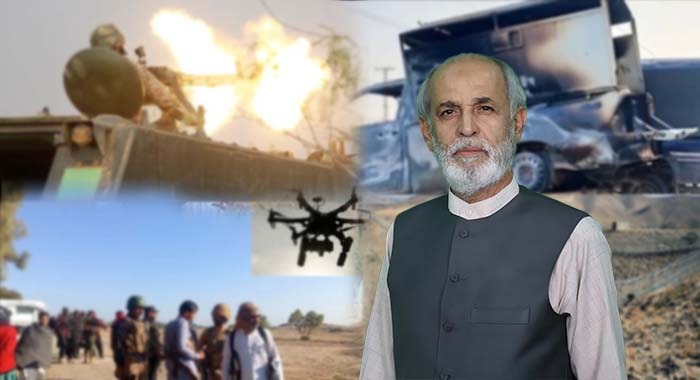
The recent escalation following Pakistan’s airstrikes across the border has once again pushed the region into a familiar but dangerous cycle of retaliation and recrimination. In the days that followed, the security situation—particularly in Khyber Pakhtunkhwa has deteriorated sharply. Attacks on police and security personnel have increased. Intelligence-based operations continue, yet the violence persists. The question before us is not merely tactical. It is strategic, political, and deeply existential: what options does Pakistan truly have in dealing with Afghanistan and the militant threat emanating from its soil?
Over the past week alone, Khyber Pakhtunkhwa has witnessed a troubling spate of violence. In Bajaur, four police officers were martyred and several injured in an attack targeting the motorcycle force. In Peshawar, three brothers were abducted from a mosque during prayers reportedly by a group of armed militants who entered boldly and left unchallenged. In Bannu and other districts, additional attacks claimed more lives. In just a matter of days, over twenty policemen were martyred. These incidents are not isolated. They reflect a deeper malaise a pattern that suggests that the militant networks are not only operational but emboldened. For years, Pakistan has fought militant organizations with military force, intelligence operations, and law enforcement action. Thousands of soldiers, police officers, and civilians have sacrificed their lives. Operations in tribal districts dismantled large sanctuaries, and many believed that the back of terrorism had been broken. Yet today, we face a resurgence particularly from the Tehreek-e-Taliban Pakistan (TTP), which continues to find space, support, and sanctuary across the border in Afghanistan.
The uncomfortable reality is this: while security forces claim successful operations and high militant casualties, the frequency and intensity of attacks suggest that the broader war remains unresolved. Tactical victories have not yet translated into strategic success. First, there is a lack of institutional harmony and coordination. Counterterrorism is not merely a military function. It is a whole-of-state responsibility. The police, intelligence agencies, paramilitary forces, civil administration, and political leadership must function in seamless alignment. Unfortunately, that alignment appears fractured. Meetings are held, committees formed, decisions announced but implementation often falters. Second, political priorities seem misaligned with security imperatives. In Khyber Pakhtunkhwa, the provincial government bears constitutional responsibility for maintaining law and order. Yet the perception fair or unfair is that political agendas have overshadowed governance. If security forces are not given full administrative and political backing, morale suffers and operational effectiveness declines. Governance cannot be subordinated to political confrontation.
Since the return of the Taliban to power in Kabul in August 2021, the regional security equation has fundamentally shifted. Pakistan initially hoped that ideological affinity and historical engagement would translate into cooperation against the TTP. Instead, the opposite appears to have happened. The TTP has regrouped, reorganized, and intensified operations from Afghan territory. Pakistan has repeatedly conveyed its concerns to Kabul. Diplomatic channels have been activated. Regional actors including Iran, Qatar, Turkey, and Saudi Arabia have attempted to mediate. Yet meaningful progress remains elusive. Airstrikes may deliver a message. They may disrupt specific camps or logistical nodes. But they also risk strengthening hardliners within Afghanistan. Military escalation, especially when it results in civilian hardship, can foster anti-Pakistan sentiment among ordinary Afghans—many of whom are already exhausted by decades of war.
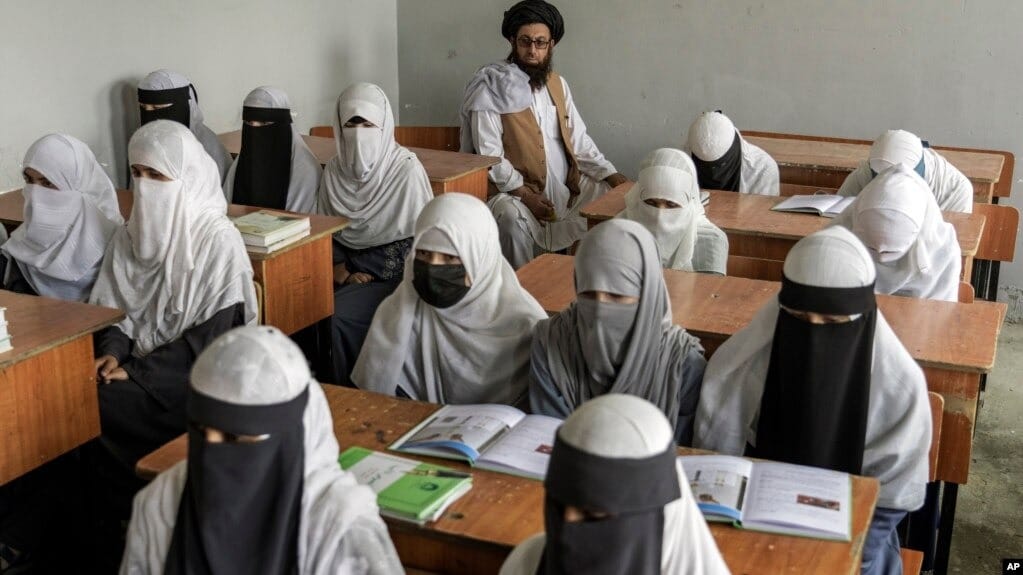
The Afghan people are not synonymous with the Taliban. Afghanistan is a diverse society composed of tribes, ethnicities, political currents, and social movements. There are former parliamentarians, tribal elders, religious scholars, civil society activists, and youth leaders who do not subscribe to militant ideology. Many Afghans are disillusioned with the current governance model. They face economic collapse, unemployment, restrictions on education particularly for women and political repression. If Pakistan’s response to cross-border militancy alienates these very segments of Afghan society, we risk consolidating support around the Taliban rather than isolating them. Therefore, Pakistan’s strategy must extend beyond military retaliation. It must be political, diplomatic, and people-centric. First, Islamabad must intensify political engagement—not only with the Afghan authorities but with the broader Afghan society. Quiet outreach to tribal elders, community leaders, and non-Taliban political actors is essential. This is not interference; it is regional diplomacy. Stability in Afghanistan directly affects Pakistan’s internal security. Engagement must be sustained, structured, and strategic.
Second, Pakistan must mobilize its regional relationships more effectively. Riyadh, Doha, Tehran, and Ankara maintain varying degrees of influence in Kabul. These channels must be used consistently, not episodically. Diplomatic pressure works over time. It requires persistence. The goal should not be public confrontation but calibrated leverage linking cooperation on security to economic facilitation and regional integration. Third, Pakistan must strengthen its internal security architecture. Cross-border infiltration is a reality, but local facilitation networks also exist. Militancy survives not only because of external sanctuary but because of internal enablers. Intelligence coordination must improve. Policing must modernize. Community-based vigilance systems must be revitalized. In areas like Bajaur, Bannu, and Peshawar, security presence must be visible and credible. At the same time, law enforcement must maintain public trust. Heavy-handed tactics that alienate local populations are counterproductive. Communities are the first line of defense against militant infiltration. When residents feel protected and respected, they are more likely to cooperate. When they feel abandoned or harassed, silence prevails.
Another critical dimension is the issue of Afghan refugees and undocumented migrants. Pakistan has hosted millions of Afghans for over four decades an extraordinary humanitarian commitment rarely acknowledged globally. However, recent deportation drives and administrative crackdowns have generated resentment. While national security concerns are legitimate, implementation must be humane and phased. Abrupt measures create humanitarian distress and diplomatic friction. If repatriation is necessary, it should be orderly, gradual, and coordinated with international agencies. Border management must be firm yet dignified. The objective should be security, not collective punishment. There is also a broader philosophical question: can war resolve what politics has failed to settle? History suggests otherwise. After years of confrontation, even bitter rivals eventually return to dialogue. If ceasefires can be negotiated in other hostile contexts, why should Pakistan and Afghanistan remain trapped in cyclical escalation? Military tools are instruments of last resort. They cannot substitute for political settlement.
Pakistan must articulate a clear, long-term Afghan policy rooted in three principles: non-interference, mutual security guarantees, and economic interdependence. Trade corridors, transit agreements, and energy connectivity projects create shared stakes in stability. When economic futures intertwine, incentives for conflict diminish. At present, both countries are economically fragile. Neither can afford sustained hostility. A protracted border conflict would strain already limited resources and deepen regional isolation. Let us be candid: the current trajectory is dangerous for both sides. Sporadic strikes, retaliatory rhetoric, and escalating attacks serve no one. Militants thrive in chaos. The longer state-to-state tensions persist, the greater the operational space for non-state actors. Pakistan must also introspect. Past policies regional alignments, militant tolerances, strategic depth doctrines have left complex legacies. Correcting course requires courage and clarity. Security cannot be outsourced to proxies. Nor can stability be imposed solely through force.
Today’s challenge demands institutional unity. The federal government, provincial authorities, military leadership, intelligence services, and political parties must converge on a shared national security framework. Public messaging should be coherent. Mixed signals weaken deterrence and confuse citizens. Finally, we must not lose sight of the human cost. Behind every statistic every “martyrdom” figure there is a grieving family. Behind every cross-border strike, there are civilians caught in geopolitical crossfire. National security debates must never become abstract exercises detached from lived realities. Pakistan stands at a crossroads. It can continue reactive cycles attack and counterattack—or it can adopt a comprehensive strategy that blends firmness with diplomacy, security with humanity, and national interest with regional stability. The choice is not between strength and dialogue. True strength lies in strategic patience, institutional cohesion, and political foresight. The path forward is neither simple nor immediate. It will require sustained diplomatic engagement, internal reform, and calibrated pressure. It will require winning not only battles but narratives particularly among the Afghan people, whose goodwill remains essential for lasting peace.
If we fail to recalibrate, the violence in Khyber Pakhtunkhwa may intensify, and tensions with Afghanistan may spiral. But if we act wisely strengthening internal security while opening political channels we may yet prevent further deterioration. War is easy to start. It is infinitely harder to end. Pakistan must choose the harder path.