
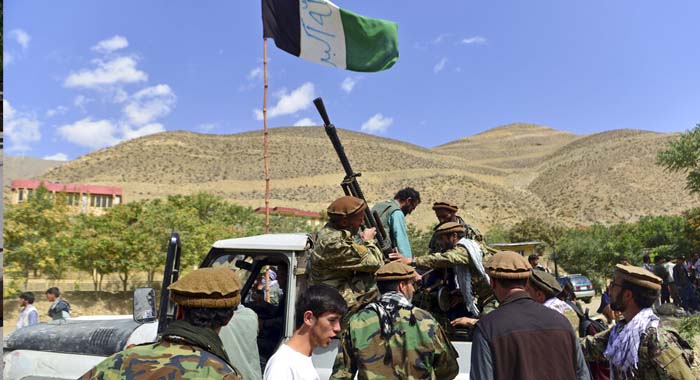
Afghanistan’s security landscape has come under renewed scrutiny following claims by three armed opposition groups that they have established control over several strategically important locations in the country’s northeastern region after weeks of intense fighting with Taliban forces.
The Afghanistan Freedom Front (AFF), National Resistance Front (NRF), and Home Soldiers Front (HSF) reportedly claim to have gained control of the centers of Zebak district, Topkhana, Sanglich Valley, Khastak Valley, and the Wakhan entry point following approximately one month of heavy clashes.
The reported developments, if independently confirmed, could represent a significant shift in the security dynamics of northeastern Afghanistan and raise new questions regarding the Taliban authorities’ ability to maintain effective control over remote and strategically sensitive areas.
However, the claims have not been independently verified, and information emerging from active conflict zones remains difficult to confirm. Independent reporting and additional credible sources will be required to establish the precise extent of any territorial changes.
The locations identified in the reported claims are significant because of their geography and their position along remote routes in northeastern Afghanistan. The mountainous terrain of the region presents both operational challenges and strategic opportunities for armed groups. Valleys, district centers and access points can influence the movement of personnel and supplies while also providing control over important approaches through difficult terrain.
Among the locations mentioned, the reported control of the Wakhan entry point could carry particular strategic significance because of the area’s geographic position and proximity to Afghanistan’s remote international border routes.
The Wakhan region has historically been characterized by its rugged landscape, limited infrastructure and difficult accessibility. Any sustained change in control over key entry points could therefore have implications for movement and security across the broader area. The reported territorial developments follow claims of sustained fighting between Taliban forces and armed opposition groups over the past month.
The NRF and AFF have previously claimed attacks and military operations targeting Taliban positions in different parts of Afghanistan. Their continued activity demonstrates that armed resistance to Taliban rule has not entirely disappeared despite the Taliban’s control of the national government and the substantial reduction in conventional nationwide warfare since 2021. The latest claims, if substantiated, could indicate that opposition groups are seeking to consolidate their presence in strategically valuable areas rather than limiting their activities to isolated attacks.
Such a development could complicate the security environment in provinces where difficult terrain makes sustained government control more challenging.
The reported loss of multiple locations would carry political and security implications if confirmed. Since returning to power in August 2021, the Taliban has sought to project an image of nationwide authority and improved security. Although large-scale fighting has declined considerably compared with previous years, armed opposition groups have continued to challenge Taliban forces in certain areas. Any verified loss of district centers or strategically important access routes could therefore represent a setback for Taliban efforts to maintain uninterrupted territorial control.
At the same time, isolated changes in control do not necessarily establish a broader shift in Afghanistan’s overall balance of power. Determining the significance of the reported developments would require confirmation of how long the opposition groups can maintain control, whether Taliban forces launch counteroffensives and whether the reported territorial gains represent permanent changes or temporary battlefield developments.



