
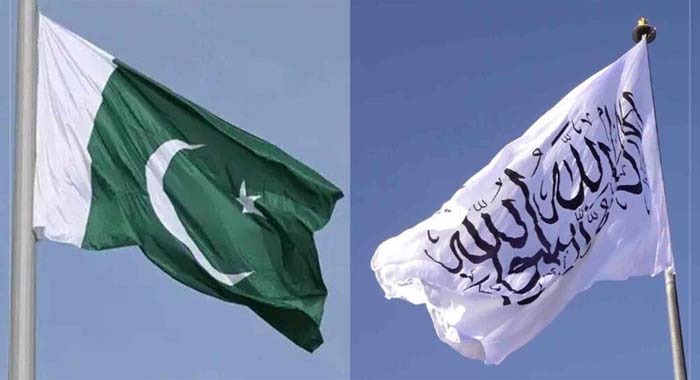
Recent developments in Pakistan-Afghanistan relations underscore the complex dynamics between Islamabad and the Taliban-led regime in Kabul, highlighting ongoing security operations, diplomatic engagement, and persistent trust deficits.
Afghan Taliban interim Foreign Minister, Maulvi Amir Khan Muttaqi, recently emphasized Afghanistan’s stated desire to resolve issues with Pakistan through dialogue and mutual understanding, asserting that no one would be allowed to use Afghan territory against Pakistan. These remarks were made during a phone conversation with Qatari Foreign Minister Abdullah bin Zayed Al Nahyan and were widely reported in Afghan media. While these assurances signal a formal commitment to dialogue, historical patterns and repeated inconsistencies in Taliban behavior raise serious questions about their reliability.
Just two days after these statements, on April 1, 2026, Pakistan and Afghanistan held preliminary talks in Urumqi, China, under Chinese mediation. The discussions, attended on Pakistan’s side by an Additional Secretary of the Ministry of Foreign Affairs, have been described as junior-level but nonetheless represent a cautiously positive step toward dialogue. However, Pakistan has made it clear that ongoing counterterrorism operations, including Operation Ghazab-ul-Li-Haq, will continue until their objectives are fully achieved.
The Taliban regime’s history of repeated promises and subsequent violations has eroded trust with Pakistan over the past five years. Despite assurances from Taliban leadership, Pakistan has repeatedly faced attacks on its soil orchestrated from Afghan territory. Previous diplomatic engagements, including regional mediation efforts, have failed to deliver consistent results. These breaches have made Pakistan highly skeptical of Taliban commitments, and authorities have emphasized that no negotiations will compromise ongoing security operations.
Operation Ghazab-ul-Li-Haq, launched in response to cross-border attacks by Taliban-affiliated militants, has so far neutralized over 600 Afghan terrorist operatives. The operation has forced militants in border areas to disperse and retreat to remote Afghan regions, significantly disrupting their ability to conduct attacks in Pakistan. Temporary pauses in the operation, such as those implemented prior to Eid al-Fitr, were limited and have since ended, reinforcing Pakistan’s commitment to a sustained counterterrorism approach.
The Taliban’s inconsistent behavior has also undermined the credibility of Afghanistan in the eyes of the international community. Even neighboring and allied countries such as Saudi Arabia, Qatar, and Turkey have experienced Taliban duplicity concerning commitments to prevent terrorism. This pattern of behavior has contributed to a deep regional skepticism about Afghanistan’s willingness and capacity to act responsibly under Taliban rule.
Regional observers, including Russia’s Special Envoy to Afghanistan, Zamir Kabulov, have highlighted that the consolidation of various militant groups under Taliban protection remains a core impediment to stable Pakistan-Afghanistan relations. Kabulov noted in late March 2026 that Taliban-supported militant networks continue to pose significant security risks, both for Pakistan and the broader region. While Russia has proposed potential avenues for Afghan labor deployment to support sectors such as agriculture, construction, and services within Russia, internal opposition within the Russian government reflects concerns about security risks associated with Afghan migrant workers.
The Taliban regime’s domestic policies, including severe restrictions on education and employment for women, public corporal punishment, and executions, have further damaged their international credibility. In 2025 alone, the Taliban publicly executed six individuals and subjected 1,118 people across various provinces including Kabul, Faryab, Balkh, Nangarhar, and Herat—to public flogging, including minors as young as ten years old. Such actions reinforce the perception of a violent, authoritarian regime with limited regard for human rights or the rule of law.
Pakistan’s engagement in dialogue with Afghanistan, including the Urumqi talks and the planned Joint Peace Jirga on March 31, 2026, aims to establish channels for communication, conflict resolution, and regional stability. Yet, historical Taliban behavior, ongoing cross-border threats, and the regime’s systemic violations of international norms underscore the necessity of maintaining vigilance and continuing robust counterterrorism operations.
In conclusion, while diplomatic initiatives provide opportunities for dialogue and confidence-building, Pakistan’s security posture remains uncompromising. Sustainable peace and trust require verifiable action on the ground, not merely statements of intent from a regime with a history of broken promises and systemic violence. Pakistan’s measured approach combines cautious engagement with ongoing operational rigor, ensuring that national security interests remain the top priority amid regional negotiations.



