(Zahir Shah Shirazi)
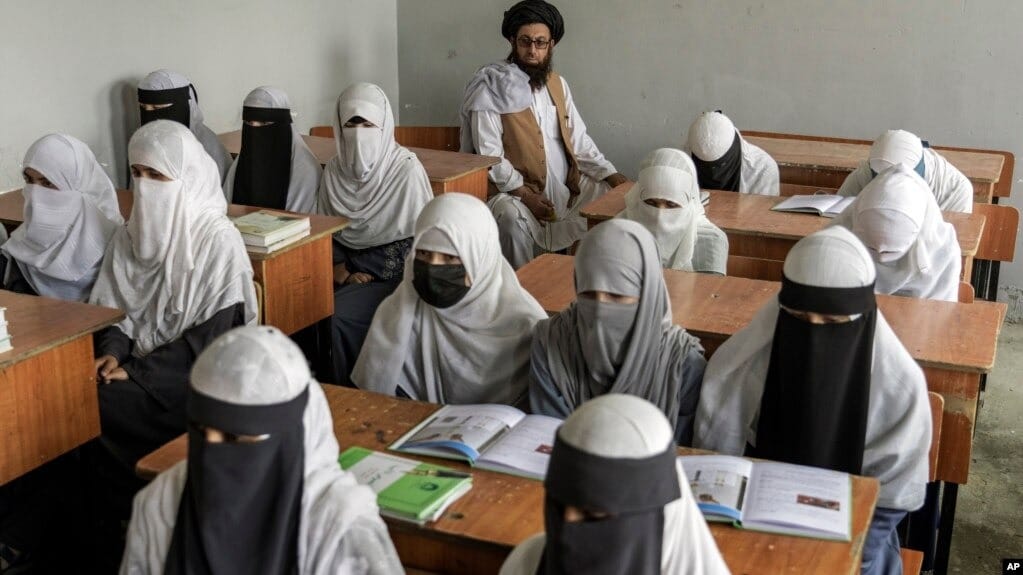
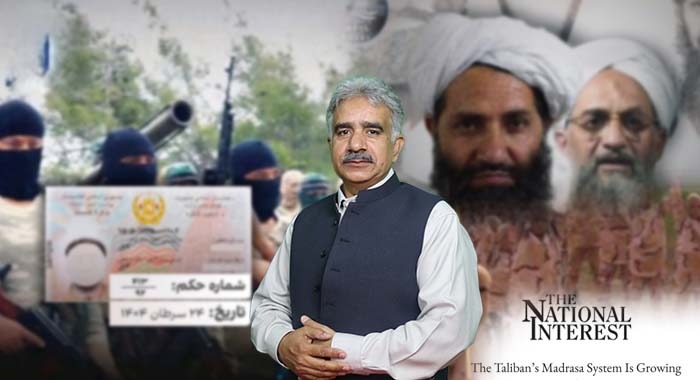
The recent report by the US journal The National Interest has highlighted a stark reality that demands global attention: the policies of Afghanistan under Mullah Hibatullah Akhundzada bear striking similarities to extremist groups such as Al-Qaeda and Daesh (ISIS). This alignment is not merely ideological; it manifests profoundly in the Afghan educational system, which is now being used less for knowledge and research and more as a tool for indoctrination and extremism. Education in Afghanistan is evolving into a system that discourages questioning, critical thinking, and intellectual curiosity. Instead, it enforces rigid adherence to a specific narrative, promoting obedience, radicalized interpretations of jihad, and intolerance toward any form of dissent.
This radicalization of education has far-reaching implications. The Afghan Taliban’s approach ensures that children are systematically taught to view differences of opinion and critical thinking as crimes or acts of rebellion. The ideological grooming begins in the Madrassas and extends into society, creating a generation of individuals whose understanding of religion is closely tied to extremism and violence. This is not a localized problem confined to Afghanistan; it has the potential to destabilize the entire region and fuel global terrorism.
In my discussions with analysts and through the review of this report, several key dimensions of Taliban ideology have become clear. First, the policies of Mullah Hibatullah closely resemble those of Al-Qaeda and ISIS because these groups share a common ideological vision. Their belief is that their interpretation of Islam is the ultimate authority, and it is not merely a personal conviction—it is a doctrine that must be imposed universally. This shared ideology explains the Afghan Taliban’s continued alliance with Al-Qaeda. Historically, after the Afghan jihad against the Soviet Union, leaders of Al-Qaeda, including Osama bin Laden and Ayman al-Zawahiri, pledged allegiance to Mullah Omar, the founding leader of the Taliban. This allegiance has persisted, with Al-Qaeda reaffirming loyalty to Mullah Hibatullah following the Taliban’s return to power in 2021.
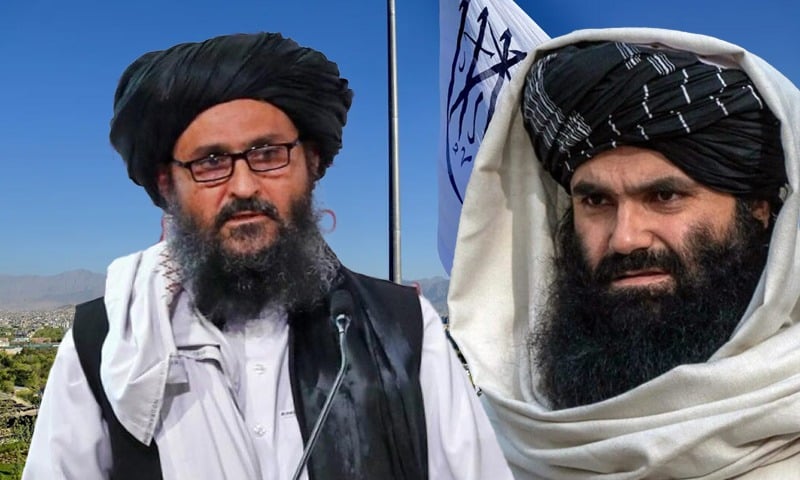
While there are operational differences among these groups Al-Qaeda pursues global jihad, ISIS seeks territorial expansion beyond Afghanistan, and the Taliban focuses primarily on consolidating power within Afghanistan—the core ideological foundation remains identical. Both Al-Qaeda and the Taliban maintain a conservative, radicalized interpretation of Islam. This shared mindset explains internal power struggles, such as the tension between Sirajuddin Haqqani and Mullah Hibatullah. Haqqani has publicly argued that ruling through fear and terror only generates resentment among the populace, advocating instead for governance through peace, unity, and social cohesion. In contrast, Mullah Hibatullah persists with a hardline approach. While the Afghan Taliban is currently focused on Afghanistan, they are ideologically aligned with Al-Qaeda’s broader vision of Islamisation.
One of the most concerning aspects of this alignment is the Taliban’s approach to jihad. The Taliban’s curriculum, revised in 2021, explicitly frames radicalized jihad as a religious obligation and a mechanism of obedience, rather than an ethical or scholarly pursuit. This curriculum, initially influenced decades ago, instills the notion that education is secondary to the pursuit of jihad, and that killing non-believers is a moral duty. Such instruction ensures that extremism is normalized from a young age, creating fertile ground for the perpetuation of terrorist ideologies. This system is a blueprint for radicalization that directly threatens not just Afghanistan, but neighboring countries and beyond.
The educational policies are further compounded by the systematic exclusion of women from the public sphere and learning. Since the Taliban’s return to power, there has been no formal curriculum for women, and access to schools remains heavily restricted. Any future revisions to the curriculum are likely to continue promoting extremist ideologies, including the subjugation of women and the denial of their rights. This is an alarming development with long-term societal repercussions, as it ensures that half of Afghanistan’s population is excluded from contributing to knowledge, innovation, and societal advancement.
Beyond ideology, the Taliban’s relationship with extremist groups illustrates a complex and dangerous ecosystem. Afghanistan has effectively become a hub for global terrorism. Reports indicate that more than 70 Al-Qaeda camps are operational in the country, controlling at least 17 cities through local commanders. The Afghan Taliban provide protection and logistical support to groups such as Al-Qaeda, the Turkestan Islamic Party (TIP), the Islamic Movement of Uzbekistan (IMU), and the Tehreek-e-Taliban Pakistan (TTP). These organizations operate openly, train fighters, and coordinate attacks, creating a transnational network of extremist activity. For example, the IMU has reportedly provided lists of over 200 Chinese militants to the Taliban but refused to hand them over to China, illustrating how Afghanistan is leveraged as a sanctuary for radicalized actors with global reach.
The ideological and operational alignment between the Taliban and these groups is further reinforced by strategic and financial support. Al-Qaeda has thrived under Taliban rule, receiving financial aid, shelter, and logistical backing. The Taliban’s failure to distinguish themselves from these organizations or to act against them is not accidental; it reflects a deliberate strategy to maintain a coalition of jihadist networks. Even when confronted with international agreements, such as the Doha Agreement, the Taliban maintain strategic deniability while continuing to support these groups covertly. This dual approach of public moderation and private complicity makes Afghanistan a central node for the spread of global terrorism.
This alignment has already had measurable consequences for regional security. Central Asian Republics, including Tajikistan, Uzbekistan, and Kyrgyzstan, are increasingly concerned about cross-border extremist activities. Similarly, Iran, Pakistan, and China are directly affected by the presence of radicalized groups operating from Afghan soil. The situation is further complicated by proxy interests from other global powers. Historical patterns of foreign intervention, combined with the Taliban’s internal instability and lack of governance capacity, have made Afghanistan a perennial flashpoint for international conflict.
The broader implications for Pakistan, in particular, are acute. TTP, BLA, and other extremist groups leverage Afghan sanctuaries to plan attacks, recruit fighters, and exert influence. While Pakistan continues to pursue intelligence-led counterterrorism operations, the scale and reach of these networks make them extremely difficult to dismantle. Afghanistan’s internal chaos and Taliban’s ideological rigidity limit the potential for meaningful cooperation, leaving Pakistan exposed to persistent security threats along its western border.
Recent international assessments, including the United Nations Security Council reports, corroborate the perception of Afghanistan as a global epicenter of extremism. With thousands of fighters affiliated with TTP and other groups, and Al-Qaeda camps actively operational, Afghanistan’s destabilization has far-reaching implications. The situation has prompted discussions at the UN and other international forums about potential interventions and coordinated action to contain the threat. Indeed, preliminary indications suggest that a major international operation in Afghanistan may be imminent, reflecting the severity of the crisis.
Strategically, the Afghan Taliban face profound internal and external challenges. They lack a coherent economic plan, development strategy, and effective governance framework. The Taliban’s economy is largely dependent on donations, narcotics trade, arms trafficking, and revenues derived from the export of extremist activities. This fragility exacerbates the country’s instability and strengthens the appeal of extremist networks, which thrive in environments characterized by weak governance and poverty. Without stabilization, Afghanistan will remain a launchpad for regional and global terrorism.
The situation is compounded by the Taliban’s ideological arrogance. Leaders such as Mullah Ghani assert a moral and religious superiority over neighboring countries, reflecting the deep entrenchment of extremist thought within the regime. This ideological intransigence shapes both domestic policies and foreign relations, limiting Afghanistan’s ability to engage constructively with the international community. It also complicates regional diplomacy, as neighboring states must balance engagement with security concerns while addressing the ongoing threat posed by Afghan-based extremist networks.
In conclusion, Afghanistan under the Taliban is at a critical juncture, with its radicalized education system, ideological alignment with global jihadist groups, and lack of governance creating a potent threat to regional and international security. The shared ideology of the Taliban, Al-Qaeda, and ISIS ensures that extremist networks are not merely surviving but thriving, with Afghanistan as their operational and ideological hub. The international community must recognize this reality and develop a coordinated strategy to address the multifaceted challenges posed by Afghan extremism.
Failure to act decisively risks perpetuating a cycle of radicalization, regional instability, and global terrorism. Afghanistan’s transformation into a global epicenter of extremism is not an inevitable fate, but it requires immediate, sustained, and strategic intervention. Without stabilization and a shift in both internal and external policy, the country will continue to serve as a sanctuary for jihadist networks, threatening the security and prosperity of neighboring states and the wider world.
The time to act is now. Afghanistan cannot be allowed to remain a breeding ground for radicalization, where the education of children is weaponized, women are denied access to learning, and extremist ideologies are institutionalized. The global community must work in concert to counter this threat, enforce accountability, and promote a future where Afghan society is no longer defined by extremism but by knowledge, peace, and stability.