
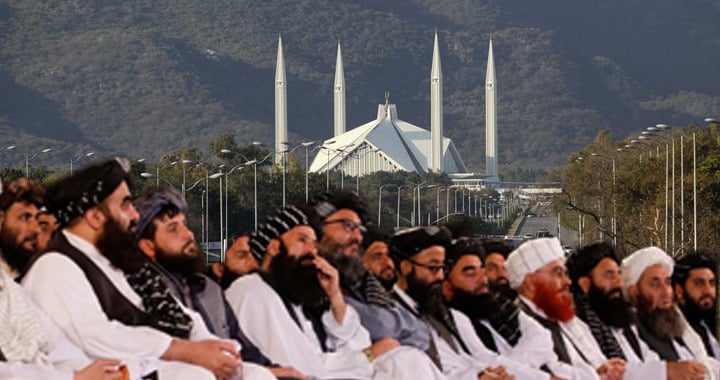
The Afghan Taliban’s relationship with the Tehreek-e-Taliban Pakistan (TTP) goes beyond the question of whether the two organisations share an ideological outlook. Their historical interactions, personal connections and years of cooperation during the Afghan insurgency have created a complicated relationship that continues to influence Kabul’s approach towards Islamabad’s security concerns.
Although the two organisations operate separately and pursue different immediate objectives, their ideological similarities and historical associations cannot be ignored when examining the difficulties surrounding Pakistan-Afghanistan relations.
The TTP emerged in 2007 as an umbrella organisation bringing together several Pakistani militant factions. Its campaign against the Pakistani state has resulted in years of violence, targeting security personnel, government installations and civilians.
The Afghan Taliban, meanwhile, fought a prolonged insurgency before returning to power in Kabul in August 2021. Their victory fundamentally changed the regional security environment and raised expectations in Pakistan that the new administration would prevent Afghan territory from being used by groups threatening its western neighbour.
Those expectations have not translated into the security assurances Islamabad seeks.
For Pakistan, the distinction between the two organisations does not remove Kabul’s responsibility to prevent terrorist activity from its territory. The central issue is not whether the Afghan Taliban directly control the TTP, but whether they are prepared to use their governing authority to prevent the organisation from operating against Pakistan.
Kabul’s internal dilemma
The Afghan Taliban administration faces a difficult political and ideological calculation.
Taking decisive action against the TTP could create tensions among elements of the Taliban movement that share historical associations and ideological sympathies with the Pakistani organisation.
Such considerations may help explain the difficulty of Kabul’s position, but they cannot justify allowing a terrorist threat against a neighbouring country to persist.
The Taliban administration must now balance its internal relationships against the broader interests of Afghanistan.
Maintaining a difficult relationship with Pakistan carries considerable economic and diplomatic costs. Pakistan is an important transit route for landlocked Afghanistan and a significant neighbour for its regional trade. Cooperation between the two countries could facilitate commercial activity, improve connectivity and create opportunities for economic recovery.
Continued hostility, however, threatens these possibilities.
Kabul therefore faces a strategic choice: maintain an approach that risks further alienating Pakistan or take practical steps to address Islamabad’s security concerns and establish a more sustainable relationship.
The consequences extend beyond Pakistan
The TTP issue is not simply a bilateral disagreement that can be managed through occasional diplomatic meetings.
The presence of armed organisations in a neighbouring country has implications for regional security, particularly when those groups have the capacity to recruit, organise and conduct cross-border attacks.
Afghanistan’s stability is consequently linked to the security environment of its neighbours.
Pakistan has a direct interest in a peaceful Afghanistan, just as Afghanistan needs stable relations with Pakistan to strengthen its economic and regional position.
Other regional countries also have an interest in ensuring that Afghan territory does not become a safe haven for organisations capable of destabilising neighbouring states.
The Afghan Taliban administration’s handling of the TTP will therefore influence not only its relationship with Islamabad but also its credibility as a governing authority seeking wider regional engagement.
The difference between assurances and action
Diplomatic statements rejecting allegations of support for terrorism cannot, by themselves, resolve the dispute.
Pakistan needs practical and verifiable measures against terrorist networks, including restrictions on their movement, dismantling of their operational infrastructure and action against individuals involved in attacks.
Similarly, both countries need effective channels for exchanging intelligence and addressing specific security concerns.
Such cooperation could help prevent misunderstandings and reduce the risk of further escalation.
However, the success of any arrangement depends on the willingness of both sides to honour their commitments.
For Kabul, the challenge is to demonstrate that its regional policy is guided by the responsibilities of governing a country rather than the sensitivities surrounding an armed organisation.
For Islamabad, the priority remains the protection of its citizens and the prevention of further terrorist violence.
The longer this issue remains unresolved, the more difficult it will become to rebuild the trust necessary for normal bilateral relations.
To be continued…



