
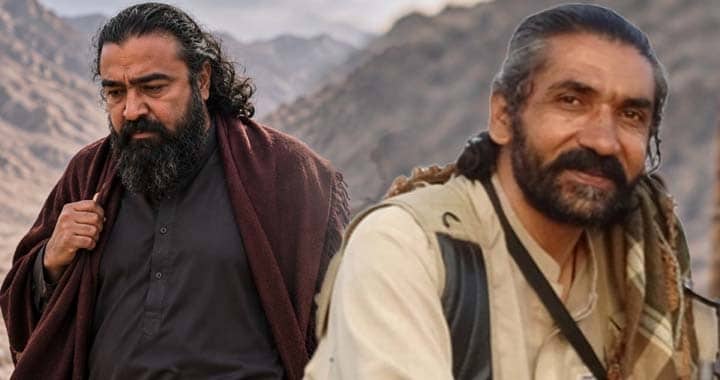
The Balochistan Liberation Army (BLA) is entering one of the most consequential periods of internal upheaval in its recent history, as the removal of Bashir Zeb Baloch from its top leadership coincides with a parallel rebellion against Hyrbyar Marri within the rival BLA-Azad faction and a wave of resignations from Marri’s political organisation, the Free Balochistan Movement (FBM).
An investigation by the Pakistan Institute for Conflict and Security Studies (PICSS) reveals that the November 3 leadership announcement was not simply a constitutional reshuffle, as portrayed by the organisation, but the culmination of months of internal disagreements, competing leadership claims and growing dissatisfaction over the direction of the armed campaign.
At the centre of the crisis is the fallout from failed Operation Herof 2, launched between January 31 and February 1, 2026. The operation, heavily promoted by BLA-linked media platforms, reportedly became a major source of disagreement between Bashir Zeb and influential commanders within the organisation following substantial battlefield losses.
What makes the current developments particularly significant is that the leadership crises are unfolding simultaneously within both major BLA factions. The resulting upheaval raises serious questions about the future of their command structures, the authority of established leaders and the possibility of a new political and organisational realignment within the wider Baloch separatist movement.
On November 3, BLA spokesperson Jeeyand Baloch announced through Hakkal Media that Bashir Zeb would no longer serve as the organisation’s commander-in-chief.
According to the statement, the decision had been unanimously endorsed during a joint meeting of the organisation’s senior decision-making bodies on October 16. All administrative, military and policymaking authority has temporarily been transferred to the Senior Command Council pending the appointment of a successor.
The BLA presented the development as a constitutional and democratic transition, invoking principles introduced by its founder, Aslam Baloch, during the organisation’s restructuring in 2018.
The statement maintained that the constitutional framework was designed to prevent hereditary leadership and lifetime appointments, ensuring that no individual could retain the position of commander-in-chief indefinitely, regardless of personal influence or seniority.
The organisation also claimed that the leadership change would not affect its command structure, operational activities or organisational continuity.
However, its announcement offered little explanation of the circumstances that made Bashir Zeb’s removal necessary.
It did not disclose the specific constitutional mechanism governing the appointment and removal of the commander-in-chief, whether the position carries a fixed tenure, or what future role Bashir Zeb might retain within the organisation.
These omissions are particularly important because the leadership transition follows months of reported internal disagreements and the apparent marginalisation of Bashir Zeb from the organisation’s central decision-making process.
According to information obtained by PICSS, the principal disagreement emerged following the consequences of Operation Herof 2 earlier this year.
The operation, launched at the end of January 2026, was publicly presented by the BLA as a major demonstration of its organisational and operational capabilities. However, subsequent Pakistani security operations inflicted substantial losses on the organisation.
PICSS sources estimate that at least 215 BLA fighters were killed during approximately one week of retaliatory and follow-up operations. The organisation itself acknowledged the deaths of 96 fighters.
The scale of these losses reportedly intensified criticism of Bashir Zeb’s leadership among influential commanders. According to PICSS sources, Captain Rahman Gul, head of the BLA’s Majeed Brigade, emerged as a prominent critic of the decisions surrounding the operation. His disagreement with Bashir Zeb reportedly concerned the broader consequences of the campaign for the organisation’s manpower, command arrangements and long-term organisational sustainability.
The dispute subsequently extended beyond the immediate aftermath of Herof 2, becoming a broader confrontation over leadership authority and organisational decision-making.
PICSS sources maintain that Rahman Gul increasingly assumed influence over important organisational decisions while Bashir Zeb became progressively marginalised from the central leadership structure.
The institute’s sources place this effective sidelining as early as February 2026.
Another development cited in the investigation is Bashir Zeb’s prolonged absence from the organisation’s public communications. His last statement on the BLA’s official platform appeared shortly before the launch of Herof 2, with no subsequent public statement issued in his name through the same channel.
In September, Pakistani security sources circulated claims that Bashir Zeb had developed cancer and travelled to India for treatment. These claims remain independently unverified.
The November announcement therefore appears to have formalised a leadership change that, according to PICSS sources, had already been taking shape for several months.
Importantly, the BLA has not publicly confirmed that disagreements over Herof 2 were the reason for the leadership transition. Its official explanation remains that the decision was made under its constitutional framework.
The present crisis cannot be understood without examining the history of the BLA’s fragmentation.The BLA-J and BLA-Azad factions developed separate leadership structures following a major dispute involving Aslam Baloch and Hyrbyar Marri.
In 2016, Aslam Baloch travelled to India without obtaining prior approval from the organisation’s senior leadership. Following disagreements over the visit and organisational authority, Aslam and Bashir Zeb were reportedly issued show-cause notices and subsequently expelled.
Aslam refused to abandon the BLA identity. Instead, he retained the organisation’s name, brought a substantial number of field commanders under his leadership and challenged Hyrbyar Marri’s authority.
The resulting division weakened the original faction associated with Marri, which subsequently became widely identified as BLA-Azad.
The faction led by Aslam Baloch emerged as a separate and more active armed organisation, later becoming closely associated with Bashir Zeb.
Aslam also established the Majeed Brigade, which became associated with suicide attacks. His decision to send his own son on the brigade’s first suicide mission further elevated his standing among sections of the separatist movement.
However, Aslam Baloch was killed in a suicide attack in Kandahar in December 2018. Following his death, Bashir Zeb emerged as the principal leader of the faction, inheriting an organisation whose identity and leadership structure had been shaped by its earlier confrontation with Hyrbyar Marri.
The removal of Bashir Zeb therefore marks another significant transition in a movement that has repeatedly experienced internal disputes over authority, organisational legitimacy and leadership succession.
While BLA-J was moving towards the removal of Bashir Zeb, the rival BLA-Azad faction was experiencing its own internal confrontation. According to PICSS, dissatisfaction with Hyrbyar Marri’s leadership began taking a more organised form in April 2026, when field commanders increasingly demanded constitutional reforms, written organisational rules and a clearer framework for decision-making.
The disagreement subsequently resulted in the emergence of a Reform Command Council, which challenged the existing leadership structure and announced the removal of spokesperson Azad Baloch.
However, the dispute remains unresolved.
Azad Baloch has continued issuing statements independently, while commanders associated with the Reform Command Council have circulated their own announcements through separate media channels. The emergence of competing claims of authority has exposed the extent of the organisational divisions within BLA-Azad.
Another important development is the apparent support that the Reform Command Council has received from social media platforms sympathetic to BLA-J. PICSS has observed that accounts associated with the latter faction have amplified statements issued by dissident commanders challenging Hyrbyar Marri’s leadership.
This raises the possibility that the internal crises of the two factions are becoming increasingly interconnected, potentially creating new alignments among individuals who previously operated within separate organisational structures.
The leadership crisis surrounding Hyrbyar Marri has extended beyond BLA-Azad into the political organisation he heads, the Free Balochistan Movement. During the final week of October 2026, several senior FBM officeholders resigned, including individuals responsible for foreign affairs, international organisation, external relations, information and judicial responsibilities.
The departing officials included:
- Jamal Nasir Baloch — Foreign Affairs.
- Obaidullah Baloch — External Organisation.
- Haider KB Baloch — International Affairs.
- Rasheed Baloch — Information.
- Shams Baloch — Judiciary portfolio.
Two founding members, Mumtaz Baloch and Lala Faheem Baloch, also resigned.
The simultaneous departure of senior officeholders and founding members suggests that dissatisfaction with Marri’s leadership is not confined to armed field commanders.
Instead, the challenge appears to have reached the political organisation associated with his broader separatist movement. This creates an additional dimension to the crisis: Marri is facing questions about authority and organisational governance across both the armed and political components of his movement.
One of the most consequential questions emerging from these developments concerns the possibility of reunification between BLA-J and BLA-Azad. Efforts to bring the two factions together reportedly began in 2025 but failed to produce a formal merger.
Their differences have historically involved competing leadership claims, personal rivalries, organisational loyalties and the separate structures that developed following the 2016 split. The current leadership crises could change the political circumstances surrounding those disagreements.
Bashir Zeb’s removal and the growing challenge to Hyrbyar Marri could create an opportunity for discussions involving individuals and commanders from both factions who previously remained divided by their respective leadership structures. The apparent amplification of BLA-Azad dissidents by BLA-J-associated media networks adds another dimension to this possibility.
Nevertheless, leadership changes alone do not guarantee reunification. The factions have developed separate institutional arrangements and organisational interests over nearly a decade. Any meaningful merger would require agreement on political representation, leadership legitimacy, organisational authority and the future relationship between their respective structures.
Consequently, the current developments could lead to closer cooperation, a negotiated reunification, the consolidation of competing leadership groups or further fragmentation. For Pakistan, the simultaneous leadership disputes warrant close monitoring because changes in the internal structure of armed separatist organisations can affect the wider security environment in Balochistan.
Leadership transitions may temporarily disrupt internal coordination, generate competing claims of authority and create uncertainty over organisational continuity. At the same time, new leadership arrangements may produce different political priorities and changes in organisational relationships.
The immediate significance of the current crisis is therefore not simply the departure of one commander. It is the possibility that the existing factional landscape may undergo substantial restructuring.
Pakistan’s security institutions and policymakers will need to assess these developments alongside the broader security situation, particularly the potential consequences of new alliances, internal fragmentation and changes in the leadership of armed groups.
The removal of Bashir Zeb, the challenge to Hyrbyar Marri and the resignations within the Free Balochistan Movement collectively point to a period of significant organisational uncertainty within the Baloch separatist movement.
PICSS findings suggest that the Bashir Zeb transition was preceded by months of internal disagreement, particularly over the consequences of Operation Herof 2 and the subsequent battlefield losses.
Meanwhile, BLA-Azad’s Reform Command Council has exposed a separate struggle over leadership authority and institutional accountability, while senior resignations have extended the pressure to Marri’s political organisation.
These developments raise a fundamental question about the future of the movement: are its factions moving towards more institutionalised leadership arrangements, or are they entering another cycle of fragmentation and competing power centres?
The possibility of reunification adds further complexity. The departure or weakening of established leaders could remove some historical obstacles to rapprochement, but longstanding rivalries and separate organisational interests remain substantial barriers.
The real significance of the current crisis lies beyond the removal of Bashir Zeb. For the first time in years, both major BLA factions are facing simultaneous challenges to their established leadership structures. Whether this produces reunification, a new generation of competing leaders or another organisational split could reshape the future security landscape of Balochistan.



