
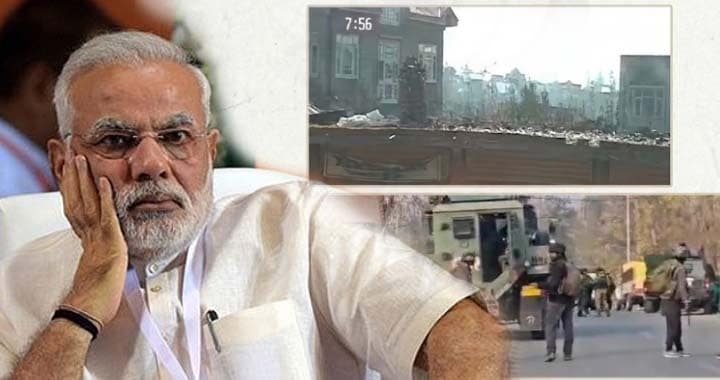
The motorcycle-borne attack on a Central Reserve Police Force (CRPF) checkpoint near Mir Bazar in Kulgam district on November 11 has once again raised serious questions about the security arrangements in Indian-administered Jammu and Kashmir, while also exposing the troubling tendency to introduce baseless allegations against Pakistan to cover their own failures and before the completion of an investigation.
According to reports by Indian media, unidentified motorcycle-borne assailants opened fire on CRPF personnel at approximately 2:15 pm near Mir Bazar, injuring at least two personnel, with several reports putting the number at three. The injured were shifted to a hospital in Anantnag, while security forces cordoned off the area and launched a search operation to apprehend the attackers. The assailants reportedly escaped following the shooting.
The incident raises significant questions about the effectiveness of security arrangements in a region where extensive security deployments, checkpoints, surveillance systems, and counterterrorism operations are routinely maintained. The ability of armed assailants to approach a security checkpoint, open fire in broad daylight, and escape warrants a thorough and transparent investigation.
More concerning, however, is the emergence of speculation and allegations linking Pakistan to the incident before the identities and affiliations of the attackers have been established.
No publicly presented evidence in the initial reporting establishes Pakistan’s involvement, identifies the attackers, or confirms any organizational responsibility. The CRPF’s reported statement confirmed the firing and casualties, while the search operation remained underway. The identity and motive of the assailants were still under investigation.
Nevertheless, sections of the Indian television and commentary ecosystem have already introduced Pakistan-related allegations in order to cover Modi failures. Such claims, when advanced without verifiable evidence, risk turning a criminal and security investigation into a political blame game.
The distinction between verified facts, investigative leads, and political commentary must not be ignored. A motorcycle allegedly linked to an individual does not, by itself, establish that person’s involvement in an attack, much less prove the involvement of an organization or another country.
The presence of Jammu and Kashmir Lieutenant Governor Manoj Sinha in Kulgam on the day of the incident has also attracted attention. However, the immediate issue remains the security breach and the circumstances that allowed the attackers to escape. PTI reported that the Lieutenant Governor was in Kulgam but not near the site of the attack.
The incident also brings renewed attention to the wider security challenges in the region. The April 2025 Pahalgam attack, which claimed 26 lives, demonstrated the devastating consequences of intelligence and security failures. Any comparison between the two incidents must be based on established evidence, but both underline the importance of accountability, credible intelligence, and effective security arrangements.
Pakistan rejects baseless allegations and attempts to assign responsibility without credible evidence. Allegations involving Pakistan must be supported by verifiable facts rather than television speculation, anonymous commentary, or political narratives.
If Indian authorities possess evidence, they should present it through established investigative and diplomatic channels. If the investigation has yet to establish the perpetrators’ identities and affiliations, responsible officials and commentators should refrain from making premature accusations.
The priority must be identifying and apprehending those responsible, establishing their actual affiliations and motives, ensuring accountability for security lapses, and providing justice to the injured personnel.
Evidence must precede accusation. Accountability must precede political blame. The Kulgam attack deserves a credible investigation, not another round of unsubstantiated allegations against Pakistan.



