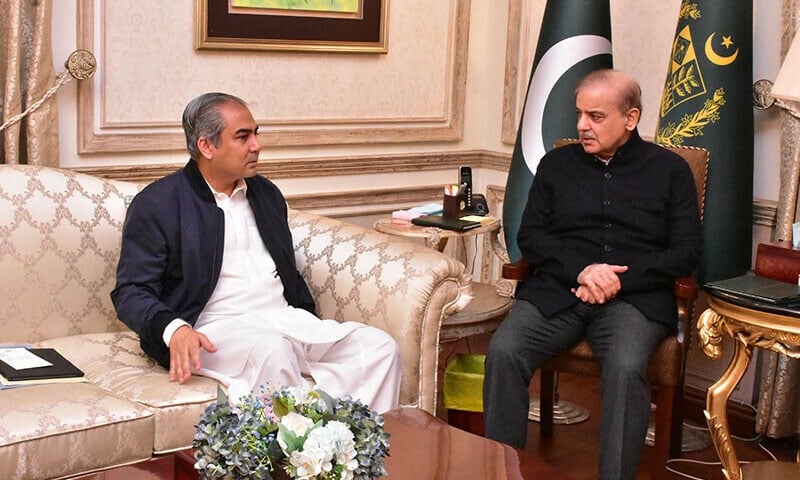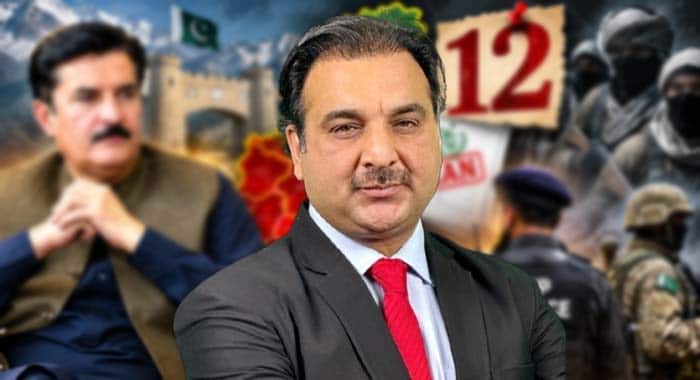
The security briefing held at the Governor’s House following the imposition of Governor’s Rule in Khyber Pakhtunkhwa has placed the province’s counterterrorism strategy, administrative priorities and financial commitments under renewed scrutiny. The briefing, attended by Governor Faisal Karim Kundi, senior provincial officials and journalists, offered a comparison between the previous PTI-led provincial government’s approach to the security situation and the priorities of the current administrative setup.
The central message was that the province could no longer afford gaps in political ownership, administrative coordination or financial support for counterterrorism. The briefing also outlined a set of initiatives that the current setup intends to pursue, with the Additional Inspector General of Police for the 12 sensitive districts, Ahsan Abbas, setting a 100-day target for some initiatives and a 180-day timeline for completing others.
This timeline is important because the people of Khyber Pakhtunkhwa have heard security commitments before. What they need now is visible progress, effective implementation and a sustained response to the terrorist threat.
One of the major criticisms raised during the briefing concerned the previous provincial government’s alleged lack of political ownership of the security challenge. The briefing pointed to a gap between the scale of the threat and the seriousness with which the previous administration approached it. The comparison was not limited to policy statements. It also focused on budget allocations, police capacity, operational requirements and the resources made available to institutions responsible for counterterrorism.
The Additional Chief Secretary, Amjad Ali Khan, highlighted the previous government’s budgetary decisions, particularly regarding security in the merged tribal districts. He said that the allocation for security in these areas had been reduced to 3.2 percent of the total provincial budget.
The briefing also presented figures concerning the strengthening of the police and the Counter Terrorism Department. According to the account shared by the Additional Chief Secretary, the relevant departments had sought Rs41 billion to strengthen their capacity. However, the previous provincial government had indicated its willingness to provide only a fraction of that amount, reportedly between Rs6 billion and Rs11 billion, while only Rs1 billion was ultimately released.
These figures, if viewed against the continuing security challenges in the province, raise serious questions about the priority previously given to law enforcement institutions. A police force cannot be expected to confront an increasingly complex terrorist threat without adequate equipment, infrastructure, personnel and operational resources.
The current setup has now presented a different financial and administrative plan. For the ongoing financial year, approximately Rs71 billion has been earmarked for the police and the Counter Terrorism Department. The police budget is around Rs60 billion, while approximately Rs10 billion has been allocated to the CTD.
The proposed expenditure includes Rs5.4 billion for CTD infrastructure and Rs6 billion for equipment and procurement. For the police, approximately Rs33 billion is intended for infrastructure, including police stations and checkposts, while Rs26 billion has been earmarked for procurement.
Chief Secretary Fakhr-e-Alam Irfan also said that Rs30 billion had been released for the police budget and that additional funds required by the department would be issued soon. He assured the participants that pending matters would also be addressed.
The proposed measures go beyond financial allocations. According to the briefing, the government intends to reconstruct police checkposts, establish Safe City projects in Dera Ismail Khan, Lakki Marwat and Bannu, and activate the Safe City Authority. Other planned initiatives include the establishment of faceless anti-terrorism courts, satellite communication facilities for operational areas, and the introduction of drone and anti-drone systems.
The recruitment of technical personnel is also part of the proposed strategy. This is particularly important because counterterrorism is no longer confined to conventional policing and ground operations. Surveillance, communications, technological capabilities and the ability to counter emerging threats have become increasingly important.
Another stated priority is action against those who facilitate terrorists. The briefing made clear that individuals providing support to terrorist networks would be pursued, and their names would be included in Schedule IV. This aspect deserves particular attention because terrorism cannot be addressed solely by targeting those directly involved in attacks. The networks that provide logistical, financial and other forms of assistance also need to face the consequences of the law.
The briefing also highlighted the scale of illicit economic activity in the province, including illegal spectrum-related business, smuggling, narcotics and extortion. It also referred to the issue of non-custom-paid vehicles. These activities represent a wider challenge for law enforcement because criminal economies can provide resources and opportunities for networks operating outside the law. Addressing them requires sustained enforcement rather than occasional operations.
Governor Faisal Karim Kundi, meanwhile, made the current administration’s position on counterterrorism clear. He said intelligence-based operations would continue and that action would be taken against terrorist facilitators. He also emphasized that the provincial government was taking ownership of the war against terrorism, describing the police, security forces and other state institutions as its own institutions.
His remarks also addressed the use of Afghan territory against Pakistan. He stated that when Afghan soil was being used by India and Israel against Pakistan, and facilitation was taking place from there, Pakistan had not only the right to defend itself but also to respond. He said Pakistan had already demonstrated that resolve.
The question of negotiations with terrorist facilitators was also addressed. The position presented during the briefing was that the state of Pakistan would not enter into dialogue or negotiations with those who challenged its authority. However, individuals willing to accept the law and authority of the state could be engaged in conversation. There would be no room for negotiations with anyone who considered himself more powerful than the state.
This distinction is significant. The state can provide an opportunity to those willing to return to the legal framework, but it cannot allow armed groups to dictate terms or use violence to undermine its authority.
The briefing repeatedly emphasized that the current setup, security institutions and relevant departments were on the same page. The message was that there was now no room for another failure and that the opportunity to address the security crisis had to be taken seriously. The previous administration’s performance was criticized, but the real test for the current setup will be whether it can translate its commitments into results.
The 100-day and 180-day targets set by the police leadership will therefore be important benchmarks. The reconstruction of checkposts, establishment of Safe City projects, improvement of CTD infrastructure, procurement of equipment, recruitment of technical personnel and action against facilitators must move beyond announcements. The promised funds must reach the relevant institutions, and the pending requirements must be addressed without unnecessary delays.
The sacrifices of police personnel and security forces have made the need for an effective strategy even more urgent. Those confronting terrorism on the ground need the institutional backing, equipment and resources required to perform their duties. Equally, the people of Khyber Pakhtunkhwa need to see that the state is not leaving them alone to face the consequences of terrorism.
The current administration has presented its strategy, identified its priorities and announced timelines. It has also acknowledged the shortcomings attributed to the previous government. But criticism of the past cannot substitute for performance in the present.
The coming days and months will show how quickly the announced initiatives are implemented and whether the current setup can deliver on its commitments. The people of Khyber Pakhtunkhwa have already paid a heavy price for insecurity. They need results, not another cycle of promises. If the current administration fails to meet the expectations it has raised, the consequences will extend beyond its political standing. Public confidence in the state’s ability to restore peace will also be at stake, and history will judge those responsible.