Afghanistan is confronting a multidimensional crisis whose consequences extend far beyond the country’s political isolation, economic difficulties and persistent security challenges. The systematic deterioration of its education system, the continued presence of militant networks and the increasingly strained relationship between Islamabad and Kabul are converging to create an uncertain and potentially destabilising future for the wider region. Beneath these developments lies a fundamental question: what kind of society is emerging in Afghanistan, and what will be the long-term consequences for regional peace, security and political stability?
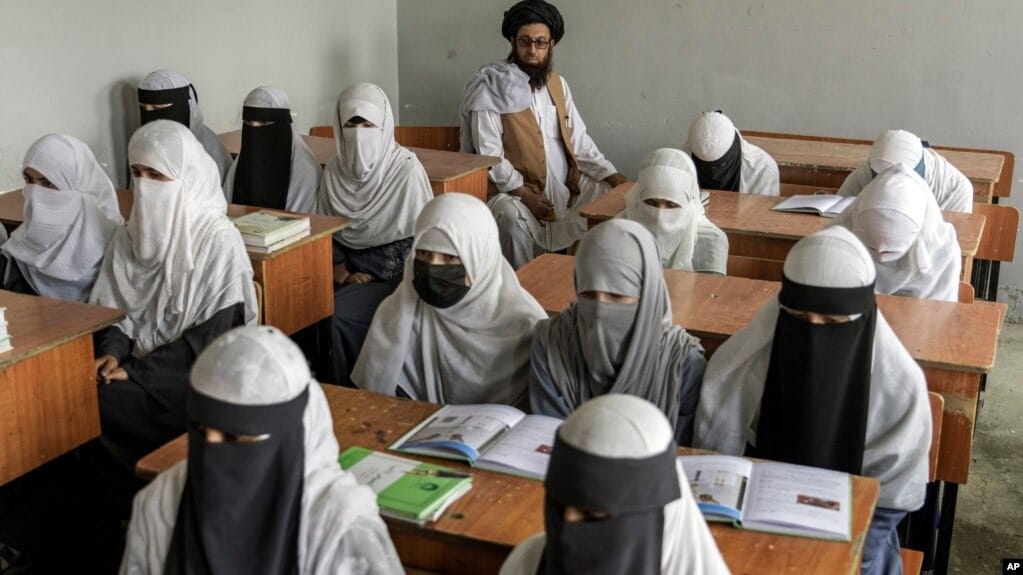
At the centre of Afghanistan’s unfolding crisis is an educational catastrophe that threatens to deprive an entire generation of its future. Figures attributed to UNICEF and UNESCO indicate that approximately 11 million children of school-going age are in the country, of whom around 6.1 million remain out of school. Alarmingly, approximately 2.6 million of these children are girls.
These numbers represent far more than an education-sector emergency. They reflect the systematic erosion of human potential on an extraordinary scale. Millions of Afghan children are being denied the opportunity to acquire the knowledge, skills and intellectual foundations necessary to build productive lives and contribute to their country’s development.
The problem is not confined to school enrolment. The broader educational infrastructure faces serious questions concerning institutional capacity, the quality of instruction, access to qualified teachers and the availability of meaningful learning opportunities. A system in which large numbers of children remain outside formal education, while others depend on limited or informal educational arrangements, cannot adequately prepare the next generation for the economic, technological and intellectual demands of the modern world.
The exclusion of girls, in particular, represents one of the most consequential setbacks in Afghanistan’s contemporary history. Preventing millions of young women from pursuing secondary and higher education does not merely restrict their individual ambitions; it weakens the entire social fabric. Women are essential contributors to healthcare, education, economic activity, family welfare and community development. Denying them educational opportunities inevitably diminishes the country’s human capital and undermines its prospects for sustainable progress.
The long-term implications are equally troubling. Educational deprivation reinforces poverty, restricts social mobility and creates conditions in which misinformation, radicalisation and extremist narratives can find fertile ground. A generation deprived of critical thinking and meaningful opportunities becomes increasingly vulnerable to social and economic marginalisation.
No country can realistically aspire to stability, prosperity or international relevance while systematically excluding a substantial proportion of its population from education. Afghanistan’s educational crisis is therefore not simply a domestic policy failure; it is a profound challenge to the country’s future and a matter of wider regional concern.
While Afghanistan’s educational decline threatens its long-term social and economic foundations, its security environment continues to generate immediate concerns for Pakistan.
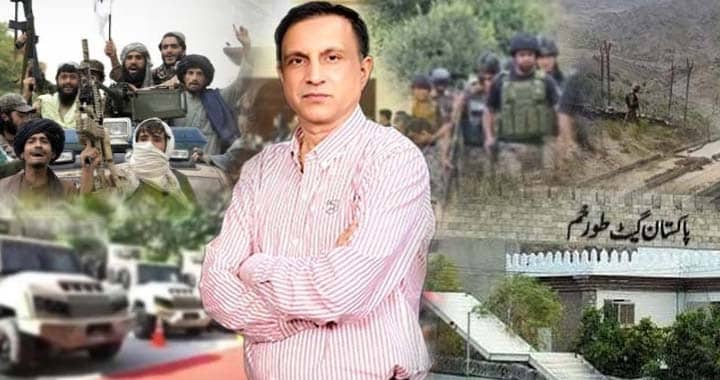
The reported gathering in Kandahar involving Noor Wali Mehsud, leader of the Tehreek-e-Taliban Pakistan (TTP), and representatives of other militant factions has raised serious questions about the organisation, coordination and financial sustainability of militant networks operating in the region.
The significance of such developments lies not merely in the identities of those reportedly involved, but in the broader implications of possible coordination among militant factions. Any consolidation of organisational structures, operational planning or financial arrangements among these groups could further complicate Pakistan’s security environment.
Particularly noteworthy are reports of dissatisfaction within militant circles over the availability of financial resources. Financial constraints may indicate growing difficulties in sustaining organisational activities, especially if established sources of funding have been disrupted by enhanced border controls, enforcement measures and counterterrorism operations.
For years, militant organisations have allegedly relied on a combination of extortion, illicit trade, narcotics-related activities and other criminal networks to finance their operations. The disruption of these channels could place considerable pressure on their organisational structures. Nevertheless, financial difficulties should not be mistaken for a decline in militant intent or a permanent reduction in their capacity to cause harm.
A financially constrained organisation can remain dangerous, particularly when it retains ideological commitment, established networks and access to logistical support. Consequently, Pakistan’s counterterrorism strategy must extend beyond disrupting individual funding channels and address the wider ecosystem that enables militant organisations to survive and reorganise.
Of even greater concern is the question of the Afghan Taliban authorities’ relationship with militant groups, particularly the TTP. Pakistan has repeatedly expressed concerns that Afghan territory is being used by militant organisations to plan or facilitate attacks against its security forces and civilians.
The reported presence of senior militant figures and the alleged continuation of their activities from Afghan territory raise fundamental questions about the effectiveness of Kabul’s security commitments. If militant organisations are able to maintain leadership structures, establish contacts and coordinate activities without meaningful restrictions, the credibility of assurances regarding regional security will inevitably come under scrutiny.
These allegations require independent verification and careful examination. However, the persistence of Pakistan’s security concerns cannot be dismissed as a routine diplomatic disagreement. It reflects a deeper crisis of confidence between two neighbouring countries whose geographical, economic and security interests are inseparably connected.
Developments along Pakistan’s western border further illustrate the seriousness of the situation. Reports of militant movements and armed confrontations in the Kurram region, alongside security concerns in South Waziristan, underscore the continuing vulnerability of sensitive border areas.
Such incidents are particularly dangerous because they create the possibility of a recurring cycle of militant infiltration, retaliatory action and cross-border confrontation. Even isolated incidents can acquire wider strategic significance when they occur against a backdrop of deteriorating diplomatic relations and mutual distrust.
For Pakistan, the challenge is twofold: protecting its territorial integrity while preventing an escalation that could further destabilise the region. This requires an effective combination of intelligence-led counterterrorism operations, border management, diplomatic engagement and sustained pressure on the networks facilitating militant activities.
For Kabul, the responsibility is equally significant. The authorities exercising control over Afghanistan must demonstrate, through verifiable action rather than diplomatic assurances alone, that Afghan territory will not be used to threaten neighbouring countries.
The central issue is therefore one of credibility and responsibility. Lasting stability cannot be achieved through declarations of goodwill while security concerns remain unresolved. Nor can bilateral relations improve meaningfully without practical cooperation against organisations that undermine the security of both countries.
Pakistan’s Internal Political Challenge: The Future of the Merged Tribal Districts
Alongside its external security concerns, Pakistan is facing another politically sensitive challenge concerning the administrative and constitutional future of the former Federally Administered Tribal Areas (FATA), now merged with Khyber Pakhtunkhwa.
Maulana Fazlur Rehman, chief of Jamiat Ulema-e-Islam (JUI-F), has increasingly voiced reservations about the existing arrangement and the future political status of the merged districts. His longstanding opposition to the 2018 merger reflects a broader disagreement over the political, administrative and constitutional direction of the former tribal areas.
The possibility of alternative administrative arrangements, including proposals for a separate province or a revised governance structure, has added another dimension to this debate. For political actors with established electoral constituencies in the region, any restructuring could significantly alter the distribution of political influence and representation.
Fazlur Rehman’s position is therefore rooted in more than a disagreement over administrative boundaries. It involves questions of political representation, electoral influence, institutional authority and the future configuration of power in a strategically important part of Khyber Pakhtunkhwa.
The concerns surrounding the possible transfer or redistribution of administrative powers, including the reported role of the governor, have further intensified the debate. Decisions affecting the merged districts carry substantial political and constitutional implications and should not be treated as routine administrative adjustments.
The people of these districts have a legitimate interest in determining the future of their political and administrative institutions. Any major restructuring undertaken without meaningful consultation risks deepening existing grievances and undermining confidence in the political process.
Fazlur Rehman’s increasingly critical posture towards the government and state institutions must also be understood within this broader political context. His statements reflect growing dissatisfaction with the direction of policymaking and what appears to be a shrinking space for political influence. At the same time, the strong responses from government representatives and the emergence of reported institutional pressures have made the political environment increasingly confrontational.
For the JUI-F leadership, the challenge is to preserve its political relevance while navigating an increasingly complicated relationship with the state. For the government, the challenge is to manage political disagreements without allowing them to evolve into a broader crisis of institutional trust.
Ultimately, the future of the merged districts should be determined through constitutional processes, democratic consultation and a genuine consideration of local aspirations. Administrative restructuring imposed without political consensus could create further instability in a region that has already endured decades of conflict, displacement and insecurity.
The developments unfolding in Afghanistan and Pakistan should not be viewed as separate political or security episodes. They are interconnected challenges whose consequences could reinforce one another.
Afghanistan’s educational collapse threatens to produce long-term social and economic vulnerabilities. The continued presence of militant networks raises immediate concerns about cross-border security and the prospects for regional cooperation. Meanwhile, Pakistan’s internal political disagreements over the future of the merged tribal districts highlight the importance of institutional consensus and inclusive governance in regions already exposed to security pressures.
These challenges are connected by a common underlying reality: instability becomes more difficult to contain when political exclusion, institutional weakness, economic deprivation and security threats reinforce one another.
Afghanistan’s exclusion of girls from education, for example, does not simply affect its domestic development trajectory. It also undermines the country’s ability to cultivate a skilled workforce, strengthen public institutions and achieve economic self-reliance. Similarly, unresolved militant activity threatens to undermine the confidence necessary for meaningful economic and diplomatic engagement between Kabul and Islamabad.
Pakistan, for its part, must recognise that sustainable security cannot be achieved through military responses alone. Counterterrorism measures are indispensable, but lasting stability also requires effective governance, economic development, political inclusion and public confidence in state institutions, particularly in the former tribal districts.
There is also a wider regional dimension. An unstable Afghanistan, persistent militancy along the Pakistan-Afghanistan border and political uncertainty in Pakistan’s western regions could complicate regional connectivity, trade, investment and diplomatic cooperation. The consequences would extend beyond the two countries, affecting the broader security and economic environment of South and Central Asia.
The region is approaching a critical juncture. Afghanistan must decide whether it will invest in the intellectual development of its next generation or continue along a path that deprives millions of children, particularly girls, of their fundamental educational opportunities. Its authorities must also address legitimate regional security concerns through credible and demonstrable action against militant organisations.
Pakistan, meanwhile, must pursue a comprehensive strategy that combines firm action against militancy with sustained diplomatic engagement, effective border management and a politically inclusive approach to the future of its merged tribal districts.
Neither country can afford to treat these challenges as isolated problems or temporary political inconveniences. They demand long-term vision, institutional responsibility and a willingness to move beyond short-term calculations.
The most disturbing prospect is not simply the continuation of political tensions or sporadic security incidents. It is the possibility that an entire generation could grow up amid educational deprivation, ideological polarisation, economic uncertainty and recurring violence. Once such conditions become entrenched, reversing their consequences can take decades.
A country that denies education to millions of its children compromises its own future. A state that allows militant networks to operate unchecked jeopardises regional peace. And a political system that fails to accommodate legitimate representation risks deepening the very instability it seeks to manage.
The ultimate test of leadership in Afghanistan and Pakistan will not be the strength of political rhetoric, the frequency of official meetings or the ability to manage immediate crises. It will be the willingness to address the structural failures that continue to threaten their societies.
The future of this region will be determined not by the political calculations of its present leadership, but by the opportunities, security and freedoms it is prepared to guarantee to the generations that will inherit it.