
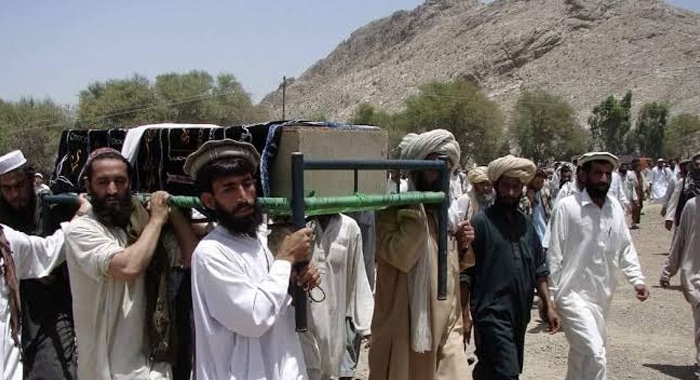
A grim account of nearly two decades of violence against tribal elders and members of peace committees in Khyber Pakhtunkhwa, including the former tribal districts, reveals that 188 people have been martyred, 62 injured and two abducted in 148 reported incidents between 2005 and 2026.
The figures, compiled from unofficial annual data, expose the devastating human cost of targeted attacks against tribal elders, community leaders and members of local peace committees who played a significant role in resisting militancy and supporting peace and stability in their respective areas.
District Bajaur recorded the highest number of fatalities, with 37 tribal elders martyred, followed by Kurram with 20, while South Waziristan, Orakzai and Khyber each reported 13 fatalities.
The year 2010 proved to be the deadliest, with 39 tribal elders losing their lives in targeted attacks, underscoring the intensity of militant violence against local leadership during that period.
According to the available records, the first documented incident in this dataset occurred on May 29, 2005, when former federal minister and senator Malik Faridullah Khan Wazir was martyred alongside other tribal elders in Jandola, South Waziristan.
The killings continued throughout the year. On July 22, several tribal individuals, including two prominent pro-government elders, were reportedly killed in different areas of South Waziristan.
On September 2, pro-government tribal elder Mehboob was shot dead in the Spinkai Raghzai Bazaar area of Ladha, while on November 11, Allah Khan, an active member of a local peace committee, was targeted in his village of Ocha Khorah.
These early incidents marked the beginning of a prolonged and deadly pattern of attacks against tribal elders and community figures.
The period from 2005 to 2015 witnessed 100 reported incidents, resulting in the martyrdom of 128 tribal elders and injuries to another 51.
Of these years, 2010 recorded the highest fatalities, with 39 elders martyred and eight injured. The year 2008 followed with 19 fatalities and 10 injuries, while 2011 recorded 12 deaths and 15 injuries.
The annual breakdown highlights the scale of the violence:
- 2005: 7 killed.
- 2006: 6 killed.
- 2007: 4 killed.
- 2008: 19 killed, 10 injured.
- 2009: 7 killed, 2 injured.
- 2010: 39 killed, 8 injured.
- 2011: 12 killed, 15 injured.
- 2012: 10 killed, 2 injured.
- 2013: 4 killed, 1 injured.
- 2014: 11 killed, 9 injured.
- 2015: 9 killed, 4 injured.
The violence was particularly brutal in 2010. In January, tribal elders were targeted in Bajaur’s Salarzai and Mamund subdivisions, Mohmand and other areas.
In March, the bodies of abducted tribal elders were recovered in Orakzai and Kurram, with reports indicating that some victims had been beheaded. In April, the body of another abducted elder was recovered from Nawagai in Bajaur.
In August, a bomb attack on a gathering of tribal elders in Khomas, Kurram, killed seven people and injured another seven. Further attacks in October and November targeted elders associated with pro-government peace committees in Mohmand and Kurram.
The available data indicates that targeted violence against tribal elders continued in subsequent years, with 48 additional incidents recorded between 2019 and 2026.
During this period, 60 people were martyred, 11 injured and two abducted.
The annual figures show:
- 2019: 2 killed.
- 2020: 10 killed.
- 2021: 1 killed.
- 2022: 1 killed.
- 2023: 4 killed.
- 2024: 13 killed, 5 injured.
- 2025: 17 killed, 1 injured.
- 2026 (year to date): 12 killed, 5 injured and 1 abducted.
The figures point to a particularly alarming escalation in recent years, with 2025 recording 17 fatalities, the highest annual toll in the 2019–2026 period. A further 12 tribal elders have reportedly been martyred in the current year so far.
The geographical spread of the attacks reflects the extensive reach of militant violence across the former tribal agencies and settled districts of Khyber Pakhtunkhwa. The affected areas include South Waziristan, North Waziristan, Bajaur, Mohmand, Khyber, Orakzai, Kurram, Peshawar, Swat, Shangla, Tank, Hangu, Kohat, Bannu and Dera Ismail Khan.
Bajaur recorded the highest number of fatalities, with 37 tribal elders killed. Kurram followed with 20, while South Waziristan, Orakzai and Khyber each recorded 13 fatalities.
The killing of tribal elders and peace committee members represents more than a series of individual attacks. It reflects the enormous human cost borne by local communities, whose traditional leadership and grassroots peace structures came under sustained threat during years of militancy.
Tribal elders have historically played an important role in conflict resolution, community mobilisation and maintaining local stability. Their targeted killings have not only deprived families of their loved ones but have also weakened traditional dispute-resolution mechanisms and community-based efforts to resist militant violence.
The reported figures serve as a stark reminder of the sacrifices made by tribal communities and their leaders over nearly two decades. Behind every number is a family devastated, a community deprived of its leadership and a local voice for peace silenced.
The sacrifices of these tribal elders must not be forgotten, and the history of violence against them deserves recognition, documentation and accountability.



