
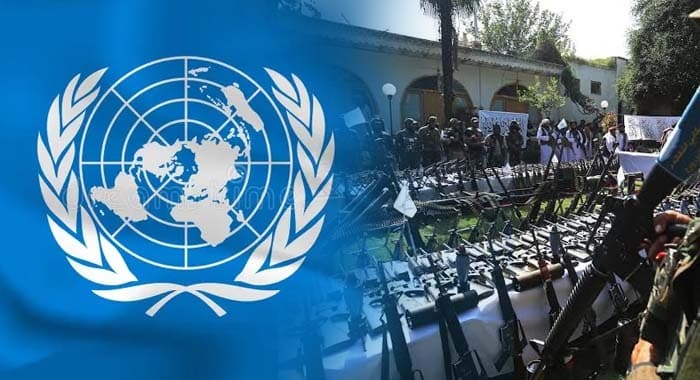
Pakistan has warned that advanced weapons and ammunition stockpiled in Afghanistan pose a direct threat to neighboring countries, urging the international community to prevent armed terrorist groups from gaining access to the arsenal.
Speaking at the 81st session of the United Nations General Assembly on Thursday, October 22, Pakistan’s representative, Sayed Atef Raza, called for stronger international efforts to stop terrorist groups from acquiring advanced weaponry in Afghanistan.
Raza said Pakistan’s concerns over the presence of these weapons were also reflected in reports by the UN secretary-general, underscoring the wider implications for regional security.
The issue remains a point of contention between Islamabad and the Taliban administration. Pakistan has conducted strikes against targets in Afghanistan that it identifies as terrorist hideouts used to launch attacks inside Pakistan. The Taliban administration has condemned these strikes as violations of Afghan sovereignty and reported civilian casualties.
The weapons left behind following the withdrawal of US and NATO forces from Afghanistan in 2021 have added to regional security concerns. According to the US Department of Defense, military equipment valued at approximately $7.1 billion remained in Afghanistan after the withdrawal, having previously been held by the country’s former security forces.
The equipment included weapons, ammunition, military vehicles, aircraft and communications systems. However, the estimated value of the remaining equipment does not establish that all of it remains operational or usable.
Raza also criticized the uncontrolled transfer of advanced weapons to conflict zones, warning that the flow of sophisticated arms prolongs hostilities and can contribute to serious violations of international humanitarian law by occupying powers.
Addressing the security situation in South Asia, he said the transfer of advanced weapons to a country in the region had widened the military imbalance and encouraged the adoption of aggressive military doctrines. He did not identify the country directly.
Raza stressed that Pakistan did not seek an arms race and said Islamabad’s proposals for balancing conventional military capabilities and strengthening arms-control arrangements at regional and sub-regional levels remained on the table.



