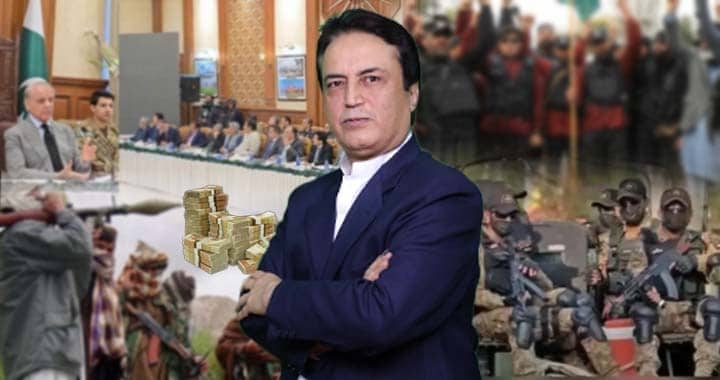
The return of terrorism in Khyber Pakhtunkhwa, the sacrifices of thousands of lives and the allocation of approximately Rs800 billion have failed to deliver the lasting peace the province desperately needs. The situation demands serious reflection. The question is not simply why terrorism has returned, but why years of sacrifices, financial allocations and political promises have failed to establish a durable sense of security.
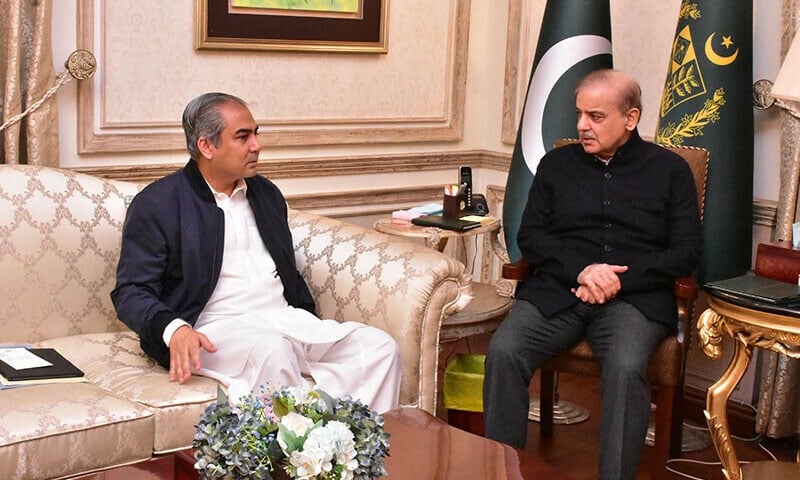
Prime Minister Shehbaz Sharif’s visit to Peshawar and his participation in a high-level meeting at the Governor’s House are welcome developments. The meeting brought together the military leadership, federal representatives and provincial authorities at a critical juncture, following the end of the Pakistan Tehreek-e-Insaf’s (PTI) provincial government on October 11 and the establishment of an interim technocratic administration.
However, the prime minister should have visited Khyber Pakhtunkhwa much earlier. Pakistan is a federation, and the federal government has a responsibility to listen to the concerns of every province. Whether the issue concerns Balochistan, Sindh, Punjab, Khyber Pakhtunkhwa, Gilgit-Baltistan, Azad Jammu and Kashmir or the former tribal areas, the genuine concerns of the people must be addressed. That responsibility rests with the prime minister and the federal government.
Khyber Pakhtunkhwa has fallen behind other provinces in several areas, including security, development and public services. The performance of the PTI government, which remained in power in the province for approximately 13 years, must also be examined. Rather than concentrating adequately on governance and public welfare, the party appeared increasingly preoccupied with its political struggle and Imran Khan’s release.
The demand for Imran Khan’s release became a convenient political instrument, allowing the provincial leadership to divert attention from its own performance. Yet it failed to secure his release, and the party eventually lost its provincial government as well. The people of Khyber Pakhtunkhwa should not have to bear the consequences of a political strategy that delivered neither the promised political outcome nor the governance their province needed.
The meeting at the Governor’s House must therefore produce a clear roadmap for restoring peace. The government needs to explain the nature and scope of counterterrorism operations, how they will be conducted and what arrangements will ensure that security measures are accompanied by relief and development for affected communities.
The financial commitments made for the former Federally Administered Tribal Areas following their merger with Khyber Pakhtunkhwa are another critical issue. An annual allocation of Rs100 billion was envisaged through the federal government and the provinces to support the merged districts. However, the amount released has reportedly fallen far short of the commitment, leaving an estimated Rs500 billion to Rs600 billion pending. Only around Rs150 billion has reportedly been paid against the broader commitment.
These districts remain deeply deprived after years of conflict. Their people need roads, schools, hospitals, employment opportunities and functioning public institutions. The authorities must address the funding shortfall and accelerate development, but releasing money is only the first step. The funds must be utilized properly and transparently.
Corruption remains a major obstacle to development in Pakistan. Governments can approve billions of rupees, but if the administrative system is compromised by corruption, inefficiency and inadequate oversight, the intended benefits never reach ordinary people. Khyber Pakhtunkhwa cannot afford another cycle of announcements followed by questions about where the money went.
The political blame game must end, as must the recurring corruption scandals. The federal government, the provincial administration and the relevant institutions must recognize the province’s problems and work towards practical solutions. They now have an opportunity to demonstrate that public money can be converted into visible improvements in people’s lives.
The Apex Committee meeting is part of the National Action Plan, which was developed to coordinate Pakistan’s response to terrorism. The plan was intended to address security challenges across the country, with provincial committees identifying local problems and coordinating counterterrorism measures. Its scope was never limited to Khyber Pakhtunkhwa and Balochistan; it covered Sindh and Punjab as well.
Unfortunately, political parties and governments failed to maintain the commitment needed to implement the National Action Plan effectively. Despite initial agreement, implementation weakened, leaving serious questions about the seriousness with which its objectives were pursued. The renewed Apex Committee process must not suffer the same fate. Regular meetings, clear responsibilities and measurable progress are essential if the plan is to produce meaningful results.
As someone who has worked in journalism in Khyber Pakhtunkhwa, I consider the province neglected. That neglect has contributed to a range of problems, of which terrorism is only one. Years of poor governance have damaged the social fabric, disrupted social relationships and widened the gap between the privileged and the disadvantaged.
The people have been pushed deeper into deprivation, while those in positions of authority have enjoyed the privileges of power. These disparities must be reduced if the state expects citizens to regain confidence in its institutions.
In my view, the biggest challenge facing Khyber Pakhtunkhwa, and particularly Balochistan, as well as Pakistan more broadly, is the erosion of public trust. Terrorism is undoubtedly a major problem, but the weakening relationship between citizens and the state is an even more fundamental concern.
This does not mean that people have necessarily turned against Pakistan or begun to hate their country. Rather, repeated disappointments, corruption, political failures and poor governance have weakened their confidence in politicians and the system. Ultimately, that loss of confidence also affects their relationship with the state.
When people begin to feel that their concerns are ignored while those in power pursue their own interests, the sense of shared responsibility that binds a nation together begins to weaken. This is particularly worrying in Khyber Pakhtunkhwa and Balochistan, where insecurity and deprivation have compounded public frustration.
States can survive serious security challenges, economic difficulties and political crises. But when the relationship between citizens and the state becomes severely strained, the consequences reach far beyond any single policy failure. The answer lies in corrective measures, accountability and governance that puts public welfare first.
Those in authority must also change their attitude towards power. Public office is not a licence to enjoy luxury, engage in corruption or pursue personal political interests while citizens struggle with insecurity and poverty. Political leaders must correct their own conduct and demonstrate through their actions that they are serving Pakistan and its people.
The current administration faces questions about its duration and future political arrangements. There has been speculation about possible deals involving PTI leaders Suhail Afridi and Ali Amin Gandapur, but such speculation should not be confused with established fact. In the age of social media, misinformation and conspiracy theories can spread as rapidly as genuine information. Political developments should be assessed on the basis of verifiable information rather than rumours.
The removal of the PTI government is nevertheless a major political development. Losing a government is not a minor setback for any party, and the PTI now faces a difficult period amid political pressure and a crackdown on some of its members. The party’s future will depend, among other things, on how it responds to the situation and whether it reassesses the political approach that contributed to its difficulties.
The immediate priority, however, must remain the security and prosperity of Khyber Pakhtunkhwa. There is speculation that the current administrative arrangement could continue for an extended period, with possible changes to the cabinet or other officials. Whatever its duration, the administration must be judged by its performance rather than predictions about political arrangements.
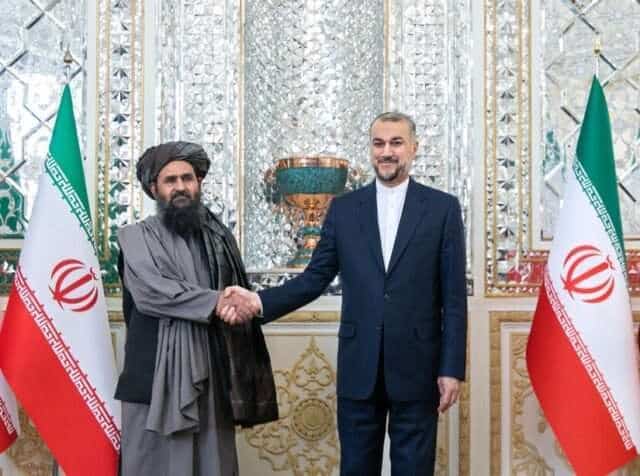
Two principal objectives have been identified for the province: restoring peace and accelerating development. Intelligence-based operations are expected to play an important role in counterterrorism efforts, alongside stronger coordination between the federal and provincial authorities. Operations may also extend across the border into Afghanistan, where the threat posed by armed groups operating from Afghan territory remains a concern for Pakistan.
At the same time, development funding must be increased and released without unnecessary delays. The province needs substantial resources to accelerate development, particularly in the merged districts, where years of conflict have left communities struggling with inadequate infrastructure and limited opportunities.
The alignment of the federal government and the provincial administration could remove one of the obstacles that previously complicated counterterrorism coordination. During the PTI government’s tenure, differences between the provincial and federal governments frequently became part of the debate over security policy. With both levels of government now working under the current arrangement, responsibility for delivering results becomes even clearer.
There can no longer be an excuse that one government is preventing the other from cooperating. The authorities must now demonstrate the political will and administrative capacity to make progress on security and development.
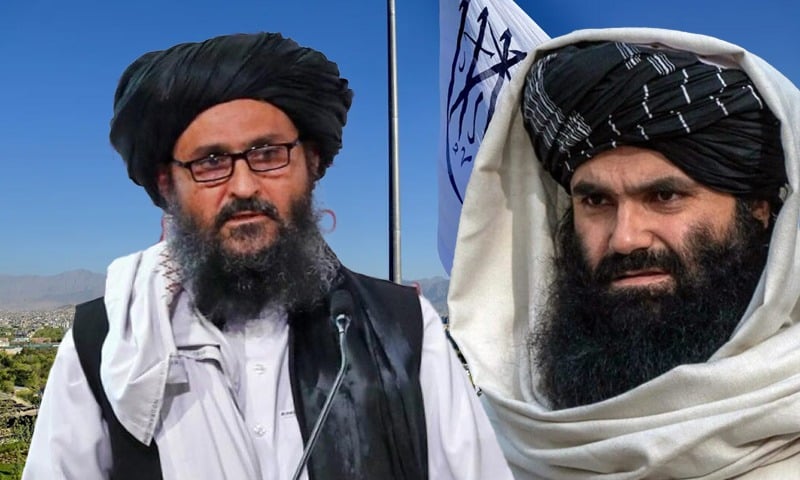
That task will not be easy. The Pakistani Taliban and other armed groups have become more powerful and better organized than they were during earlier phases of the insurgency. Over recent years, smaller organizations and factions have joined larger networks, strengthening their reach and complicating the security environment.
The growth of alliances among armed groups, including the Ittehad-ul-Mujahideen platform, reflects the changing landscape of militancy. Al-Qaeda also remains part of the wider security challenge. These developments mean that the threat cannot be assessed solely through the activities of one organization or a single geographical area.
The expansion of terrorist activity from mountainous and remote areas into urban centres is particularly alarming. In the early years of the insurgency, the threat was more closely associated with mountainous areas and the former tribal belt. Today, terrorist networks can operate in urban environments, including Peshawar. This geographical spread illustrates how significantly the challenge has evolved.
The response must therefore be comprehensive. Intelligence-based operations, effective policing, institutional coordination and sustained pressure on terrorist networks are essential. At the same time, the government must invest in education, healthcare, infrastructure and economic opportunities. Security and development cannot be treated as competing priorities; they must advance together.
The authorities should also recognize that successful counterterrorism measures may provoke reactions from armed groups. Such risks reinforce the need for effective planning, intelligence sharing and protection of civilians. The public must be kept informed about the objectives of security measures and the progress being made.
Khyber Pakhtunkhwa has endured enormous sacrifices. Its people deserve a future in which security is not a temporary respite between periods of violence, development is not limited to budget announcements and public office is not treated as a personal privilege.
The prime minister’s visit and the Apex Committee meeting have created an opportunity to move in that direction. The challenge now is to translate political coordination into action, ensure that development funds reach their intended destinations and rebuild the trust that years of insecurity and poor governance have weakened.
Ultimately, the people of Khyber Pakhtunkhwa will judge the authorities by what changes on the ground. They need peace, prosperity and a government that takes responsibility for delivering both. The present administration has an opportunity to demonstrate that meaningful change is possible, but only sustained performance will determine whether that opportunity becomes a turning point for the province.